





According to the news agency Online news According to Ibna – Afsane Nejati: There are books that cannot be read just once and put aside. You have to go back to them years later; With eyes that are no longer the eyes of the first reading. “Two Centuries of Silence” is one of these books. A work that takes the reader to the past upon first encounter, but upon re-reading, it poses another question: is what we are reading the past itself or the image that the author has made of the past?
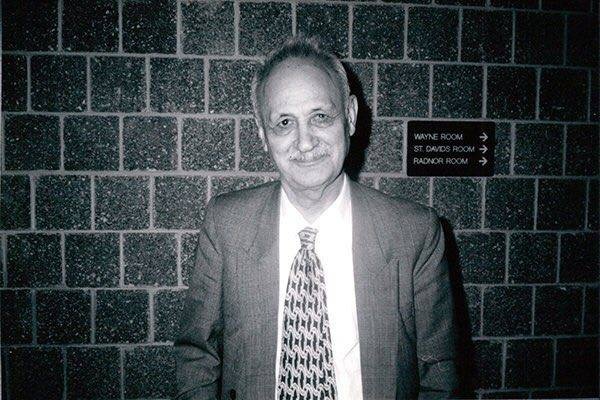
Abdul Hossein Zarinkoub
This question brings us to a problem older than contemporary historiography; In the ratio between the event and the narrative, between what happened and what has entered our memory and language.
History, contrary to popular opinion, is not a set of events ready to be picked up by the historian and put together in chronological order. Every event has passed through people’s eyes, memories, testimonies, documents and sometimes silence before it finds its way to a page of the history book. When reconstructing the past, the historian inevitably makes a choice. Selection of sources, order of events, highlighting some sounds and keeping others low. Even the word you choose to name an event can affect our perception of it.
Beyhaghi is one of the first who reveals the importance of this distance in a striking way in the tradition of Persian historiography. In his history, the news is not simply passed from the narrator to the reader. Sometimes the route of news is also important; Who narrated it, where did he hear it and how much can be trusted in his statement. As the secretary of the Ghaznavid court, Beyhaqi was close to many events and knew the people of the power scene. However, proximity to the event does not equate with full access to the truth. In his narration, hesitance, caution and sometimes refraining from judging are also present.
This feature becomes more important in our time. Beyhaqi reminds us that the narrator, no matter how knowledgeable and faithful he is, does not stand outside the world of narration. He also lives in his time, has a place and looks at events from a certain point of view. Perhaps the validity of a narrative begins when the author, consciously or unconsciously, recognizes the limits of his knowledge.
With such a question, you can go to Abdul Hossein Zarinkoub; A researcher whose name has been associated with Iran’s history, literature, mysticism and Islamic civilization for several generations of Persian readers.
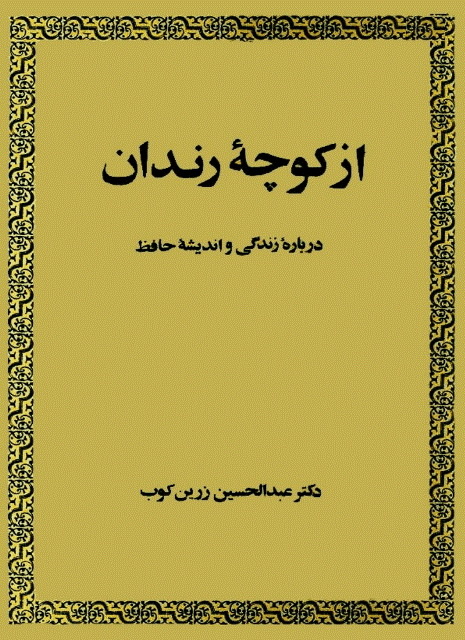
Zarinkoob should be recognized in the special place he had between historian and writer. He was one of those writers who could take out a lot of historical information from dry reports and give them a literary life. In works such as “Step by Step to Meeting God”, “Serre Ni”, “From Kuche Rendan” and “Two Centuries of Silence”, the past is not only a collection of names and dates; It is a human world with its struggles, beliefs, failures and dreams. This ability is undoubtedly one of his great points. Many readers have become interested in the history and culture of Iran and the Islamic world through Zarinkoob’s works; A score that cannot be ignored with a few flaws and research slips.
However, it is at this point that one should linger a little. Powerful prose sometimes affects the reader’s mind so much that the border between historical data and the author’s interpretation is less visible. When the narrative proceeds with such skill, the reader may unwittingly substitute the writer’s judgment for the event itself. This risk is serious in literary historiography; Because the beauty and coherence of the narration can give it an authority that is not necessarily obtained from the strength of documents.
“Two centuries of silence” is a good example to reflect on this issue.
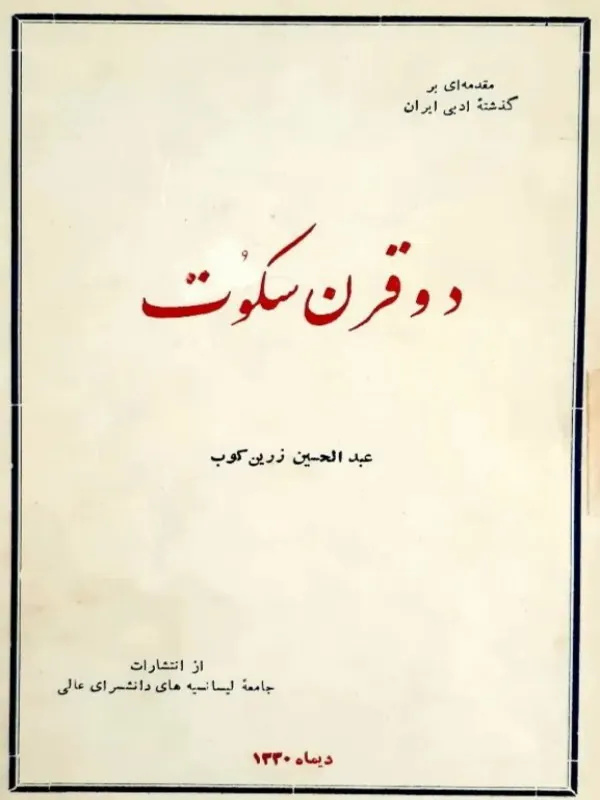
The book was first published in 1330; When Zarinkoob was twenty-one years old. The work was quickly recognized and became one of the influential books in the formation of the public perception of the history of Iran after the Arab conquest. However, the author did not consent to its reprint. Five years later, in 1336, he published an expanded and revised version. The changes were not limited to adding a few things; The structure of the book was also changed. For example, the “Sahara Governors” chapter was added in the second edition; The chapter that exposed the historical background and previous relations between Arabs and Iran to the reader.
This review should be taken seriously. In the introduction to the second edition, Zarinkoob paid attention to the criticisms raised about the first edition and distanced himself from some hasty judgments and prejudices of his youth. This behavior has moral and scientific importance in the career of a researcher. He did not take refuge in the fame of his book and did not consider his text immune from criticism.
But revising a book does not end the question of truth.
The title “Two Centuries of Silence” from the very beginning confronts the reader with a specific image of a period. Whose silence? Silence in which field? Has a society in which political and religious transformations are taking place, new social relationships are formed, language and culture are undergoing transformation, and Iranians are participating in building a new civilization, really been silent for two centuries?
Perhaps the title of the book, rather than a detailed report of the entire reality of those two centuries, expresses the experience of a kind of historical and cultural rupture; A gap that the author has sought to understand and narrate. But this choice raises a question that cannot be ignored: doesn’t the name we give to a period determine a part of the result in our minds before starting the research?
Iranians did not disappear from the stage of history in the first two centuries of Islam. Political resistances, rebellions, changes in power relations, continuity of cultural traditions and participation of Iranians in the formation of Islamic knowledge and civilization are all part of the reality of that era. Therefore, if we take silence to mean absolute cultural and social silence, it will not be compatible with the image obtained from the historical sources and developments of that period. We must clarify which silence is being talked about and what is highlighted or hidden in this interpretation.
Here, the issue goes beyond the criticism of a title. History cannot be known only by counting events. It should be seen what relationship we have established between the events and what meaning we have made by putting them together. It is possible that two historians have access to sources close to each other, but they approach them with two different questions and as a result create two different narratives.
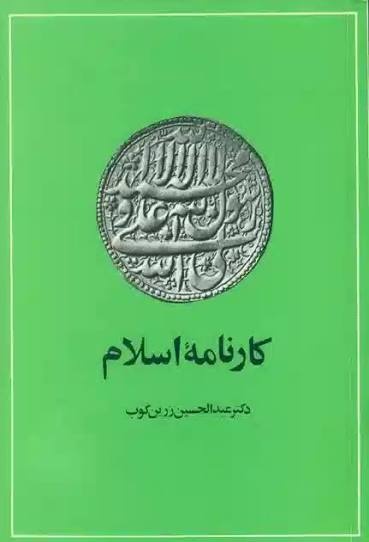
The comparison of “Two Centuries of Silence” with “The Record of Islam” is worthy of reflection. In the first book, Iran’s confrontation with the Arab conquest and its consequences are narrated in a critical and sometimes bitter tone; In the second book, Zarinkoob shows more attention to the achievements of Islamic civilization and the contribution of various cultures, including Iranian culture, in its formation. These two works cannot be placed next to each other regardless of the time interval and the intellectual evolution of the author. Siavash Shohani’s article entitled “Two interpretations of one civilization” also examines the same difference in perspective and narration.
Are we facing two contradictory narratives? Part of the difference can be explained by changing the author’s question and expanding the horizon of his studies. In one, the main issue is the fate of Iran in the face of conquest; In the other, the subject is the civilization record of the Islamic world and its achievements. These two questions, although related to the same historical period, do not necessarily require the same answer.
However, the significant difference in tone and judgment in these two works should not be easily overlooked. This difference provides an opportunity to see how intellectual presuppositions, the research problem and the choice of perspective can interfere in the formulation of a historical narrative. The goldsmith of later years cannot be criticized simply by referring to the younger goldsmith; Just as his later works do not need critical review.
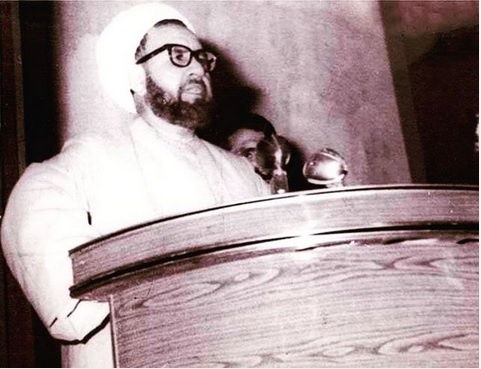
Martyr Morteza Motahari
In the meantime, Morteza Motahari’s criticism of “Two centuries of silence” is also part of the history of the controversy surrounding the book. But that criticism should also be read in its own intellectual and reasoning context. Disagreeing with one narrative alone does not make the opposite narrative the truth. Just as nationalism or religious affiliation do not take the place of document examination and historical reasoning. If we are going to judge about the past, we should ask both sides of the conflict: which claim is based on which source and how far is the distance between the witness and the conclusion?
Perhaps one of the difficulties of Zarinkoob’s work is that in some works, the voice of his writer and narrator is so strong that the voice of the researcher and the limits of the evidence behind it are less heard. This point does not mean negating the value of his works. By the way, one can praise him for his narrative power and at the same time question some of his conclusions. Respect for an author should not lead to his immunity from criticism; Just as the criticism of some historical judgments is not a license to ignore his intellectual and literary achievements.
From Beyhaqi to Zarinkoob, there is a long time gap, but the question still remains: to what extent can the historian separate himself from the subject of his narration? Is trustworthiness in reporting the news enough, or does the choice of news and how to link it with other news also place a moral and cognitive responsibility on the writer?

In many places, Beyhaqi presents the path of news to the reader. Zarinkoob often places the reader in the heart of a historical period with continuous prose and a comprehensive narrative. This difference should not be interpreted as the absolute superiority of one over the other; Each of them wrote in their time and with their intellectual and literary possibilities. But reading them together makes us realize two different sides of the historian’s work: responsibility for the news and responsibility for the image he creates of the past.
These questions are not limited to history books. Each of us makes a choice when we retell our past. Among the multitude of days, we remember moments; Some faces remain in the memory and some fade away. An event that did not have a clear meaning at the time of occurrence may find another meaning years later in the light of new experiences. Memory does not lie, but our view of it changes. What we understand today from the past is not always what we understood at the moment of occurrence.
Of course, this analogy does not mean to equate personal memory with historiography. History deals with documents and evidence that must be subjected to criticism and evaluation; But in both, there is the issue of choice and time interval and the meaning that is given to the event later.
Maybe that’s why re-reading a historical book after years can be a different experience. We don’t just re-read the author; We also put our questions before him. What seems obvious on first reading may require explanation on re-reading. Sometimes even a title that we have accepted immediately turns into a new question.
“Two Centuries of Silence” can also be such a book; An effective work that should be read and asked about. Not to offend the author, not out of loyalty to his reputation. You have to see the text in its own time, follow the author’s intellectual development, weigh his sources and arguments and ask yourself which part of the narrative is still stable and which part needs revision.
Historical truth does not end with a narrative. Each generation returns to the past with new questions and access to newer evidence and methods. This return, if accompanied by trust and accuracy, does not mean invalidating previous narratives; It is an opportunity to see what was previously out of sight.
Beyhaqi reminds us that the news should be weighed; Zarinkoob shows how the narrative can give life to the past and, at the same time, find a special form with the power of language and the author’s choices. A critical reading of these two brings us to a question that still has no final answer: what is the place of truth in the historical narrative and what responsibility does the author take on it?
Perhaps historical trust begins from this awareness: from knowing that what we have written is the result of our seeing and measuring; That our narrative, no matter how documented and honest, does not contain the whole past. The historian must narrate, but he has no right to hide the border between what he knows and what he infers from it.
And maybe every time we open a history book, before we ask what happened, we should stop for a moment in front of this question:
Who has narrated this past, from which point of view and what has been seen in his narration?
Notes on sources and historical accuracy:
In setting up the historical section, especially the history of the two editions of “Two Centuries of Silence”, changing the chapters and revising Zarinkoob, these sources have been used:
Morteza Arabzadeh Sarbanani, “History of two centuries of silence”.
Siavash Shohani, “Two interpretations of one civilization: rereading two works of Abdul Hossein Zarinkoub; Two centuries of silence and the record of Islam”, Journal of Islamic History and Civilization, 2008.
259



