





Sajjad Hosseini
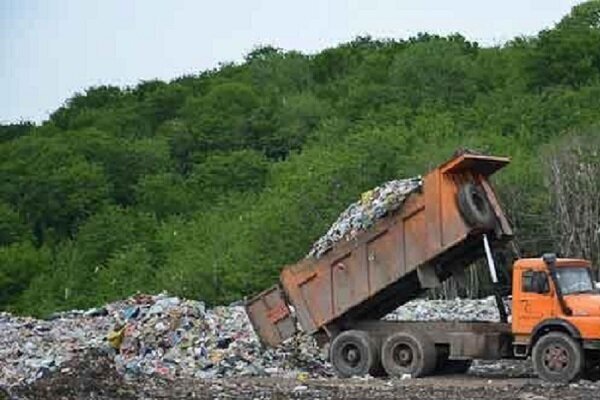
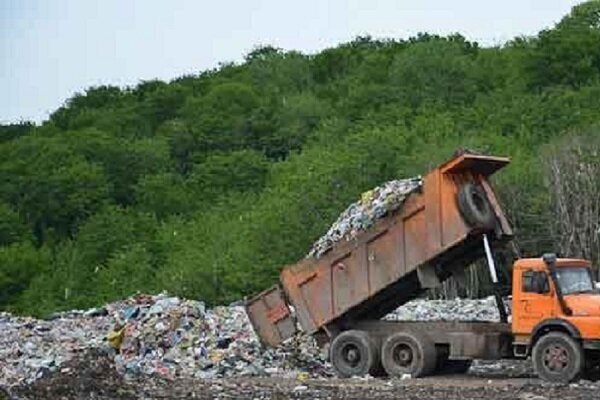
High-profile meetings, promised deadlines, half-finished projects, and promising reports come and go, but waste and leachate remain in the geography of people’s lives. The issue became critical since the waste depot of several cities, including Rasht in the Saravan region of Gilan, threatened the environment and forests. Many plans were proposed to prevent damage, one of them was to limit the space of the waste depot, which was said to be 90% successful, but the result was nothing! After that, the governor’s office proposed a plan to take the waste out of the province by train and move it to a dry area so that the toxic leachates have less impact on the environment. But these plans are still fruitless and a flood of sap flows in the forest.
From show to promise
In March 1400, Asadollah Abbasi, the then governor of Gilan, appeared at the Saravan site wearing a mask and held a meeting of the waste working group at the crisis site. After that, there were many talks about the progress of organizing Saravan and approaching the end of the crisis. But being in the landfill, even if it is accompanied by the seriousness and intention to solve the problem, is not an environmental achievement by itself. The progress of a construction project should not be left behind by solving the waste management crisis
got it wrong
Now, Hadi Haqshanas, the governor of Gilan, is talking about solving the waste crisis by transporting waste by rail outside the province. These statements, regardless of the implementation possibility, still do not give a clear answer to the main question: what program is going to change the flow of production, processing, disposal and pollution of waste in a sustainable way? Despite the announced promises, what is needed to evaluate the performance of the provincial administration is an integrated program with quantitative goals, clear timing and public indicators for measuring the results, not repeating the promise of ending the crisis.
90% progress without solving the problem!
In July 1403, in a media interview about the organization of Saravan to limit the polluted area, a point was emphasized that is still decisive for evaluating the performance of the province today: the number of 90% of the physical progress of the improvement project could be correct, but this number does not mean solving the waste crisis. If there is no sustainable solution for the incoming waste, actual processing capacity and leachate management, even the heavy spending on organizing the landfill may lose an important part of its effect as the waste continues to enter.
This distinction is not a verbal difference or a game with percentages; The difference between delivering a project and solving a public problem. It is possible that the soil and plant cover of an area will improve, but if the leachate is not properly collected and treated, the residual waste is not determined, and the daily input continues, the crisis will only change its form and location. In environmental management, what is important is not the end of the project; It is a result that can be measured in water, soil, air and people’s lives.
The train does not manage garbage
Transporting waste by rail is not inherently a wrong solution. In certain circumstances, rail transport can be logistically advantageous, but the train is a means of transport, not a processing plant and not a guarantee of safe disposal. The final destination, actual capacity of the facility, full cost of handling and processing, environmental requirements, long-term liability and fate of the remaining waste should be clear before making a decision. Most importantly, it needs to be determined how much the transfer actually reduces final landfill and whether the cost is justified compared to other options.
If the answers to these questions are not clear, rail transportation may move the crisis from one point to another instead of solving it; With the difference that this time the shipping cost has also been added to the general bill. Closing Saravan is not the end of the crisis if it only means stopping the entry of garbage into that place. The end of the crisis means when the fate of incoming waste, available leachate and the daily flow of waste production, all three have been determined.
The same logic applies to small-scale garbage incinerators, known as “rural reject incinerators” or its correct name, “carcass incinerators”. The main question is not the opposition to technology, but the necessity of standard measurement, control of pollutants and compatibility of technology with the composition of waste. The name of technology is not a substitute for technical evaluation. Without separation from the origin, recognition of input feed, reliable monitoring of pollutants and determination of the safe assignment of ash and combustion residue, we may replace the issue of leachate with new risks for air and environmental health.
waste economy; A ring that cannot be corrected
The root of the continuation of the crisis is waste management from the end of the chain. When the majority of costs are spent on collection, transport and disposal, but production reduction, reuse, real separation from the source and effective processing do not have a proportional share in the priorities, the system practically remains dependent on the continued production and transfer of waste. A factory with a high nominal capacity is not a solution if it does not have suitable feed, stable operation and acceptable output. Separation from the origin is also an activity rather than a structural modification if it does not lead to verifiable data about the reduction of mixed waste.
It is advertising.
Waste is a continuous chain: production reduction, reuse, separation, recycling, organic waste processing, energy recovery in appropriate technical conditions and finally sanitary disposal of the residue. Weakness in each link transfers cost and pressure to the next link. In Gilan, the consequence of this weakness is not only limited to burial sites; Water resources, soil, Hyrkani forests and Anzali lagoon are also exposed to risks due to improper waste management.
Change the management rail
It has been about 15 years that the appointment of Saravan has been on the agenda of various managers. During this time, various credits and projects have been defined and various promises have been made about the end of the crisis. However, the persistence of the problem shows that the evaluation of success should not be limited to the report of the executive body or the percentage of progress of a project. The gap between the administrative report and the reality on the ground is where public trust is eroded.
Mr. Haqshanas should also know that if his management period is not to repeat the experience of his predecessors, he should create an independent and public system to monitor the performance of waste in the province instead of competing to announce the closing time of Saravan. This system should publish at least five indicators with a clear baseline and verifiable data: the actual amount of waste generation and collection; Share of separation from origin and demonstrable recycling; actual input and output of processing centers; The amount of waste sent to the landfill and the monitoring and treatment status of the leachate; Total cost of managing each ton of waste.
This information should allow month-to-month comparison and independent evaluation. People and specialized institutions should be able to understand how much waste is actually removed from the landfill cycle, how much leachate is managed and what results each unit of public expenditure has brought.
The measure of the success of the provincial administration in this field is not the number of meetings, news headlines, or covering a garbage heap; Rather, it is the measurable reduction of landfill waste, pollution control and sustainable management chain improvement.
Saravan turns from an advertising case into a successful management experience when we no longer need to refer to the percentage of progress and future promises to prove its success; Clear data about pollution reduction and environmental improvement should speak for themselves. Gilan’s garbage crisis is not solved by moving garbage; It will be solved by changing the way of governance.




