



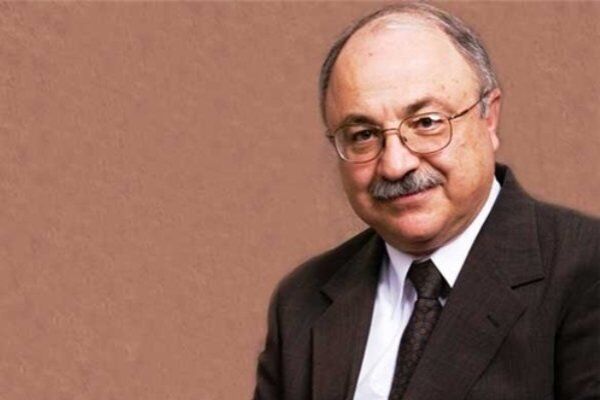


Nader Entisar said: After these elections and in the next two to three months, we will enter one of the most dangerous periods of Iran-US relations. In this period, it is not possible to make any scientific and definitive comments about future developments.
Hadith Roshni- The result of the congressional mid-term elections has made Donald Trump’s position face a serious challenge in the second half of his presidential term. The defeat of the Republicans and the possibility of the Congress being taken over by the Democrats have changed the political atmosphere in Washington and can make it more difficult to advance the government’s domestic and foreign programs. The increase in the cost of living, trade tariffs, dissatisfaction with the performance of the government and the Iran war have been among the issues that have been raised in election evaluations as factors affecting the defeat of the Republicans. The war that Trump promised not to involve the US in, along with the increase in energy prices and economic pressures, has become one of the axes of voter dissatisfaction.
According to Etamad, Trump himself admitted that the war played a role in the defeat of his party. However, some analysts believe that with the Congress being taken over by the Democrats, the possibility of advancing the government’s internal plans will be limited and even the foreign policy budget and Iran’s war can become a source of controversy. On the other hand, the differences within the administration and the Congress about the war strategy, the pressures on Pete Hegst, the Secretary of Defense and the attempt to impeach him, are signs of the more complicated political environment in Washington. In the meantime, Trump is facing a government that, in order to continue its policies, has to pay the price of bargaining with Congress more than before.
The shadow of field developments on the path of diplomacy
The narrowing of Trump’s domestic position has raised questions about the future direction of American foreign policy. In such a situation, the Iran case is still one of the most important issues that can affect Washington’s relations with regional actors. At the same time, the diplomatic movements of Iran and the consultations of the regional countries show that despite the continuation of tensions, the dialogue channels are still active. Kazem Jalali, our country’s ambassador in Moscow, announced the three-hour meeting of Mohsen Rezaei, the secretary of the Supreme National Security Council, with Russian President Vladimir Putin. Jalali also explained Iran’s positions regarding America’s bad faith and the impossibility of direct negotiations without receiving the necessary guarantees. In this meeting, the issue of the Strait of Hormuz and what Iran considers to be a violation of the transit agreement with Oman was also raised. In any case, these consultations were held in a situation where Tehran insists on the necessity of obtaining guarantees before any negotiation and links the experience of previous rounds of talks, from Amman to Geneva and Islamabad, with bad faith and simultaneous attacks by the other side. At the regional level, there are different positions on how to deal with Iran. Abdul Khaliq Abdullah, a former Emirati adviser, has listed five paths for the interaction of the Persian Gulf countries with Tehran: dialogue with the mediation of Qatar, establishing direct communication between the Arab capitals and Tehran, applying economic pressure and sanctions, abandoning the option of war and maintaining deterrence, and receiving guarantees about Iran’s respect for the sovereignty of the Arab countries. According to some observers, these proposals show that among the countries of the region, in addition to security concerns, there is also a desire to find ways to manage tension.
The meaning of American military formation
However, developments in the field still cast a shadow on the diplomatic atmosphere. The US Central Command claimed to have disabled a St. Kitts-flagged cargo ship that was trying to cross Iran’s naval blockade in the Oman Sea on November 7. On the other hand, there have been reports of Ansarullah attacking targets in Saudi Arabia, including the King Abdullah Financial District in Riyadh and an office building belonging to Aramco. All of these developments show that political changes in Israel and America, along with diplomatic movements and tensions in the field, can affect the future equations of the region. However, the main question is whether Trump’s political limitations after the defeat of his party in the congressional mid-term elections and the difficulties of building a coalition in Israel and the end of Netanyahu’s prime ministership provide the ground for a review of regional approaches, or whether military and security pressures will continue to prevail over the path of diplomacy in the Iran case; This is a question that Etemad newspaper interviewed Nader Entisar, a distinguished and retired professor of the University of South Alabama. Nader Antasader, a distinguished and retired professor of the University of South Alabama, in response to the first question of “trust” regarding the variables affecting the results of the mid-term congressional elections and the reason for the historic defeat of the Republicans, said: the most important factors that caused the hard defeat of the Republican Party were the domestic issues and issues of the United States, not foreign factors. Although there has been a lot of talk about Iran, the impact of the Iran war on the elections was not due to the events that happened outside of the United States, nor because of the developments in the Persian Gulf countries, but the effects of this war on the internal economy of the United States played a relatively important role in the election results and affected the daily lives of the American people. For example, the prices of basic goods, food, housing, electricity, water and gasoline have increased regularly and are still increasing. In this sense, the Iran war has been effective. This analyst of Middle East issues went on to tell “Etemad”: However, some people think that Iran was able to force Trump’s ruling party to defeat with this war; While this perception is not correct. It is true that about 75% of the American people were against this war, but this opposition does not mean that 75% of the American people are in favor of Iran, but this majority is looking for their own welfare. In the continuation of his conversation with “Etamad”, Intisar noted: Of course, other political issues also played a role in this failure. The semi-fascist approach taken by the Trump administration was not acceptable to many Americans. American political institutions were formed over 250 years and invested to establish and stabilize them, but Trump wanted to manage them in a way that would serve him and his family, as if these institutions were his personal property. This issue was generally not acceptable to many Americans, so American civil society also had a great impact on the results of the election congress.
Intensification of competition for the future of Republicans
Further, in relation to the speculations about the deepening of the gaps among the members of Trump’s cabinet and the possibility of its collapse, Intisar told “Trust”: Note that these gaps existed before, but the election results caused them to deepen. For example, both “Marco Rubio” and “JD Vance” are among the figures who definitely have a plan for the 2028 presidential election and do not want to be in a position where their chances of winning in that election will decrease. Of course, there are more than two years left until the presidential election, and other people may come forward in the meantime, but in any case, there have been cracks within the power structure and Trump’s cabinet that have deepened now. According to this analyst of international issues, as we saw in Trump’s dismissal of “Susie Wiles”, the head of the White House office. “Susie Wiles” was one of the most important figures close to Trump and one of the influential people in this series, who had a lot of challenges with Trump due to his frankness.
Trump has become more unpredictable
In response to another question from “Trust” about Washington’s possible approach to Iran between the end of the election and the formation of the new Congress, Intisar said: After the election, we are facing a person who is politically damaged and intellectually unconventional. This trauma, both psychologically and politically, can affect his future performance, so his future behavior cannot really be predicted. According to Intisar, there are two possibilities; Both the possibility of war may decrease, and the situation may lead to the escalation of conflict. Therefore, one has to wait for both possible scenarios. In any case, the more important thing is that Iran cannot adjust its policy based on the prediction of Trump’s reaction, because the determination of the country’s policies should never be tied to the prediction of Trump’s reaction. Iran should formulate its independent policy considering both possibilities; It means to always be prepared that America may increase the level of war at any moment or not to do so. Both possibilities exist. It is important that Tehran does not make a strategic mistake and does not fall into the trap of Trump’s unpredictable personality.
From the instability of the coalition to the continuation of the war
This professor of the University of South Alabama continued and in relation to his assessment of the results of the Israeli parliamentary elections and the order to form a cabinet by Netanyahu’s rival, told “Etamad” that although Netanyahu’s bloc could not win an absolute majority of seats in the Israeli parliament, it won more votes than its rival. On the other hand, his rival “Eisenkot” can also form a cabinet if he succeeds in attracting the support of a sufficient number of opponents. According to Intisar, however, in Israel, the cabinets that do not have enough cohesion and depend on the support of the opposition to form and maintain themselves, usually do not have much stability, so even if we assume that Netanyahu’s opponent can attract the necessary support, obtain the required majority and form his cabinet, we still cannot count on its durability and stability, because the stability of the cabinets in many countries, especially in Israel, is an issue that should not be neglected. became This trend may be able to form the cabinet, but it may lose the same cabinet a month later and collapse, so Israel, like America, has entered a period where it is difficult to predict political developments. It is not yet clear how long the new cabinet will last and what approach it will take. This analyst of regional issues further pointed to Israel’s possible strategy towards Iran in the post-election environment and reminded: Israel’s strategy towards Iran is also not clear. It takes time for the new cabinet to come into office and take over the power from the current cabinet. Even if Netanyahu is not in power, it is impossible to predict what approach Israel will adopt towards Iran; Does it continue Netanyahu’s policies or does it make some interruptions and changes in these policies? The war between Tehran and Tel Aviv may continue, although its intensity will not necessarily increase. In any case, there are different scenarios about Israel’s possible approach towards Iran. According to this university professor, the important point is that Netanyahu’s influence and thinking are not limited to him. In recent years, he has created a very wide influence among different strata of Israeli society. Therefore, the war against Iran is not an issue that has many opponents among the people of Israel. Unlike America, where about 75% of people are against the war, in Israel, the majority of people support the war against Iran. In such a situation, the prime minister who takes office cannot go against the views and attitudes of a large part of the Israeli society and suddenly make a 180-degree turn in his policies. These are different scenarios that should be analyzed and analyzed individually, but I believe it is not possible to say with certainty which of these scenarios will be realized. The fact is that such predictions are not only difficult, but also not very useful for Iran’s policy making.
Two fateful months in the relations between Tehran and Washington
In the future, regarding the future of tensions between Tehran and Washington, Entisar told “Etimad” that there are various scenarios regarding the possible approach of America in the case of Iran. From the continuation of economic pressure and its escalation to a wider military invasion and even a nuclear attack. Of course, this does not mean a full-scale nuclear attack, like the Hiroshima and Nagasaki attacks, but the use of tactical nuclear weapons. This issue has not only been discussed in America’s plans for a long time, but now it is also being discussed publicly and it is no longer an issue that remains in silence and behind the scenes. According to this university professor, one of the most dangerous aspects of the current situation is that we are now facing a politically defeated and damaged president whose behavior is somewhat unpredictable. The question is whether Congress can stop him. I don’t imagine. If Congress wants to stop the continuation of the war, it has a relatively simple solution and that is to cut off the war budget. However, there has been no indication so far that Congress, even a Congress with a Democratic majority, intends to reduce the US military budget in connection with the war against Iran, so until such time there is no such indication, we should not count on what action Congress will take or whether it will block Trump’s decisions. According to this analyst of international issues, power in America has been largely personalized and institutions have been weakened. We are dealing with a person who has become a semi-dictator ruler, politically damaged and in a situation where he may make a different decision every day. He may take the most dangerous actions or he may remain involved in his political situation and injuries and not actually take any specific action. Both possibilities exist. In the final part of this conversation, Entisar stressed: The important point is that after these elections and in the next two to three months, we will enter one of the most dangerous periods of Iran-US relations. In this period, it is not possible to make any scientific and definitive comments about the future developments. In fact, the next two months to two and a half months will be one of the most dangerous periods in Iran-US relations.