



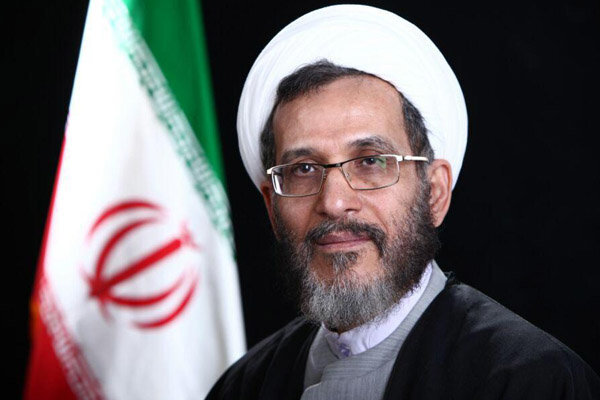



According to Khabaronline news agency, Hojjatul Islam Ahmad MazniThe Chairman of the Cultural Commission of the 10th Parliament, while evaluating the efforts of some delegations to enact new laws in the field of the Internet in the form of a plan to systematize cyber space, said: the behavior of new phenomena, especially in the field of technology, whether the technologies that are specifically related to the field of culture and cultural issues, or the technologies that are used in various specialized fields, should be examined in a more far-sighted, deeper and scientific way. The experience of the past years, both the procedures that existed before the revolution and especially after the revolution when the system was a religious system and some decisions were made in the Islamic Republic system that were later seriously criticized, shows that we should be more careful in this field. For example, when the speaker was invented, in some Islamic countries, including Iran, many people distanced themselves from it and mentioned it in bad terms; For example, they called it the devil’s tool and used such interpretations.
According to Jamaran, he added: After the victory of the Islamic Revolution, due to the same historical fear of new phenomena, videos were dealt with and videos were collected; While at the same time useful and positive uses were made of this device. Years later, measures were also taken regarding satellite networks. In the 10th term, when I was the Cultural Commission of the Majlis, I investigated where this story of dealing with satellite networks and collecting satellites originates. We saw that a plan was prepared by some respected representatives in one session and given to the Majlis Research Center. The research center also consulted with experts and opposed this plan. We followed up on the issue of the satellite plan and found that the professor of communication, Dr. Mohsenian-Rad, apparently has opinions and experiences in this regard. We went to his house and asked about his opinion on this matter. He immediately brought a collection that looked like books, dissertations and research reports and put it on the table and said: “This is a report that I had prepared about the plan to ban the use of satellite networks in Iran.”
Mazni also clarified: We did a brief review and we saw that he had predicted at that time, before approving this plan, that you could enact a law, but in practice what happens is that people use these facilities, and then you come to the conclusion that it was basically an irrelevant matter that you prohibited their use and sent officers to collect them. However, we saw that despite the opposition of experts at this level, they pushed forward and approved the plan to ban the use of satellites. For a long time, the problem of the system, our law enforcement agencies and the people, or a part of the people, was that the agents went to the houses, went to the roofs and collected the satellite dishes. This matter has a story in itself.
He continued: The same approach has been taken in the case of virtual space and the Internet, and they may want to do the same with artificial intelligence. The fact is that the knowledge and technology that is invented anywhere in the world and enters the country, which must first be accepted; But we should not surrender to the culture of different countries that produce these technologies. We should not surrender to their culture and social views. We should welcome and use these capacities and possibilities based on our own culture, our own beliefs and our own issues. If we create a limitation, the public opinion must accept that limitation. The problem I have about cyberspace is the relationship between cyberspace and the broadcasting organization. On the one hand, in our country, according to the constitution, we have a radio and television and a national media, which is under the authority of the government and has a large number of different radio and television channels and has all these audio and video facilities. But if we add all this together, we see that different networks convey the same topic with the same content and with a specific team of people and a single voice that rules in the country, and in a way, a single voice rules.
Mazni stated: Even if we believe that 100% of the radio and television news is accurate, correct, timely and up-to-date, its analyzes are correct, and the people who are invited cover the positions of all strata, all classes, all classes, and all political currents, but in the real world, the mentality that has been created in society now is the mentality of doubt about this issue. In addition, we have proofs and proofs that the radio and television organization is not neutral. The Broadcasting Organization sometimes leaves the field of honesty, only a specific stream uses it, and its analyzes are one-dimensional and do not cover the entire society. When you do not allow people to have their own radio and television channels and you say that this is what it is; On the other hand, you filter the virtual space and say that no one has the right to use the Internet and virtual space in this way. Networks for which billions of dollars are spent to direct the minds of Iranian society and public opinion towards Iran’s ill-wishers.
The former head of the Cultural Commission of the Islamic Council added: This is an issue that needs to be thought about. That is, on the one hand, by using the same constitution that I have stated many times, permission to establish radio and television networks, both in the field of production and broadcasting, should be given to seminaries, universities, sports institutions, clubs, artists in various fields of music, cinema, theater and other fields, as well as researchers and experts to create networks. They can even get permission from the radio station and express their opinions. Political parties can also express their positions and views. If there is a violation, like the newspapers, if they have a problem, they will be warned and the jury will examine the matter, audio and video media should also operate in the same way and in a comprehensive and nationwide manner, in the same size and framework as the radio and television, and the radio and television organization itself will take on more of a supervisory role and trade union. If this is done, then people will believe that those who seek to close some virtual networks are well-wishers and want people to use the right news.
Mazni also clarified: When you close all the ways for people to access the news they want, it is clear that it does not work. That is, if on the one hand there are such restrictions and the look is the look of filtering and on the other hand you do not open the ways of legal use for the people, then in my opinion this issue will suffer the same fate as satellite and video and similar things. On the other hand, there is the issue of filtering and filtering. Someone come to answer this matter; This case is similar to fuel smuggling. From the president of the country to the officials, everyone says that fuel is smuggled, but it is not clear who the smuggler is, who deals with him and why he is not dealt with. It is the same here. You filter on the one hand and on the other hand the filter breaker is sold and income is obtained in this way. Free filter breakers are provided to our youth and children through foreign services.
He stated that the effects and losses of these restrictions are much greater than the effects and losses of open space. If we consider security as freedom of thought, freedom of dialogue, interaction and communication and the use of these technologies, of course, within the legal framework that all countries have laws to control, manage and limit this space, we can achieve this goal. But if the view is only limited, it will not work and even harms the public trust and destroys people’s hope to improve things.
Mazni, in response to the example you mentioned about the satellite and your own experience in the 10th parliament, do you think the plan to systematize cyber space will suffer the fate of the protection plan? He continued: The protection plan was also brought up during the period when I was in the parliament, friends spent a lot of time working on it, but this bipolarity governing all levels of society, from the level of legislators to different people of society, and seeing the issue as a black and white bipolarity, caused many of these issues to fail. Even now, there is a group called the Supreme Council of Cyber Space, whose members elect and appoint the Supreme Leader, and whose head is the president. Some of the members are also legal members, this organization exists. Mr. President has appointed a group under the supervision of Mr. Aref, which is supposed to supervise and guide this matter. Now, in the new plan of the parliament, what action do they want to take so that it does not suffer the same fate as the protection plan and the law does not lose its validity and sanctity.
He added: That is, when the law is not established based on the needs of the people and with the justification of public opinion, and it is based solely on the fact that we consider the people to be immature and we consider the people to be at a level where they may be abused and we close all the ways to them, it will not have a favorable result. While the Iranian society has shown that in certain situations, even though all the capacities of our enemies and ill-wishers are used for mind engineering, they stand by the Iranian flag and their religious and national values in historical decisions. I don’t deny these effects, but at the same time I want to say that we need to assume people are smart and think and produce useful fodder for society and provide them with the possibility of comparison. The same protection plan was one such thing, which in my opinion did not come to fruition either.
Virtual space does not need a plan
Mazni pointed out: In the 10th parliament, I told one of my colleagues in the cultural commission that it is a disgrace to the system that there is a law in the country and people do not follow this law, so we should not even think of entering the satellite law and canceling it altogether. Our fellow brother said what is the need? People are doing their own work now; It is better not to interfere. But the style of running the country, in my opinion, is not the right style for us to deal with important issues like this. In the current environment, the first place that should address this issue is radio and television. In different networks, experts and elites from different spectrums, youth and generation Z, people who mostly deal with this space, can freely talk, discuss and express opposing opinions. Maybe the summary of their opinion for our public opinion is what they are looking for.
In the end, he reminded: But now people are treated in a way that they are not mahram and we have to hand over thinking to them by force. If we assume that they have good intentions and, God willing, it is out of benevolence and there are no political, gang, factional, or financial interests behind it, assuming that it is also a question of benevolence, I think that the kind of imposed view, no matter how important the issue is and no matter how important any value is, creates a conflict between freedom and justice, and in such cases it is justice that suffers and loses freedom. We must turn this balance, this conflict into balance; That is, we should provide a platform for people to talk about the Internet, virtual space, artificial intelligence, satellite issues and issues like that. These discussions never disturb national security. Of course, if Sha’am determines that a discussion should not be raised in certain circumstances and a limit is created, everyone will accept; But keeping the space completely closed and trying to induce a thought, I don’t think it will work. Dear representatives, it is better to spend their time preparing and approving the law on the administration and supervision of radio and television, which has not had a law for radio and television for 35 years. Where they need to act and step, they don’t step there. Cyberspace does not need such a plan, and if they are going to do something, there is the Supreme Council of Cyberspace, the Supreme Council of Cultural Revolution, and they can manage these issues with the guidance of the leadership.
31216




