





According to the online news agency, the Guardian newspaper, Jens Skelund, the head of the European Union Chamber of Commerce in China, believes that European companies are at a turning point and should reconsider their way of being in the Chinese market and competing with the manufacturers of this country.
He says that European companies have gradually come to the conclusion that instead of manufacturing in China just for the Chinese market, they should use the country’s production capacity and supply chain to export to global markets.
Europe’s trade deficit with China reached 18.1 billion euros per day
One of the signs of the worsening trade imbalance between Europe and China is the increase in the EU’s trade deficit with this country.
According to the Guardian report, the trade deficit of the European Union against China has reached a daily record of 1 billion pounds, equivalent to about 1.18 billion euros. Meanwhile, some European governments have adopted a stricter approach against the import of Chinese goods, and the discussion of supporting domestic producers and increasing trade restrictions has intensified.
Referring to a report from the investment bank Goldman Sachs, Sklund says that China’s exports can reduce the EU’s gross domestic product by 0.5% by the end of this decade. The estimate of this report for Germany is a possible decrease of 0.9 percent of GDP. He has warned that countries will reconsider the continuation of these trade relations if trade ends up at the expense of one side instead of creating value for both sides.
German automobile industry under the pressure of Chinese competition
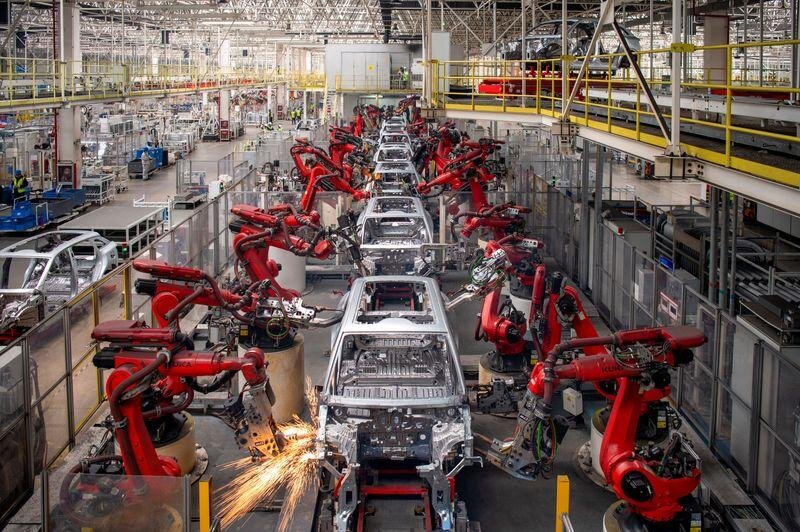
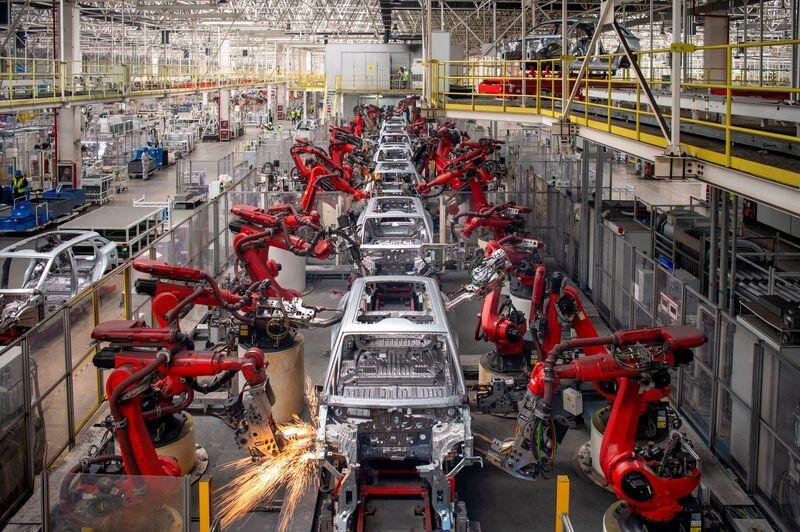
One of the sectors that clearly feels the pressure of China’s competition is the German automobile industry.
On the one hand, German manufacturers are facing the reduction of profit from the Chinese market and on the other hand, the price competition of Chinese companies in the European domestic market. According to the Guardian report, BMW has announced that the company’s sales in China have decreased by 22% in the first nine months of this year. This company has also warned of profit reduction for the second time this year. Chinese companies BYD, Geely and Saik Motor are among the competitors of European car manufacturers in the market of this continent. Sklund believes that China’s competition is no longer limited to one or two industries, and in almost all industrial sectors, Chinese companies have become serious competitors of European manufacturers.
How has China strengthened its industrial position?
According to the head of the European Union Chamber of Commerce in China, Beijing’s industrial policy in the last three five-year plans has been to reduce dependence on imports and strengthen domestic production capacity.
In its new five-year plan for 2026-2030, China has also focused on the development of advanced technologies and industrial self-sufficiency. Areas such as artificial intelligence, quantum computing, robotics, green technologies, biotechnology and sixth generation communications are among the priorities of this program. Sklund says that when Beijing decides to develop an industry, tax support, incentives and subsidies flow through different levels of government; An issue that allows Chinese companies to increase their production capacity more quickly.
What is Europe’s solution?
The head of the European Union Chamber of Commerce in China believes that raising tariffs and restricting imports alone cannot solve the problem of competitiveness of European industries.
According to him, instead of trying to compete directly with all the industrial sectors of China, European companies should become a part of the country’s supply chain in some areas.
This approach means the cooperation of European companies with Chinese partners and the joint production of goods that can be offered in global markets.
He has described this change of approach as the transition from the “production in China for the Chinese market” model to the “production in China for the world” model.