



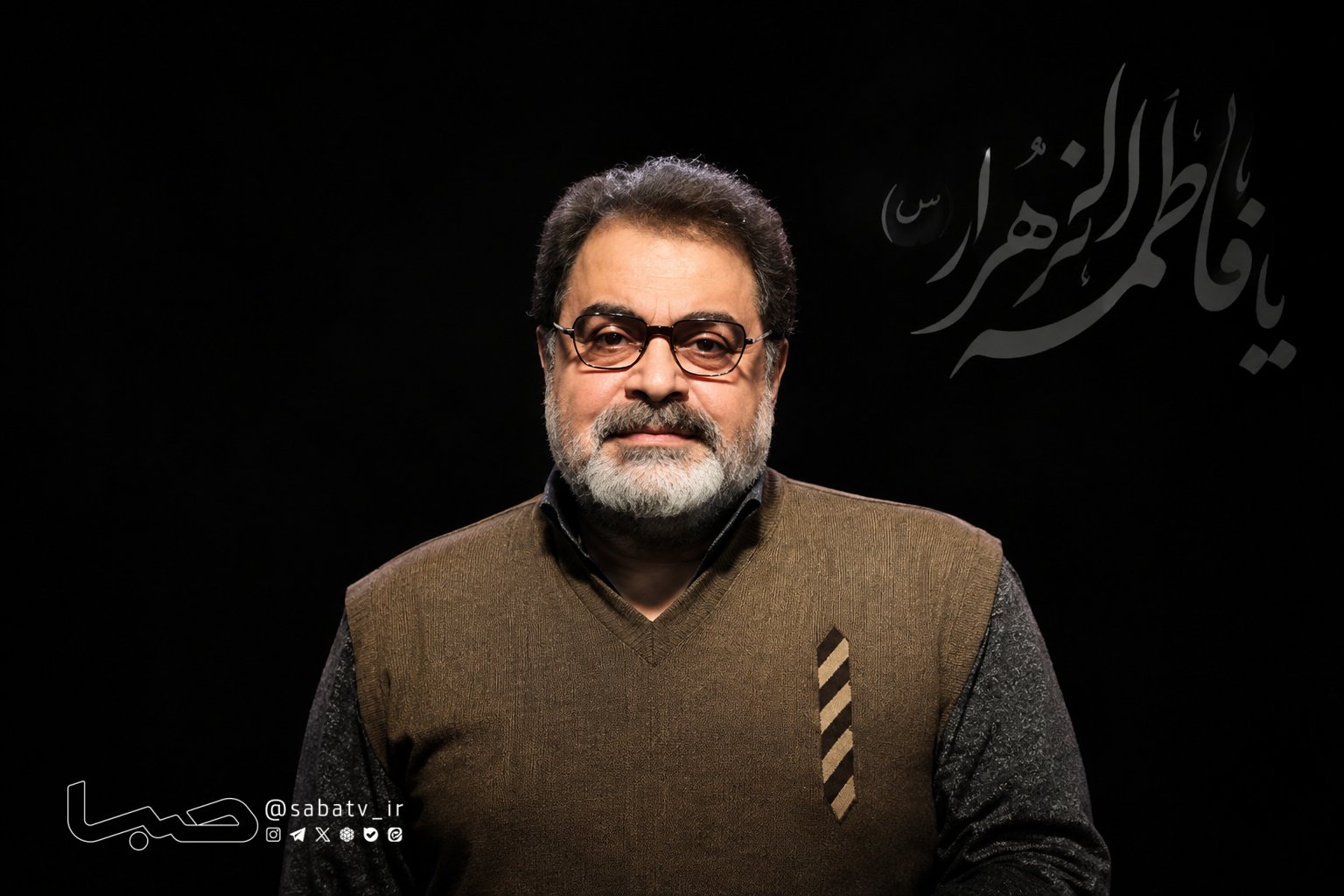


In an interview with Saba, cinema director Ali Royinton, criticizing the lack of attention paid by Iranian cinema to the life of Hazrat Fatima Zahra (pbuh), believes that this historical and religious figure has endless capacities to create cinematic narratives. A capacity that, according to him, has been neglected due to the lack of serious concern among cultural and artistic directors for the production of religious works, rather than facing cinematic limitations.

Nasser Arbab/Saba, The life of Hazrat Fatemeh Zahra (pbuh) is one of the least used capacities in Iranian cinema; A character whose various dimensions of personal, family, social and historical life can be the basis of various cinematic narratives. However, Iranian cinema still faces a gap in presenting an important and lasting work about the life of this great lady of Islam; A topic that, on the occasion of the martyrdom of Hazrat Zahra (pbuh), once again raises the need to review the capacities of religious cinema and examine the reasons for the lack of attention to this field. Making films about holy figures has always been accompanied by historical, religious and artistic considerations; But can these considerations alone explain the absence of such works in Iranian cinema? Does the life of Hazrat Zahra (pbuh) not have enough capacities to form a cinematic narrative, or should the issue be sought elsewhere?
Ali Royinton, Cinema director, in an interview with Sabaemphasizing that the main problem should not be found in cinema’s inability to deal with such issues, considered the lack of serious concern among cultural managers as one of the obstacles to the production of religious works.
Are our managers really concerned about filmmaking and religious culture?
He said: “The problem is not that Iranian cinema does not have the ability to make such works. Religious beliefs, religious values and issues of resistance survive in the form of art when people really believe and care about them. Anyone, according to his purity, belief and ability, can gather several people together, pay for a work and take a step in keeping religious concepts alive; But the issue here is whether our directors are really concerned about filmmaking and religious culture? In my opinion, this concern does not exist among cultural and cinema managers as it should.”
We should not be limited to one angle or one historical moment
This movie director further described the dramatic capacities of the life of Hazrat Zahra (PBUH) as very broad and believes that one should not limit oneself to a single point of view or a historical moment for a cinematic narration of this character. Referring to the family relations and position of Hazrat Zahra (S), he said: “Zahra (S) is a character with infinite capacities for cinematic narration. You look at his mother, you can make a movie from that angle; Look at his daughter, there is still the capacity of a film; Look at his father and his wife, each of these relations and links can be the basis for the formation of a cinematic narrative.”

Hazrat Zahra (pbuh)’s absence is a very big sign for us
Referring to some less discussed aspects of the life of Hazrat Zahra (pbuh), Royinton continued: “Even this lack of address of Hazrat Zahra (pbuh) is a very big and ponderable sign, and this issue alone has the capacity to be dramatic and cinematic. His life and personality are so broad that it can be addressed from different dimensions and different narratives can be created.”
At the same time, he criticized the lack of sufficient will and motivation to enter this field and added: “In my opinion, in the current situation, neither the officials have the necessary concern nor the artists are looking to seriously enter this field as they should; While the capacity for such work is completely there.
After Hazrat Maryam (pbuh), Hazrat Zahra (pbuh) is one of the most fascinating historical figures in the world
Another part of this conversation was dedicated to how to narrate the character of Hazrat Zahra (pbuh) for the contemporary audience and especially the Z generation; A generation for which communication with historical and religious concepts requires knowledge of today’s language and communication requirements. In this context, Royinten considered it necessary to introduce the human and social aspects of the character of Hazrat Zahra (pbuh) and said: “First, we must introduce this character to today’s generation.” In my opinion, after Hazrat Maryam (S), Hazrat Zahra (S) is one of the most attractive historical figures in the world, and her personality capacity is not limited to a specific geography or society.
This director emphasized on the global capabilities of the character of Hazrat Zahra (pbuh) and continued: “Hazrat Zahra (pbuh) can be introduced in different global, social and human dimensions. He is a character whose life can be looked at from various angles and his human and social characteristics can be depicted.”
The position and freedom of women in Islam and the life of Hazrat Zahra (pbuh)
In the end, Royinton considered the position of women in Islam as one of the important issues for the cinematic narration of Hazrat Zahra’s life and noted: “One of the important issues that can be addressed in this context is the position and freedom of women in Islam. When we look at the character and life of Hazrat Zahra (pbuh), we come across many capacities to discuss this issue. This issue alone can be the basis of an attractive and relatable cinematic narrative with today’s audience. We must be able to introduce the personality of Hazrat Zahra (PBUH) in such a way that today’s audience, especially the young generation, can relate to her human and social dimensions; A narrative that can even go beyond geographical and cultural boundaries and have a global audience.”
Royinton’s words once again put the question before the Iranian cinema that despite the historical, human and dramatic capacities of the character of Hazrat Zahra (pbuh), why has not the ground for the formation of an important film about her life been provided yet? A question whose answer, in addition to the will of cultural managers, also depends on the creative view of filmmakers and overcoming stereotyped narratives in religious cinema.