



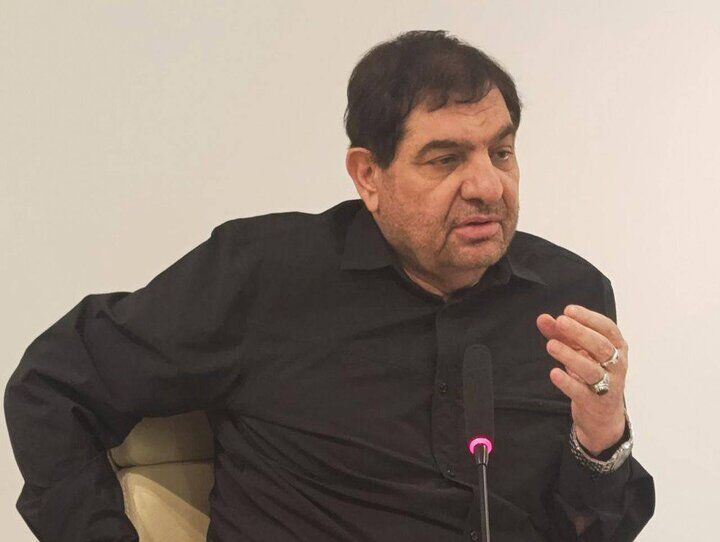


Mohammad Mokhbar, advisor and assistant to the Supreme Leader, in a meeting with a group of young middle managers in the field of economy and energy of the public and private sector, which was held this evening (Wednesday), pointed out that one of the main problems of the country is “cutting the middle link”, and stated: the middle management links have not been formed as they should be, and this problem causes the strategies of the system and leadership to not reach the people in the implementation phase. They should count the issues and problems, receive the strategies and convey them to the people and achieve results with collective support.
Stating that the elites should provide a model of cohesion and cooperation, he suggested that a secretariat should be formed from the present crowd and specialized working groups should be formed in various industries and services to establish effective communication between the system, the people and the private sector. In this way, the government can play the role of facilitator and continuous meetings will be held to follow up the work.
Referring to the experience of the 12-day war, the member of the Expediency Recognition Council said: Before this war, the enemy organized 600 knowledge-based companies, and a large part of the damage caused was the product of the planning of these companies. On the other hand, after the start of the war, hundreds of elite youth forces became active and did things. It was the power of our technological youth that, by the order of the Martyr of the Revolution leader, immediately after the attack on the country, the enemy tasted the regional war, and relying on the knowledge and power of these technological youth, by the order of the Supreme Leader of the enemy, in the event of another attack, the country will also touch the offensive strategy of the country.
Emphasizing that the country’s successes in crises have always been achieved by relying on the people, the advisor and assistant of the Supreme Leader stated: The Islamic Revolution won with the presence of the people, and in various crises, issues have been resolved with the power of the people and Basij.
Emphasizing the necessity of transferring economic governance to the people, he said: Until this transfer is done, economic problems will not be solved. The policies of principle 44 and resistance economy have also been proposed for this economic shift from the government to the people. Today, technology has made governance deeply effective, and the concept of platform government and e-government is also the same.
A member of the Expediency Discernment Council stated: If we do not expand domestic platforms, many opportunities will be lost. In some countries, up to 70% of the economy has been digitalized, and this field is the main scene of elite activity. In this model, the government becomes a standard setter and regulator, and management is taken from it.
The informant called the disputes over water, electricity, gasoline, gas, budget and banks as “places of wealth creation” and said: These disputes are where the elites can solve the country’s problems and create wealth. The biggest advantage of the country is the young and elite force, and if the problem, elite and investors are connected, all problems will be solved.
At the end, the adviser and assistant of the Supreme Leader emphasized the necessity of forming working groups and registering specialized companies by elites, saying: you should not be afraid of entering the economic and technological fields; It is necessary to plan and create and develop up-to-date platforms in a short period of time. He announced his readiness to hold continuous meetings and follow up on the implementation of these proposals.




