



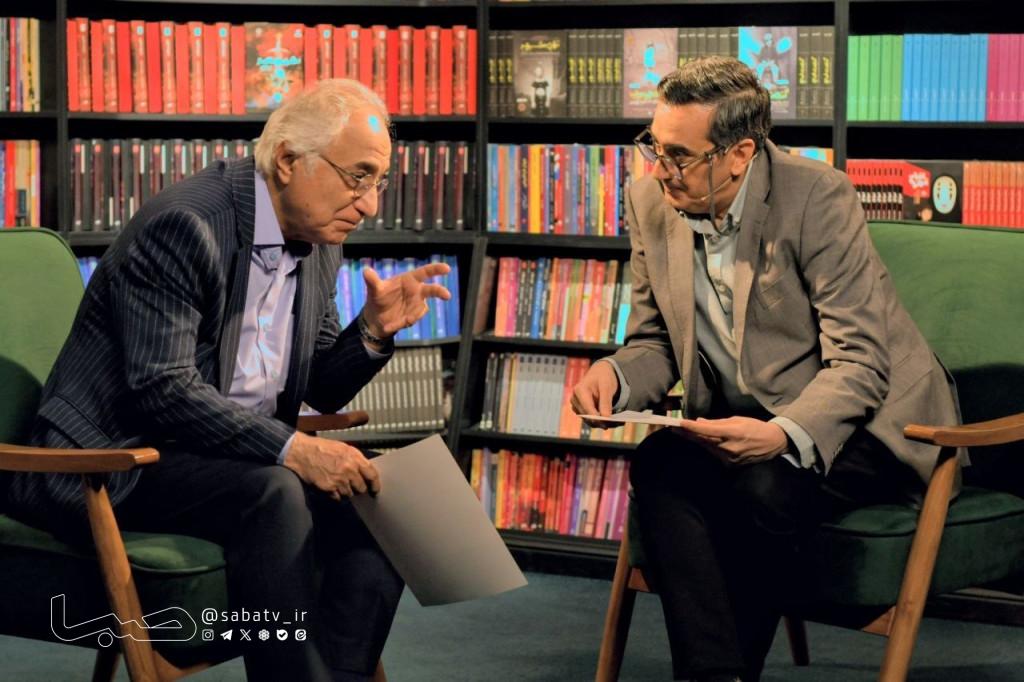


In a note, Shahram Ashraf Abyaneh reviewed Farzad Farbad’s “Ham Kalam” program; An attempt to turn artists’ memories into audible stories, beyond a televised conversation.
According to Saba, Narrating the memories of art and drama figures is a kind of storytelling. After all, you should know how to make your guest taste so much that he is the best storyteller of his own life. A kind of storytelling in which life becomes meaningful with sounds and music for the guest of the program (like a different program Hossein Alizadehwhere the sounds played from the old audio recording are the starting point of this story-telling). Sometimes we hear from the past that literacy is the first support of an artist’s work.Ali Nasiryan). Sometimes loneliness can make a person feel better.Mohammadreza Ghaffari).
Sometimes you hear that someone could have become a murderer or a murderer instead of being an actor or artist (in the program Shahreh SoltaniIt’s as if you are playing a role with what life presents to you. Sometimes, no matter what you do, life doesn’t bring you six pairs (Asha Mehrabi). It is good that a person has a busy and adventurous childhood. So that the family gets so upset that they are constantly paying attention to you, and that’s why you have to go to school early, and pass the first year of primary school for two years with two different names, and what’s more interesting is that at the end of the program, they tell you that artificial intelligence is the story of the life of an actor with a story. Fahrenheit 45 Ray Bradbury compared. (Ramin Nasser Nasir)
Talk show program Synonym of Filmnet It is such a thing. An example in the program bookworm and now Sorush Sehat We had seen it too. This time, the host is a translator and a man of letters, who is interested in launching such programs. It may seem that the creator and presenter of the program, Farzad Farbadthe ability and mastery of someone like Sorush Sehat does not have Host, this is more of a kind of bridge, so that the guests can pour out what they have in their hearts. The studio space is arranged like a library (with books from fantasy and science fiction genres).
As if this is all that connects us to the fantasy world of childhood. I wish he didn’t require his program to follow a fixed form. That, for example, a musical group always accompanied parts of the program (which, of course, is not a bad thing, but the work that is repeated makes the program new and refreshing), there was more fluidity in presenting the program items, and we were not limited to the studio space like this type of programs, and by using simple animations with the explanations of the guest of the program, a special period of his life was recreated. In this case, the television director of the program would not be forced to constantly use fixed decoupage, and the creativity and diversity that the program makers had in mind would be more visible and dramatic. Of course, this expectation is created by the quality level of the program, and the knowledge we have of its presenter and creator.
All the energy of the items in different parts of the program are focused on the guests and the luck of the program same word It is that he chose the right people to tell the stories of his memories. For example, the program Hossein Alizadehit gets a different mood altogether. As if everything was shaped by the master in the form of musical notes. as if Hossein Alizadeh He is creating a ballad of memories that the sounds bring to him.
If it wasn’t for such a form of presentation, Hamkalam would be something like other programs. At that time, the host’s concern (the other side of this story) and his interest in literature (given that we know that he is one of the translators and publishers of genre literature), would not have affected the program to such an extent. Of course Farzad Farbad It is not a TV showman. His silence and waiting to get the story out of the mouth of the guest of the program could have become boring if he always remained in such a fixed position. Apparently, the trick of the presenter is not to involve himself in anything (such as showmanship and acting, which is specific to the presenters of such programs). Instead, like a hunter waiting and guiding the conversation.
It may seem at first that the program is going to fall from one to the other, but the patience of the host and writer of the program pays off most of the time. In a specific instance, in item Asha MehrabiThe place of host and guest is changed. Asha Mehrabi Subtly and impromptu, he challenges the presenter with his one-off questions. This is where the literacy and work experience of Farzad Farbad comes in handy, and the program reveals its hidden side, that the presenter can also be on the other side of this narrative scale, and not everything is limited to the guest of the program.
This is where creating diversity in such programs is seen more than ever. That such a rich program, in each item, adjusts its own shape with the invited guest. At such a time, the shape and decoupage of the program (which, of course, is professionally and properly implemented in its current form) would take a different form.
same word But in this current form, he creates memorable nights with the guests of his program. He pulls out things from their hearts, which would be unlikely to be achieved in the case of a solid performance. An example is the spaces created with objects (things like matches, hats, etc.). A kind of chaptering, to organize what we hear. I can say the same thing wash It would be radio, or some kind of podcast, if there were no such subtleties in the program’s visual form. The audience of the program is lucky, which is a group of writers behind the production of the program. It is as if this is a trip, which determines the way and manner of the trip itself. As if this is all that is needed to create a book of human life. To force them to go through the glass of their memories, to pull out something that is safe from the hands of time.




