



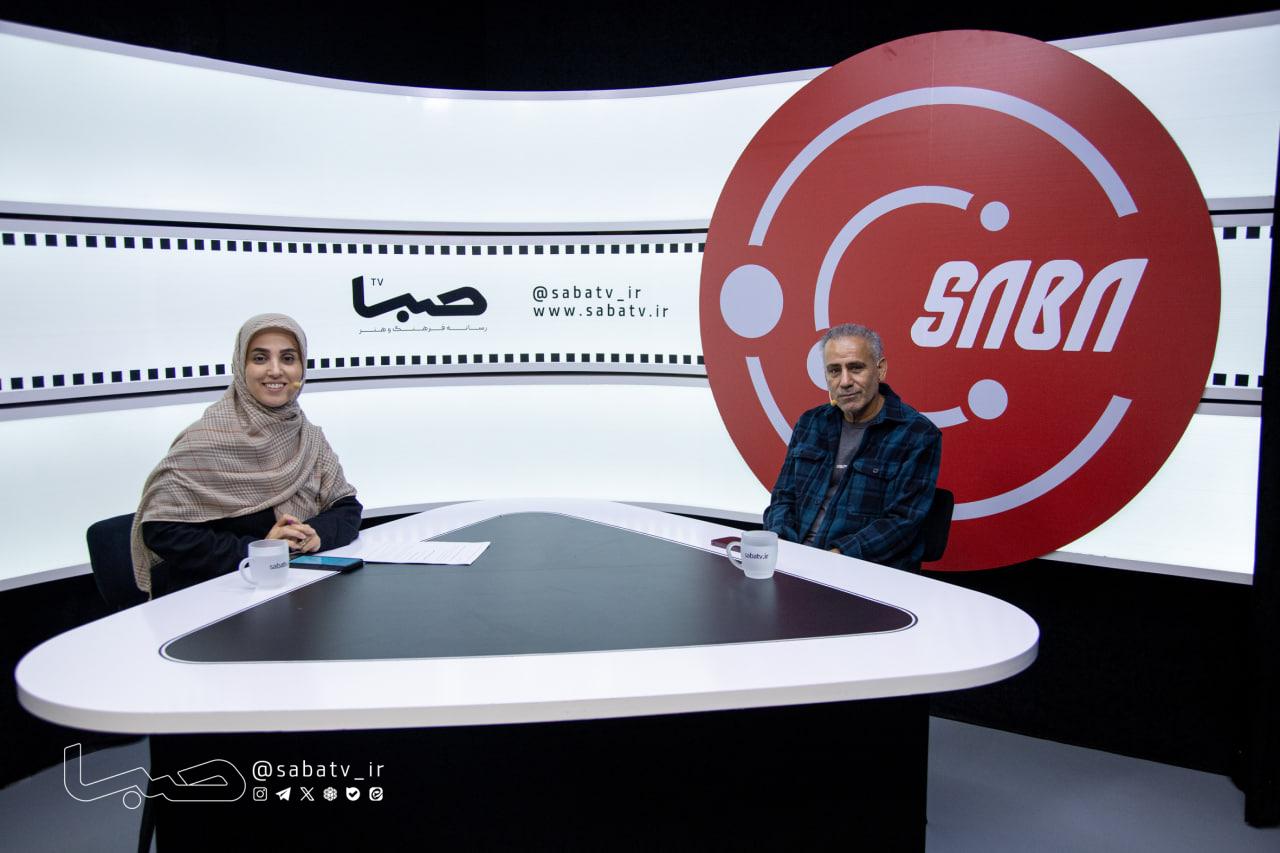


Dawood Hashemi, the producer of series such as “Goodbye Baby”, “The Fifth Sun” and “Operation 125”, referring to the change in the production mechanism on television, says that today’s producers in many projects do not have the authority to choose the story, writer and director, and are only responsible for implementing the decisions that were made earlier; A situation that, according to him, affects the quality and variety of television works.

Samira Jafari/Saba, Dawood Hashemi, a producer who has more than 300 series episodes in his career, is one of the faces known for the popular TV series in the past years. However, his presence in television productions has decreased in recent years; A distance that, according to him, does not come from anger with television, but from the difficulties of working with managers and changing the production mechanism. In an interview with Saba, Hashemi, while reviewing the experience of making series such as “The Fifth Sun”, “Operation 125”, “Nurses” and “Goodbye Baby”, talks about the conditions that, in his opinion, reduced the producer from the position of decision-maker to the executor of predetermined plans. He believes that television needs trust, authority and managerial courage more than anything to return to its successful days.
From managers’ trust in professional groups to attrition meetings
Hashemi emphasizes that he is still interested in television and is willing to continue his activity if the right conditions are provided; But he cannot accept the responsibility of a project in which he does not have much authority in the main decisions. He considers the important difference between past and present conditions in the level of trust managers have in producers. According to Hashemi, in the period when professional producers were active, the plan was presented, the directors reviewed it, and if approved, the group was entrusted with the responsibility of production.
To explain this method, he points to the experience of making the series “The Fifth Sun”; When along with Alireza Afkhami and other members of the group, they presented the plan to the managers and after approval, they started the production. At that point, the script was not yet complete and the writing of the text continued at the same time as the filming. Hashemi believes that the directors’ trust in the production team and the producer’s acceptance of responsibility provided the basis for the creation of a series that was announced by television as the best series in the same year.
On the other hand, he criticizes the prolongation of administrative processes and the holding of numerous meetings for obvious production issues, and says that sometimes managers do not have sufficient knowledge of the series production process and the professional status of the actors.
Centralization and loss of network competition
One of the main axes of Hashemi’s criticism is the reduction of the authority of television networks and the concentration of decision-making in central structures. He believes that when the networks had the possibility to choose the production team, plan for the audience and make decisions about their projects, the competition between them helped to increase the quality of the works.
According to this producer, network managers in the past were more motivated for the success of their series and tried to attract more audiences by choosing stories and professional groups.
Referring to the production of three series for Ramadan, all three of which were selected as the best series in the year of their broadcast, Hashemi considers this success to be the result of a series of factors, including the story, professional group, actors and the trust of the directors. He believes that the centralized structure cannot plan for different audiences as much as independent networks, and the result of such a situation is the reduction of variety and the possibility of new experiences.
producer; From the owner of the authority to the executor of the plan
Hashemi considers one of the most important problems of today’s television to be changing the position of the producer in the production process. According to him, in many projects, the script is pre-approved and the writer, director and even the actors are selected in a process in which the producer does not have a decisive role.
In such a situation, the producer is solely responsible for the implementation of the project whose main decisions have been made earlier; While professional production should include choosing the story, writer, director, actor and production method.
To explain this situation, he points to an experience in which, about eight months after the airing of a series, the relevant director asked the writer to come to him to explain the script. The author of that collection was Behrouz Afkhami, and Hashemi considers this request as an example of some managers’ unfamiliarity with the production process and the position of professional agents.
From his point of view, a producer with years of experience should be able to discuss the project with managers and be responsible for the results; Rather than explaining the previous decisions from the beginning for each step of the work.

“Operation 125”; An experience based on reality and field collaboration
In another part of the conversation, Hashemi talks about the experience of making the “Operation 125” series; A collection that, according to him, owed an important part of its success to field research and the presence of the production team in real firefighting situations.
He explains that to form the idea of the series, he went to the fire station with Behrouz Afkhami and Alireza Afkhami and got to know the activities of the forces closely. The production team did not just listen to the explanations and also participated in the missions with the firefighters.
Researching and writing the script took about three to six months, and after preparing two or three episodes, filming began; While the writing of the next episodes continued. According to Hashemi, most of the events of the series were filmed in real situations and about 99% of the events were real and not made with special effects.
Of course, this method of production also brought risks for the group. Hashemi mentions the overturning of the fuel truck, the cameraman falling from the back of the vehicle, and the actual fire of the building where the crew was filming the fire scene.
He considers one of the most important feedbacks of the series to be the change in the way firefighters look at their profession. According to Hashemi, after the airing of the first season, the director of the fire department told him that before the airing of the series, some soldiers would put their uniforms in their backpacks and wear them at work, but after the airing of the series, they would proudly wear firemen’s uniforms in the community.
Producer’s Difficult Decisions in “Nurses”
In reviewing the experience of making “Nurses”, Hashemi mentions the collaboration with Alireza Afkhami and says that the production pressures and obsession of this author in reaching the story had created difficult conditions to continue the work.
According to him, Afkhami sometimes wrote the script from night to morning and brought the text to the stage in the morning. Hashemi, who observed his physical and mental exhaustion, concluded that it is better for Afkhami to concentrate on writing and not to continue directing.
This decision led to resentment among them, but Hashmi emphasizes that the producer should also consider the responsibility of the project, production time and costs in addition to friendship.
He says that at one point, because the script was not ready, he stopped the production for about six months so that Afkhami had more time to write, and then Shahram Shahhosseini took over the direction.
Hashemi also mentions the disagreement with the Ministry of Health regarding the presentation of the realities of the hospital environment. He believes that a series about nurses cannot simply present a white and perfect image of the hospital; Because drama cannot be formed without conflict and dealing with social problems.
Giving opportunities to young people; Without removing the experienced
This producer considers the selection of actors as one of the important responsibilities of the production team and believes that fame should not replace the suitability of the actor for the role. He mentions the collaboration with Attila Pesiani in “Operation 125” and considers this actor’s mastery of the text and execution of several pages of dialogue in one take as an example of the ability of professional actors.
Hashemi also emphasizes the importance of auditioning and discovering new talents. According to him, many of today’s well-known actors once entered the field by giving opportunities to lesser-known figures.
He considers the choice of Manouchehr Hadi to direct “Goodbye Baby” as an example of this trust; A project in which Hadi, despite his limited experience in television, was placed with an experienced group and achieved a successful result.
Hashmi emphasizes that the arrival of a new generation is necessary, but this should not lead to the exclusion of experienced producers, writers and directors. According to him, cooperation between generations can provide the basis for the production of high-quality works.
Reputation of actors and investor involvement in platforms
Referring to the production process in the home show network, Hashemi criticizes the situation in which the presence of a few famous actors sometimes takes precedence over the story and the professional selection of the production team. He believes that in some projects, the investor makes the presence of a specific actor a condition for funding, and as a result, creative decisions are out of the producer’s control.
Hashemi compares this situation to football; Where the coach knows the right composition of the team, but the capital owner may impose another player. He emphasizes that he is not against the principle of investment, but he believes that the task of the investor is to provide financial resources and that creative decisions should remain in the hands of the professional group.
Hashemi also talks about a project for one of the platforms that was prepared with a different script and planning for the director Alireza Shahhosseini, but it was stopped due to the conditions caused by the war and the lack of financial resources.

audit; The need to pay attention to the logic of the drama
In another part of the conversation, Hashemi reviews his experience of television auditing. He points to a sequence from the series “Everything is there” in which Sam Derakhshani’s character and his second wife were adjusting the satellite antenna.
According to Hashmi, the director of the network had initially asked to remove this sequence, but he explained that the character in question in the story is not a positive character and showing his behavior does not mean that it is approved by the makers.
Hashemi believes that it is impossible to evaluate each character’s behavior separately from its place in the story. He finally reached an agreement with the network manager and the sequence was not deleted. From his point of view, this experience shows that disagreements about content can be resolved by professional dialogue and review of the logic of the work. He emphasizes that fictional characters do not have to be perfect for a set to be considered culturally acceptable.
Return to television; Subject to trust and authority
Hashemi considers the first four to five years of Ezzatullah Zarghami’s management as a successful period in television; A period when, according to him, the networks had more authority and managers had a closer acquaintance with professional groups.
Despite accepting the changing taste of the audience and the expansion of platforms, he believes that the decline in television audience cannot be attributed only to social and media changes. According to him, the main problem lies in the way of management, the reduction of trust and the limitation of production options.
In the end, Hashemi emphasizes that it is still possible to make high-profile series and television has not lost the human capital necessary for this. He considers his return to production conditional on the conditions in which he can decide on the production team, writer, director, and the method of project implementation, and the managers are also with the group in the way of solving the problems.
According to this producer, in order to return to its successful days, television must rely on professionals who have the experience of making high-profile works; Because you can’t expect the production team to make a different work, but at the same time they take away the creative tools and authority from it./ Saba Newspaper