



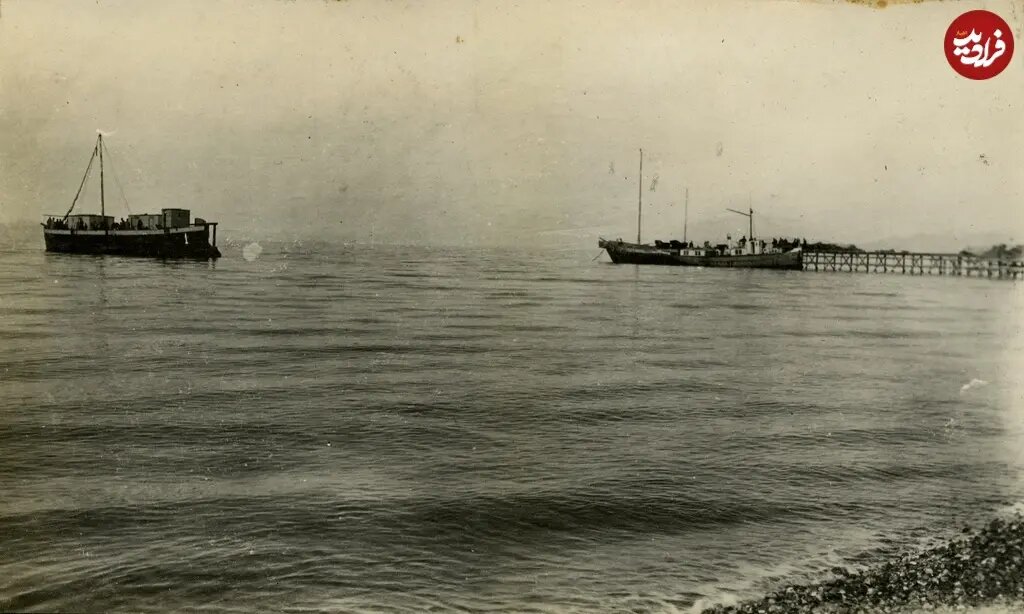


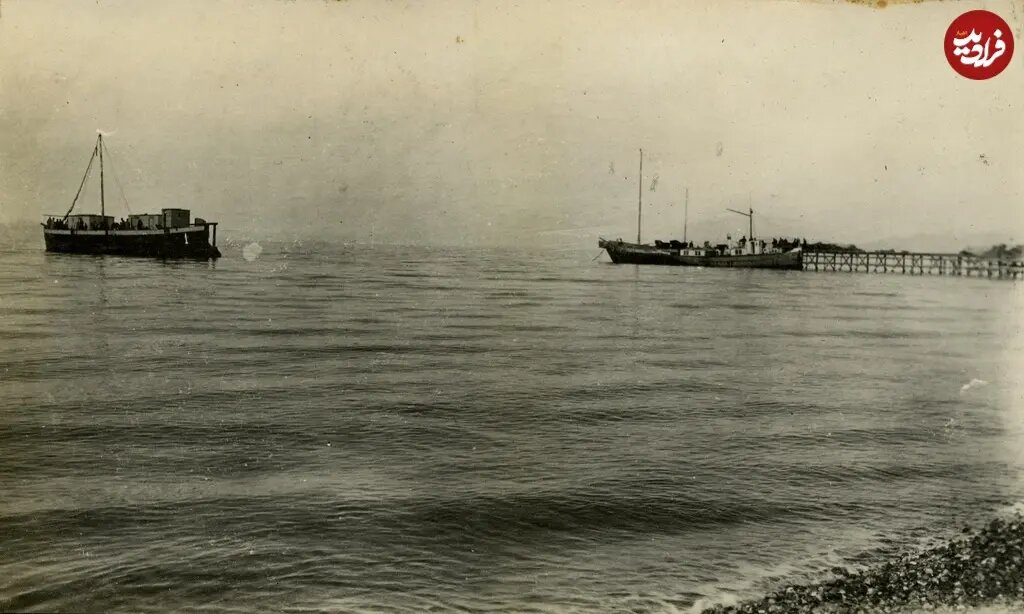
According to the news agency Online newsA lake in Azerbaijan, which today is called the semi-arid lake of Urmia, was called Shahi Lake during the Qajar period. In the case of Lake Urmia, what has attracted the attention of geographers and travel writers for a long time, is the high concentration of salt and other salts and, as a result, the lack of fish in its water. The Shahi peninsula in the east of the lake also turned into an island when the water rose. Despite these features, shipping had a long history in it, the prosperity of which goes back to the eras before the Mongol invasion. The first reports of navigation on the lake from the 19th century show that there were vessels on the lake, albeit undeveloped, with crews lacking seamanship skills. According to August Bin Tan, a French officer who was sent to the court of Abbas Mirza in Dartabriz, sailing in Lake Urmia was dangerous due to sudden storms.
The long wars with Russia in these years had made the Iranian government think of transferring shipbuilding technology to the country. The existence of these primitive vessels was soon overshadowed by the decision of Malik Qasim Mirza, the son of Fath Ali Shah, to develop shipping in the lake. Malik Qasim Mirza, whose mother was the daughter of Imam Qoli Khan Biglar Begi Afshar of Urmia, was an educated person who was familiar with French, English and Russian languages. At the beginning of Naser al-Din Shah’s reign, he was once the governor of Azerbaijan (1264-65 A.H.), there is information about the measures he took during his rule in Urmia for development and spreading modern knowledge. He was able to receive the monopoly of shipping and admiralty of Urmia Lake as a reward from Mohammad Shah as a result of his good and prosperous services in Shishwan, which was located on the eastern shore of the lake. To take advantage of this right, at the beginning, he destroyed some of the primitive boats of the villagers on the shores of the lake, and then he built a small ship with the help of Russian craftsmen who had brought him from the sea ports of Mazandaran to Shisvan and launched it into the lake. Also, to develop the islands of the lake, he started to establish a settlement on the island of Qoyun Daghi – Qoyun Adasi.
Following these successes, by hiring a master shipbuilder from Baku and a number of carpenters, he built a large ship with a capacity of one hundred tons in Shisvan to be used to transport merchandise between the neighboring areas of Lake Urmia. Ravinson, a famous orientalist, praises Qasim Mirza’s perseverance and actions and writes that these successes made Malik Qasim Mirza try to launch a steamship in Lake Urmia.
Despite this, during the reign of Naser al-Din Shah, he launched the first steamship in the lake. Malik Qasim Mirza had a private inflatable ship with a luxurious cabin that traveled the distance from Shiswan to Urmia in three days. He used this ship to travel to Qoyun Daghi Island and hunt there.
After that, Imam Qoli Mirza, the son of Malik Qasim Mirza, who was an educated person, took over the monopoly of shipping on the lake. He ruled Urmia twice in the reign of Muzaffaruddin Shah and once in the reign of Mohammad Ali Shah. At that time, his commercial fleet consisted of three flat-bottomed inflatable ships, each with a crew of a dozen, carrying a capacity of 20 tons. Since the traffic of these vessels depended on the favorable wind, their movement was irregular and delayed. The main difference between Imam Qoli Mirza’s shipping rights and Malik Qasim Mirza’s was that he paid a thousand tomans to the government annually and therefore was considered a tenant. However, Malik Qasim Mirza had this monopoly as a title.
Imam Qoli Mirza also leased his ships to a person named Aslan Khan Serhang for 2720 Tomans (800 Liras) per year (1308 AH). But more important than these were the actions that were taken in Tehran to acquire the shipping privilege of Lake Urmia.
Among these privileges, the concession of the road Tehran-Tabriz-Jolfa-Tabriz-Bayazid (Ottoman border) and Tehran-Boroujerd was granted to Kamran Mirza and General Alfred Dolomer, the son-in-law of Toluzan doctor Naseruddin Shah in the year (1307 AH/1890 AD). This concession, which lasted for 60 years, included the monopoly of shipping on Lake Urmia, but the owners of the concession did not take any action to create roads and shipping; And as a result, the privilege was invalidated due to the end of the deadline. In the year (1312 AH/1895 AD), the shipping privilege was granted to the sons of Badal Arzumanians – the founder of Arzumanians trade house. This concession was opposed by Karsaz Muzaffaruddin Mirza, the crown prince who supported Imam Qoli Mirza.
From the end of the 19th century, Urmia’s foreign trade grew. During these years, Urmia imported the needed European goods directly from Istanbul, without the intermediary of Tabriz, and Indian spices and fabrics from Hamedan. On the other hand, the efforts made by others for shipping privileges in the past years encouraged Imam Qoli Mirza, the ruler of Urmia in the year (1322-23 AH/1905 AD) to increase the number and capacity of his ships in order to increase his income and stabilize his rights in Lake Urmia. According to Eugène Aubin, the minister of power of France, his fleet in 1324 AH consisted of three large inflatable boats, each with nine crews. These ships used to transfer the Russian iron and textiles that were imported from Ardabil to Maragheh to Urmia, and on the return, they carried the agricultural products of Urmia. In case of favorable wind, the journey between the two banks would take 8-9 hours for these vessels.
In addition, Imam Qoli Mirza was also trying to launch a steamship, but the arrival of parts of this ship, which were bought from one of the European countries, probably Germany, was thwarted by Russia.
In order to prevent the presence of a third state in Lake Urmia and to facilitate the transfer of shipping to its citizens, St. Petersburg prevented the said ship from passing through Russian territory. Following the intervention of the Iranian government and the issuance of a decree prohibiting the transfer of shipping privileges by Imam Qoli Mirza and his children to foreign nationals, the Russian government agreed to the passage of the ship (Shawal 1324-November 1906 AD). Finally, the Bukhari ship was assembled and launched by a German engineer in Rabi al-Awal 1325 AH, when the victory of the constitutional movement promised the country’s progress. From now on, the development of shipping in Lake Urmia gained significant momentum.
Sources:
1- Kazem Beigi, Mohammad Ali – Royal Lake and Great Powers, Ministry of Foreign Affairs Publications (Tehran) – 1st edition 2018
2- Mokhbar al-Sultaneh, Mehdighili – Memories and Dangers, Zovar Publications (Tehran), 1329
3- Tabatabaei, History and Geography of Tabriz Darul Sultanah, 1379, (Tabriz)
4- Motamed al-Maziri, Rahmatullah-Urumieh in the battle of the world, Shirazeh publishing house (Tehran), year 1379
5- Ojen Oben’s Travelogue, Iran Today, Zovar Publications (Tehran), 1362.
Source of text: Duniya Ekhtaz, author: Majid Khalilzadeh
Photo source: Faradid
259