



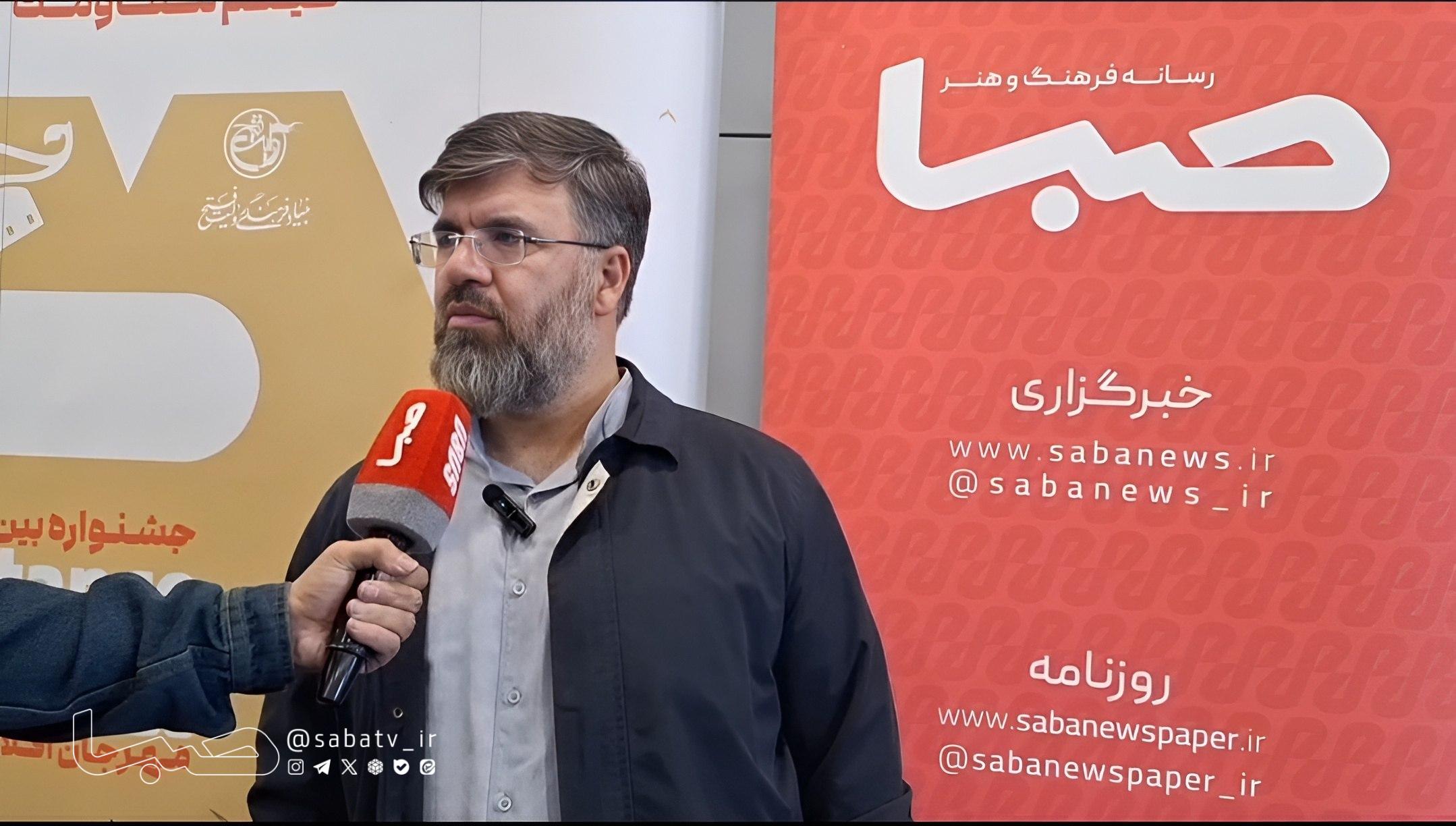


Jalal Ghafari Qadeer, the secretary of the International Resistance Film Festival, by emphasizing the necessity of resistance cinema to distance itself from sloganeering and moving towards the humane narrative of war, believes that this cinema is becoming an independent movement against cinema affiliated with America and the West.
Nasser Arbab / Saba Jalal Ghafari Qadir, the secretary of the International Resistance Film Festival, spoke on the sidelines of the second day of this film event, about the position of resistance cinema today, the necessity of overcoming rhetorical narratives, how this cinematic trend relates to the young generation and the responsibility of artists in reflecting the realities of war.
Referring to the increase in the number of works present in the festival and the expansion of its various sections, he believes that resistance cinema is no longer just a title or a slogan, but has become a cinematic trend with a specific audience in the domestic and international arena; A stream that still has a long way to go to reach the desired point and should be able to narrate the hope, joy, sacrifice and life of people in addition to showing the sufferings of war.
Resistance cinema should distance itself from slogans
Jalal Ghafari Qadir, in response to the question of how far today’s resistance cinema has been able to distance itself from slogans and approach the human narrative of war, stated: Resistance cinema should distance itself from slogans and be the true narrator of the sufferings, vitality and hope that is created in the heart of war. This cinema should not remain in the dark, but should move towards the narrative of hope. I believe we are on this path; However, we have a long way to go and there are bigger peaks in front of us that need to be conquered.
Referring to the capacity of Iranian and international filmmakers in the field of resistance cinema, he continued: We have very good filmmakers who are active in the field of resistance. Our domestic filmmakers are amazing and the international filmmakers are doing really amazing work. Issues such as Gaza, country issues, and other resistance-related issues have attracted the attention of filmmakers, and this shows that this trend is expanding.
The secretary of the resistance festival emphasized the formation of an independent cinema stream in the world and stated: We are giving birth to an independent cinema; Independent and resistant cinema that is being formed in the world and in front of cinema affiliated with America and westernized cinema. I think we will hear the voice of this new born in the world of cinema.
From four to five films to 18 feature films in the festival
In response to a question about the relevance of resistance cinema to the young generation and the need to attract new audiences, Ghafari Qadeer pointed out the diversity of the works in the festival and said: “Right now we have animations that are shown in the festival and were produced for children, teenagers and different age groups. This variety of works shows that resistance cinema is moving towards a diverse audience and is not limited to a single age group or a cinema format.
Pointing to the increase in the number of works admitted to the festival, he added: Today, 18 domestic feature films and 10 foreign feature films are present in the festival, and besides them, dozens and hundreds of documentaries and short and long films have also been noticed in different sections. Today, the festival is screening in more than 10 theaters and fortunately, it has been well received by the audience.
Comparing the current situation of this event with the previous periods, the director of the Resistance Festival noted: If we look back, the festival was held with maybe four or five films, but today we are facing 18 domestic feature films, 10 foreign feature films and a wide collection of short and documentary works. This incident shows the quantitative development and variety of productions in the field of resistance cinema.
Transferring the experience of cinematic generations to resistance filmmakers
Ghafari Qadir also explained about the educational programs and transfer of experience on the sidelines of the festival: Simultaneously with the screening of the films, classes titled “Resistance Cinema Experience” are being held in which professors and well-known figures of Iranian cinema are present.
Referring to the presence of Kamal Tabrizi, Zarindasth and other professors of Iranian cinema in these programs, he said: Great people attend these classes, who I believe are one of the unique faces of Iranian cinema and talk about their life and professional experience. This opportunity can be valuable for filmmakers and resistance cinema enthusiasts; Because the transfer of experience from people who have worked in this field for years helps to grow and improve this stream.
He considered the set of these events as a sign that resistance cinema has passed the slogan stage and emphasized: All these cases show that today we are not talking about a slogan. Resistance cinema has become a reality; A national and international genre that has its own audience. In my opinion, an independent cinema is being born and we will hear more about it in the future.
The artist must be the narrator of the world in which he lives
In another part of this conversation, the director of the Resistance Festival pointed out the social and historical responsibility of artists in facing the surrounding events and said: Today’s artist must be the narrator of the world and the world in which he lives. The artist cannot be indifferent to what is happening around him, especially when the society is experiencing difficult and fateful situations.
Referring to the war and the recent developments in the region and what he described from the perspective of Iran’s authority in facing the US, Ghafari Qadir said: We are experiencing a cowardly war against ourselves and in this situation, the artist must be able to narrate what is happening in the society. In my opinion, we were able to defeat the biggest superpower in the world in two wars and he asked us for a ceasefire. This shows that our cinema should be able to narrate at the level of what our armed forces have created.
At the same time, he emphasized that the narrative of the war should not be limited to the display of military equipment, operations and dimensions, and added: Of course, the narrative of the war is not only a hardware and military narrative. War should not be seen only through the lens of military equipment and events. The narrative of war is the narrative of people who sacrifice and give up their rights and their personal lives in order to create security for their fellow citizens in their country and for their children.
The distinguishing point of resistance cinema is the narrative of sacrifice and human being
At the end, Ghafari Qadir, emphasizing the importance of paying attention to the human in the cinematic narratives of war, considered this component to be the distinguishing feature of resistance cinema from other cinema trends and noted: In my opinion, this is the distinguishing point of resistance cinema from other cinemas; To be able to narrate people who, in difficult circumstances, give up their lives and personal desires in order to maintain the safety and peace of others.
He emphasized that in order to establish its position, resistance cinema should pay attention to human dimensions, hope, vitality and sacrifice in addition to representing the sufferings and realities of war. The path that, according to the director of this festival, can be the basis for the formation of an independent and influential movement in world cinema.