





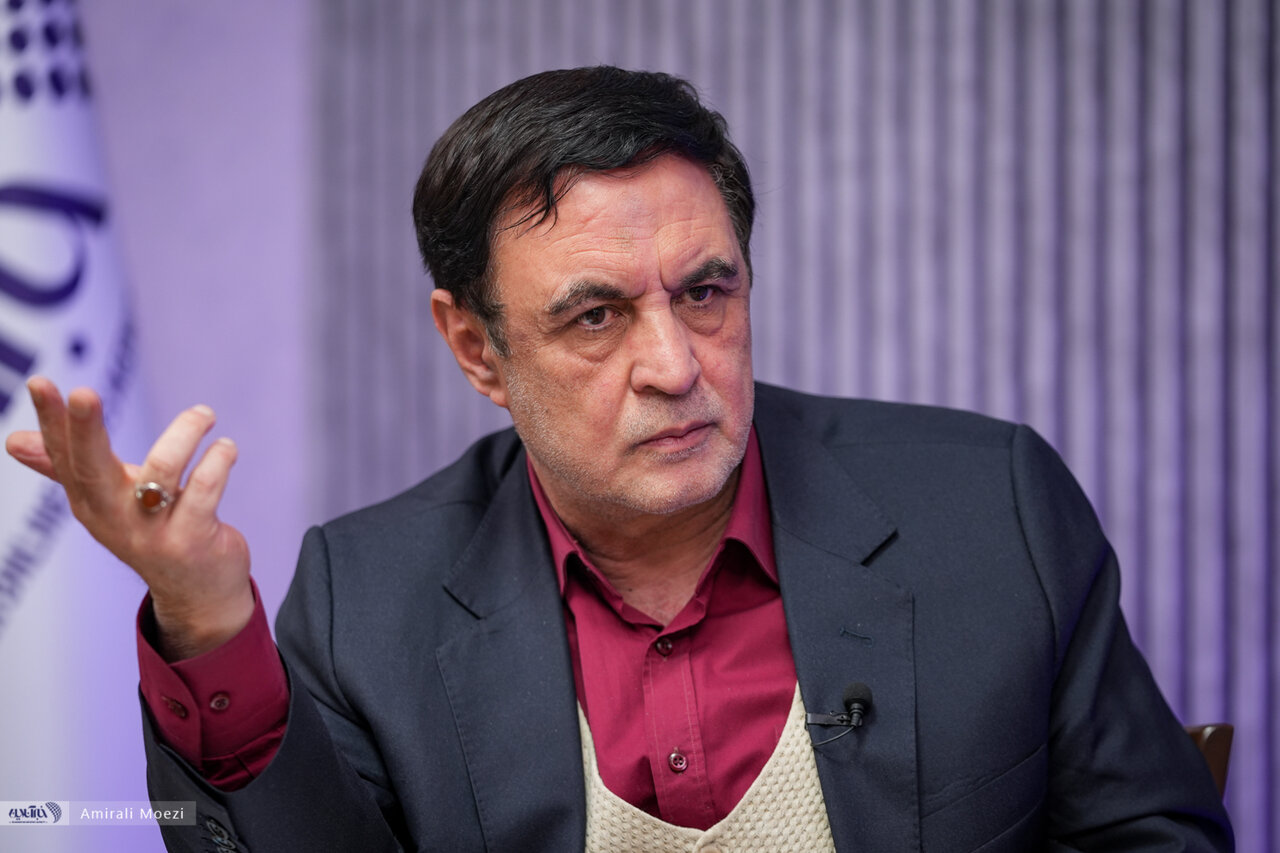
According to Khabar Online news agency, Nasser Imani said about the necessity of observing ethics in political comments and the border between frank criticism and destruction of people’s character: Because we are weak in political actions, our political ethics have also weakened. The experience of political work in Iran in the international sense is about 40 to 45 years. Before that, due to the functioning of the ruling regimes, there was no history of political work in that sense in Iran except for a short period during the constitutional era; This has caused us to not be able to learn the ethics and culture of political activity.
According to ISNA, the fundamentalist political activist, referring to the conditions of the years after the revolution, recalled: After the revolution, for about 10 years, due to the war, there were restrictions on the public space of the country. Therefore, in the end, we can say that the experience of political work in our country is about 30 years, and this time is not much time for us to learn and form a culture of political interaction with our rivals.
The lack of coalition mechanism between parties has weakened the political interaction
Regarding the role of party activity in the formation of political ethics, he stated: Due to the laws that exist in the country and parties cannot enter the legislative assemblies as a party, political interaction in the country has become very weak. In other countries, parties occupy parliamentary seats, not individuals. If the parties cannot get the majority of votes, they are forced to form alliances with each other, and this form of alliance leads to the growth of political ethics.
Imani continued: Two or three parties that have been competing with each other, when they cannot get the majority of votes in the elections, they are forced to form a coalition, and when they form a coalition, political interaction and political ethics grow. In our country, because there is no such mechanism, parties in governments and parliaments do not interact much with each other and mostly see each other in the social scene, press, newspapers and virtual space.
Pointing to the effect of the lack of cooperation mechanism between parties on political activity, the fundamentalist political activist added: parties can have any kind of confrontation without needing to cooperate with each other; For example, rival factions never have to cooperate with each other because there is essentially no such mechanism.
It is necessary to distinguish between insults and insults with criticism and suggestions
Emphasizing the necessity of distinguishing between political criticism and insulting behavior, he emphasized: We must know the difference between insult, insult, slander and criticism. Criticism and suggestions are different from cursing, insulting and humiliating. Unfortunately, when we want to criticize harshly, we resort to insults; While harsh criticism does not mean insulting.
Referring to the state of political ethics in America, Imani said: Political ethics are not observed in America either. It is possible to see what insults the parties or their presidents raise against the opposite party, political figures of the rival faction or others. However, our culture is different from theirs, and we must distinguish the difference between insult, slander, and slander with criticism and suggestions.
Having a document is not a license to use offensive literature
The fundamentalist political activist clarified about the need to observe ethics in making accusations against people by the tribune owners: whoever makes a claim against a person, whether he has a document or not, must observe ethics. We live in a country that is considered one of the most civilized countries in the world. We are moral and cultured and we must respect Iranian, Islamic culture and ethics. We should not use aggressive, sharp and rude literature. Whether or not we have a document for our claim is another matter; Having a document does not mean that we are allowed to use any offensive words and literature.
Regarding the responsibility of tribune owners in promoting political ethics in the society, he said: Tribune owners are the ones who inject ethics into the society. When the society sees two people who have a platform and responsibility treat each other like this, what else can be expected from ordinary people and people with different jobs or those who are not very educated? In fact, the holders of the podium, responsibility and office should observe ethics and know that their behavior affects the society.
Emphasizing the necessity of setting an example from officials in observing ethics, Imani added: When those in charge, including university professors, clerics, or people in positions of authority, do not observe ethics, what can be expected from society and ordinary people? People are the owners of the government based on the procedures and methods, and the owners of responsibility should take the lead in observing ethics.
The media should be responsible for maintaining public ethics and culture
The fundamentalist political activist stated in the field of social responsibility of the media in the society: If we consider the media as a forum of public opinion, the answer to this question becomes clear, to what extent is the responsibility of the media. It should be seen if the existing media represent the public opinion or if it is a media that someone invested and started for himself. The media represents a part of public opinion, and for this reason, its responsibility is very high.
He continued: “The media does not mean that a few people gathered together, put money and started a newspaper or created a platform in the virtual space; Rather, the media represents a part of public opinion. The media must fulfill its social responsibility to maintain public morality. Just as the media considers itself socially responsible for what news to publish and what analysis to present, maintaining public morals and culture is also one of its missions.
Limited errors in night gatherings should not be generalized to all of them
In response to a question about some slogans raised in the night rallies, Imani said: holding night rallies is a social revolution that was spontaneously formed by the people due to the enemy’s military aggression against Iran. If incorrect movements are carried out in some very limited gatherings, in a corner of a city or county, these cases should not be magnified and exploited; In order to create this impression, all gatherings and social movements that are held every night in the cities do not respect ethics.
The fundamentalist political activist said about the need to warn people who make false statements in night gatherings: these gatherings fully respect ethics, but if in a small gathering, in a city and in one night, a person who has a podium says something inappropriate, he should be warned right there. This tribune is a sacred and spontaneous tribune of committed people who have come to the stage to defend Iran, and these cases should not be magnified.
29218