





According to the news agency Online news According to Ibna-Ali Nikoyi, a researcher of ancient Iran: Why is painting placed next to a prophet in Mani’s history? Why, among the various aspects of his character and thought, historical narratives have always placed these two titles next to each other? This cohabitation is not accidental; Because in the Manichaean worldview, the image was not merely a means to decorate writings or represent religious narratives, but was considered a language to express truth and convey thought. Mani, who pursued his mission in a wide range of lands and cultures, was aware of the capacity of the image to cross the boundaries of language and convey complex religious concepts, therefore, the art of illustration found a place beyond a decorative tool in the Manichaean tradition and became a part of the mechanism of propagating, teaching and explaining the worldview of this religion; To understand Mani, one must go beyond the face of the prophet and recognize the relationship between his religious thought and artistic creation and image language.

Mani’s worldview and the necessity of image
Mani’s worldview is based on the fundamental opposition of two realms of light and darkness; Two principles that are eternal and distinct from each other in Manichaean thought and their fusion creates the origin of the current state of the world. In this belief system, the world is the stage of conflict between light and dark forces, and human beings are considered to be part of the gem of light in the middle of this fusion, which must be freed from the captivity of matter and darkness. The Manichaean narrative of creation, the origin of the world, the place of man and his cosmic end includes a complex set of Manichaean beings, heavenly forces, levels of existence, and mythological events. Such a vast body of thought required ways beyond written and spoken expression to convey to audiences of different languages and cultural backgrounds. In the meantime, the image could transform abstract and difficult cosmological concepts into visible and accessible forms; The representation of light and dark forces, levels of the Minoy world, and the narrative of the liberation of light from the bondage of matter, when they were presented in the form of visual compositions, increased the possibility of understanding and remembering religious teachings. Therefore, the image in Manichaeism was not merely a complement to the sacred text, but had an educational and preaching function along with speech and writing; Linking images with religious narratives allowed the followers not only to hear or read the fundamental teachings of the religion, but also to experience them in the form of a visual system. Therefore, the importance of the image in the Manichaean tradition should be sought in its direct relationship with the nature of the worldview of this religion; A world that provides a special and sometimes irreplaceable capacity to explain the complexities of that image language.
Arjang; A book that became a symbol of Manichaeism
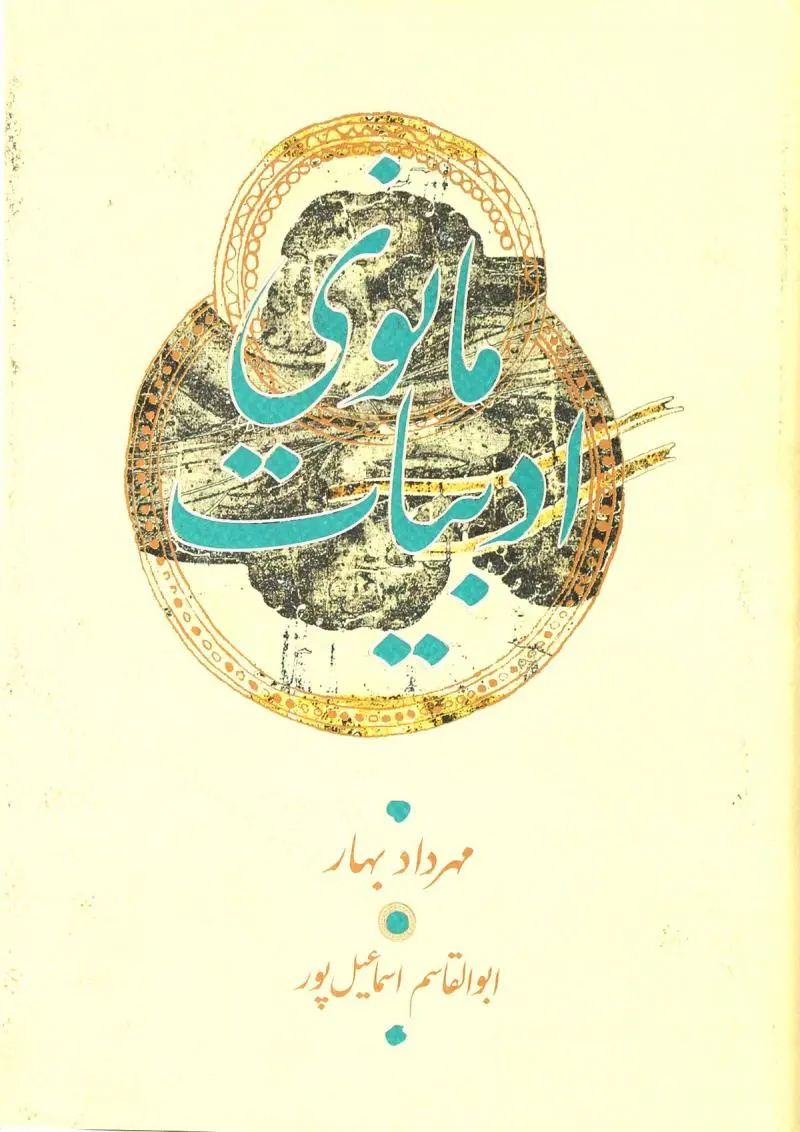
Among the works attributed to Mani, none of them has been linked to his fame as a prophet and painter as much as “Arjang”. Arjang, which is also known as “Ardhang” in Pahlavi and Parti texts, was the title of an illustrated book that represented the fundamental teachings of Manichaeism through a series of pictures. In Manawi sources, this work is also mentioned with titles meaning image or book of images. Its importance was such that in the later traditions, the name of Arjang gradually became a symbol of the art of painting and Mani’s amazing ability in visual representation of religious concepts. Historical accounts present the Arjang as a work of rare artistic quality that was used to explain complex Manichaean teachings. In some reports, the illustrations in this book are directly attributed to Mani, and they consider him the creator of a series of images that, along with his written teachings, made his religious message clearer. In the Manichaean tradition, painting was not just an artistic activity, but was considered a part of the way of teaching and transmitting religious knowledge, therefore Arjang can be considered one of the most important manifestations of the connection between art and religious teachings in the history of religions.
Arjang’s position in the history of Manichaean art should not be limited only to the personality of Mani; This work became a model for the formation of a wide tradition of book design and illustration among his followers; A tradition that spread over time from Sassanid Mesopotamia to Central Asia and China. Researches related to Manichaean art show that the pictorial versions and later re-creations of this tradition played an important role in oral education and transmission of religious teachings; In this context, the study of Abulqasem Ismailpour in the book “The Myth of Creation in Mani’s Religion” is also important for understanding the link between cosmological narratives and their visual representation. However, a distinction must be made between historical evidence and later narratives. The original book of Arjang has not yet been obtained and we do not have a definitive example of its illustrations. Abul Ma’ali’s report in the fifth century of Hijri about the existence of a copy of this work in the Ghaznin treasury is one of the most important evidences related to the continuation of its fame in the Islamic world. On the other hand, the reflection of Arjang in works such as “Shahnameh Ferdowsi” and “Weiss and Ramin” by Fakhreddin Asad Gorgani is more than a documentary report of the structure and content of the book, it shows Mani’s legendary position as a master painting in the cultural memory of Iranians; Therefore, Arjang should be considered both a historical work in the tradition of Manichaeism and a cultural symbol that has preserved Mani’s artistic fame in the historical memory of Iran.
Image as the language of religion
In Manichaeism, painting should be considered as one of the fundamental ways of expressing and transmitting religious thought. The image in this tradition had a task beyond the representation of mythological characters and events; He could transform teachings that were difficult in the form of words and abstract concepts into a visual and understandable language. Therefore, painting, along with the sacred text and oral narrative, found a special place in the education of followers and the spread of Mani’s teachings. One of the important features of Mani’s art was the link between text, image and narration; In this style, paintings could represent parts of the story of creation, the battle between the forces of light and darkness, and the story of the liberation of the gem of light. Together, the text, narrative, and image helped to better understand the teachings and made the audience face a harmonious system of signs and concepts; In this way, the image was not a margin on the text, but a part of the structure of the transmission of the religious message.
Color was also important in this image system, the opposition of light and dark that formed the basis of Manichean worldview had a great capacity for visual expression. Light colors could be associated with the realm of light and the Minyan world, and dark colors could be associated with the dark space and the material world. Of course, one should not consider a fixed and identical meaning for all colors without examining each work; Symbols, the posture of figures and the composition of scenes also played a role in conveying concepts and directing the audience’s gaze. The audience of this art was not limited to a specific group of literate or religious elites, the image could provide a way for those who did not have direct access to the holy texts to get acquainted with Manichaean teachings. Missionaries used pictures and their oral explanations to convey religious concepts to different social groups. In fact, illustration helped to expand the scope of communication between Manichaeism and various societies and contributed to the formation of the common identity of its followers. From this point of view, Manichaean art should not be considered merely a manifestation of aesthetic taste, but a part of the cultural and social mechanism of a missionary religion; A religion that turned the image into a language to see, understand and remember the truth.
From Turfan to the treasures of Manichaean art
Although there is no definite example of pictorial works attributed to Mani in the 3rd century AD, the archaeological discoveries of Central Asia have provided the possibility of a more objective knowledge of the tradition of Manichaeism. Among them, Turfan Oasis in East Turkestan [سینکیانگ امروزی چین] It has a privileged position. Four German archeological teams that traveled to this region between 1902 and 1914 collected a large collection of manuscripts, paintings and works of art, which today are considered one of the most important sources of knowledge of Manichaean culture and art. The importance of these findings is not only limited to the number of works, but their linguistic diversity is also impressive; The Manuscript texts discovered in Turfan were written in languages such as Middle Persian, Parthian, Sogdian and Old Uyghur. This diversity shows how Mani’s religion included various languages and cultures of Central Asia during its expansion, and its written and pictorial tradition continued among different societies. Some versions are a combination of text and illustrations and clearly show that illustrations in Manichaean books were part of the structure of transmitting religious teachings. The paintings obtained from this collection have remarkable features in terms of execution method and artistic quality; The use of bright colors, blue backgrounds, gilding, detailed design of figures and attention to the details of clothing and ritual objects are among the characteristics of these works. In some versions, the pictures are rotated in the direction of the text; A characteristic that can be seen in the illustration of Manu Turfan’s books as a specific pattern. This method shows the existence of specific visual rules in setting the page and the link between text and image. One of the most well-known examples of this art is the image of the “Bema” ritual[i]” is preserved in a fragment of a manuscript with the ID MIK III 4979.
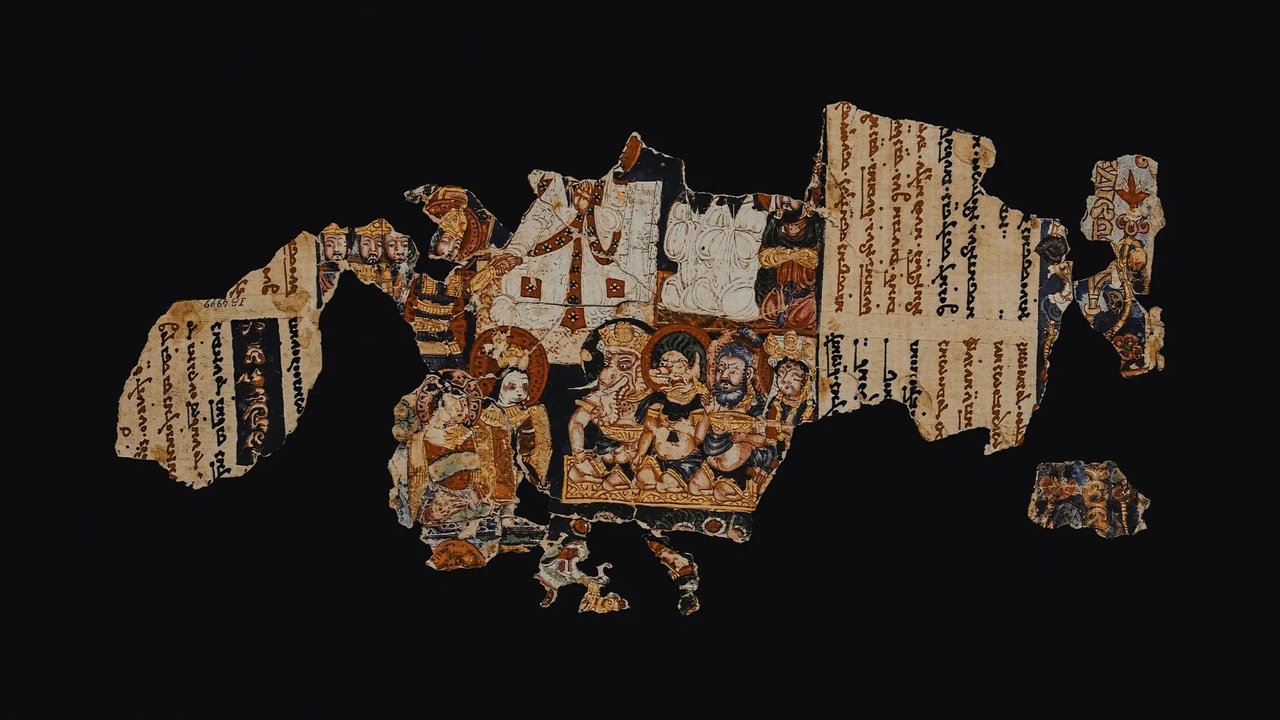
This image shows a ritual ceremony that was held to commemorate the death of Mani and his spiritual ascension; The figures of Manichaean clerics, ritual white clothing, the special position of the religious leader and the central platform of the ceremony have created a regular and meaningful combination. Another example is the piece MIK III 8259, which contains a scene of preaching and belonged to a collection of religious texts in Middle Persian and Parthian languages; These works are now kept in the collections of the Asian Art Museum in Berlin. In addition to Berlin, there are examples of Manichean art in the collections of St. Petersburg, London, and Kyoto.
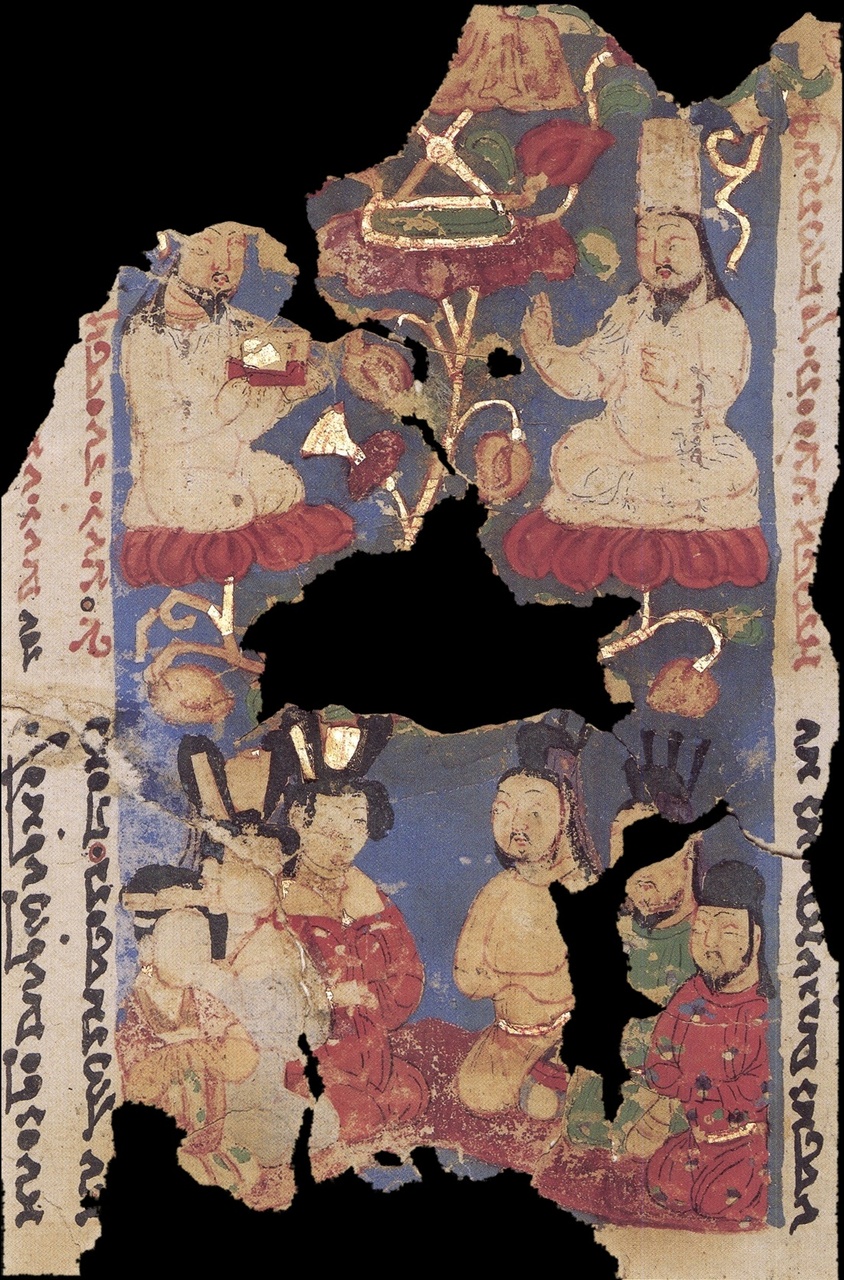
The importance of these treasures for the history of the art of Iran and Central Asia is that they provide the possibility of examining the artistic links between Iranian lands and Eastern cultures; In addition to having the roots and characteristics of West Asian art, the paintings of Mani Turfan have also been influenced by the cultural environment of Central Asia, so they cannot be considered as works belonging to a limited religious tradition. These paintings are valuable documents of the flow of ideas, artistic techniques and representation methods along the Silk Road. Turfan’s pictorial heritage shows that Iranian art in the ancient and middle centuries was present in a wider range of cultural exchanges, contrary to the limiting notion that reduces it to the political borders of Iran, Manawi art is one of the clearest evidences of this historical link.
The position of Manifesto in the history of art
Manichaean art should be examined in connection with the artistic traditions of Iran and the cultural scope around it. This art was formed in the context of the Sassanid world and took advantage of the image and array capacities common in Iranian lands; But gradually, with the spread of Mani religion towards the east, it also found characteristics suitable for new cultural environments. Manichaean imagery is not an isolated phenomenon but a part of the dynamic history of art in the ancient world and the Middle Ages. The spread of Manifestism in Central Asia and then China provided the context for the encounter of various pictorial traditions; The paintings discovered in Turfan show that Manichaean artists were influenced by the ways of representation, clothing, arrangement of figures, and decorative elements common in the Sogdian and Uyghur environments, in addition to maintaining some common features. In China, Manichaean works appeared alongside Buddhist traditions and other religious and artistic currents and found new forms in the multicultural atmosphere of that land. However, examining the influence of Manichaean art on subsequent artistic trends requires historical caution, the similarity in the composition, coloring or the way of drawing figures alone does not prove the direct transfer of a model from Manichaean art to another traditional one, to prove such a connection, one should pay attention to historical evidence, transfer routes, technical characteristics and the continuity of visual elements. Therefore, we cannot consider Manichaean art as the source of all Eastern painting traditions, nor ignore its role in artistic exchanges between Iran, Central Asia, and China. The historical importance of this art lies more than anything else in its mediating position and its participation in the formation of a common artistic space in the Silk Road.
The end of speech; When the image crossed the border of language
Mani cannot be remembered only as a prophet with religious and philosophical teachings; In the history of culture and art, he is also a distinguished figure who turned the image into one of the means of expressing thought. In Mani’s worldview, painting was neither an array to beautify texts nor an artistic entertainment, but a language to represent the truth, which was difficult to understand due to abstract concepts and complex cosmological narratives. Regardless of what is said about its details and fate in historical narratives, Arjang became a symbol of a lasting bond between religious message and artistic creation.
The discovery of Manichaean paintings and manuscripts in Turfan showed that this link went beyond the boundaries of the first Manichaean society and continued in a wide area from Iran and Central Asia to China. Perhaps Mani’s most important artistic legacy is this, “the thought that was expressed in words came to life in the image and was able to cross the borders of languages and territories.” Yes, Mani was not the only prophet of painters, he was one of the pioneers of the link between art and religious thought in the history of the culture of Iran and the ancient world.
[i] The “Bema” ceremony was the most important annual ceremony of Manichaeans, which was held in commemoration of Mani’s death. This ritual was accompanied by fasting, prayer and gathering of followers in the last month of the Manichaean year. In this ceremony, a symbolic throne was erected in memory of Mani, which was a reminder of his spiritual status and spiritual presence among his followers.
[ii] A fragment of an illustrated Manichaean manuscript belonging to Turfan, with a depiction of a Manichaean religious ceremony; Berlin State Museum Collection, Indian Museum of Art, ID MIK III 4979, on leaf (Recto).
[iii] A fragment of an illustrated Manuscript of Uyghur belonging to Quchu (Turfan), with a depiction of a sermon scene; Berlin State Museum Collection, Asian Art Museum, ID MIK III 8259, first leaf, recto.
259



