



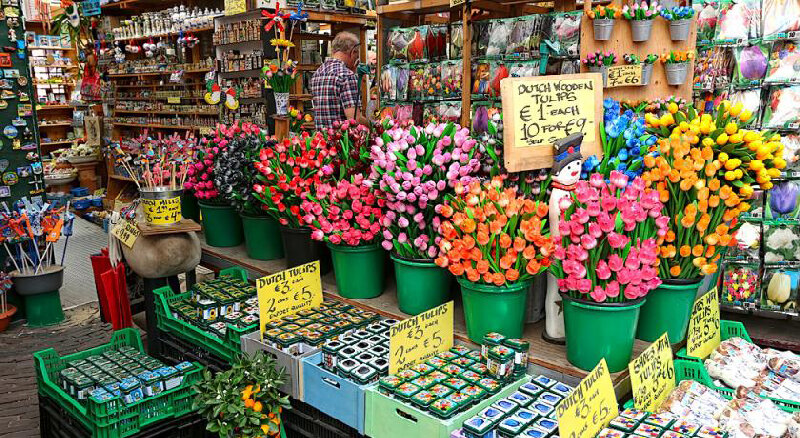


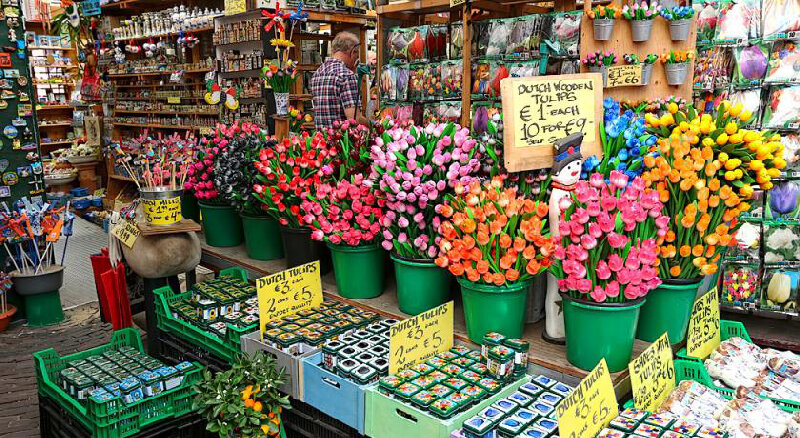
According to Khabaronline news agency, the flower trade is a multi-billion dollar business in the industrialized world. The perishable nature of this product, of course, has led to the formation of a chain for flowers to arrive from the farm to the consumer market in the shortest possible time. Surveys show that the Netherlands has a special place in this industry; A country that is not only a producer of flowers, but has also become the main center for collection, pricing, trading and distribution of flowers produced in different parts of the world.
According to the statistics of the Dutch Flower and Plant Wholesalers Association (VGB), a significant part of the flowers traded in the Dutch markets are not necessarily grown in this country. Even the flowers produced in Africa and Latin America enter the Dutch trade network and from there they reach European markets and other parts of the world.
What are the figures for the Dutch flower trade?
According to the statistics of the Dutch flower and plant wholesalers association (VGB), the value of flower and plant exports in this country reached 7.2 billion euros in 2025; A figure that increased by nearly 2% compared to 2024.
Of this amount, 4.4 billion euros were related to the export of cut flowers and 2.8 billion euros were related to the export of ornamental and potted plants. However, the growth of cut flower exports was very limited and only increased by 0.3%. The export volume of this product also decreased by 3%. On the other hand, the export of ornamental plants grew by 4.4%. This statistic shows that the value of Dutch flower and plant exports is still slightly lower than the record of 2021, i.e. 7.3 billion euros.
Alsmeer Auction; The beating heart of the global flower trade
One of the most important reasons for the transformation of the Netherlands into the flower trade center of the world is the formation of a large auction network in this country. Meanwhile, Royal FloraHolland has a special place. This collection is one of the largest international flower and plant markets that connects producers and buyers of different countries. In the 2025 annual report of Royal Flora Holland: the turnover of products traded in Royal Flora Holland reached 5.4 billion euros in 2025. This figure has increased compared to 5.3 billion euros in 2024. Royal Flora Holland has also announced in its introduction that an average of 100,000 transactions are carried out on this network every day, and its annual turnover exceeds five billion euros.
Why are flowers from Africa and Latin America sold via Holland?
The important thing about the Dutch flower business is that this country does not rely only on domestic production. An important part of its commercial power is related to the import of flowers from producing countries and its redistribution in world markets. Countries such as Kenya, Ethiopia, Colombia and Ecuador are important producers of cut flowers. Climatic conditions, production costs and the possibility of growing flowers on a large scale have contributed to the development of this industry in the mentioned countries. For example, Kenya has become one of the important suppliers of roses in the European market. The flowers produced in this country are transported to the Netherlands by plane and after entering the distribution network, they are sold in different markets.
In November 2020, Amsterdam Schiphol Airport announced in a report the joint cooperation of KLM, Royal Flora Holland and Schiphol Airport under the name “Holland Flower Alliance”. The purpose of this cooperation was to create an integrated chain for the transfer of flowers from Kenya to the Netherlands, to maintain the quality of the products and to reduce the time and cost of transportation.
What is the competitive advantage of the Netherlands?
Perhaps, this point is important for the observers, what competitive advantage the Netherlands had in this field. Surveys show that the transport infrastructure has played an important role in making the Netherlands a world center for flower trade, because the proximity of production and trade centers to Schiphol Airport and the European road transport network has made it possible to quickly transfer flowers to consumer markets. At the same time, the right equipment plays an important role in creating a cold chain. As mentioned, cut flowers are a perishable product, and delays in transportation or improper storage can reduce its value. At the same time, the existence of a centralized market and network of buyers and the development of technology and digital transactions are effective in this.
223223