



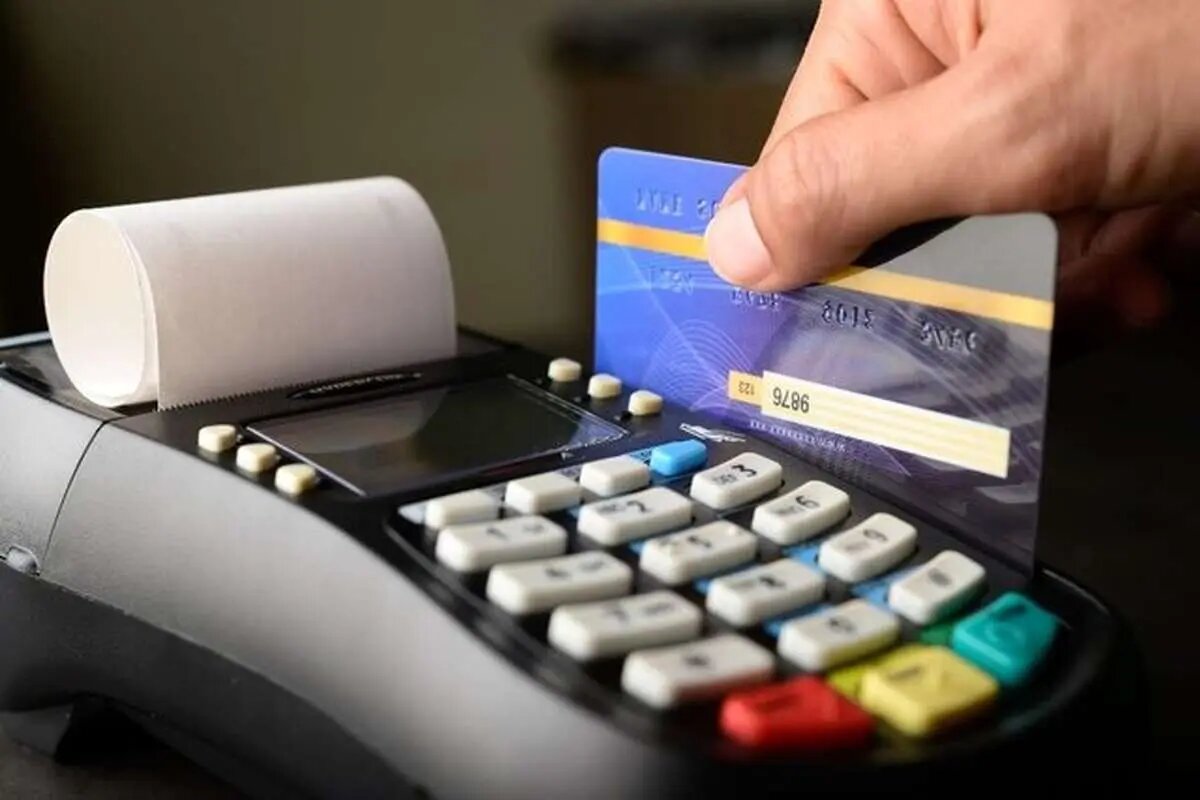



According to Khabar Online, the latest economic report of Shaperk shows that in October 1405, more than four billion and 721 million transactions were registered in the country’s payment network, and the value of these transactions reached more than 44,541,000 billion Rials. Although the nominal value of transactions has almost doubled compared to the same month of last year, the deflated index analysis shows that the real growth of the value of payments in the same period of time was only 5.03%; Statistics that highlight the necessity of separating nominal and real growth in the analysis of payment network performance.
ISNA wrote in a news: According to this report, in October this year, 4 billion 721 million 77 thousand 347 transactions were processed in the card payment electronic network. The Rial value of these transactions has also reached 44,541,000 billion Rials.
Comparing the performance of October with September shows that the number of transactions has decreased by 3.10%, but their Rial value has increased by 1%. In this way, despite the decrease in the number of payments, the total nominal value of transactions registered in the payment network has slightly increased.
In a point-to-point comparison, the number of transactions has increased by 2.69% and their nominal value by 98.16% compared to October last year. However, this significant growth in the value of the rial does not mean a proportional increase in the real volume of exchanges.
By calculating the value of transactions after removing the effect of inflation, Shaperk’s report shows that the real growth of the value of payments has reached 5.03% compared to the end of last year. Also, the real value of transactions has decreased by 3.25% compared to September.
In the same period, the price index of consumer goods and services reached 729.8 in September to 761.8 in October, which is equivalent to a monthly growth of 4.38%. The consumer price index has also increased by 88.66% compared to last year.
These figures show that a significant part of the increase in Rial value of Shoprak transactions is affected by the increase in the general level of prices. Therefore, for a more accurate evaluation of the electronic payment situation, relying on the nominal growth alone is not enough, and the real value index can provide a clearer picture of the changes in purchasing power and the economic volume of exchanges.
In-store card readers remain at the forefront of payment tools
Examining the composition of acceptance tools shows that store card readers still have the largest share of the number of payment network transactions. In October 1405, the share of this tool has reached 91.01% of the total number of transactions.
After store card readers, internet tools are with a share of 5.89%, and mobile tools and command codes (USSD) also have 1.59 and 1.51% of the number of transactions, respectively.
In the amount index, store card readers are in first place with a share of 74.85%. Internet tools accounted for 23.96% of the value of transactions, and the share of mobile tools and USSD was 1.11% and 0.08%, respectively.
This combination shows that although internet and mobile tools are part of the country’s payment infrastructure along with card readers, the majority of the number and value of transactions are still made through store card readers.
On the other hand, the average amount of each transaction in different tools is also significantly different.
The average amount of each transaction in the internet tool was 38.87 million Rials; While this figure is 8.13 million Rials for store card readers, 7.73 million Rials for mobile devices and 0.49 million Rials for USSD.
This difference indicates that the contribution of a number of acceptance tools is not necessarily the same as their monetary contribution, and each tool has a different role in the payment network, according to the type of use and the nature of the services provided.
The share of successful transactions is 92.49%
In the service quality section, Shaperk’s report mentions the registration of more than five billion and 104 million transactions in the total network, of which more than four billion and 721 million transactions were successful. Based on this, the share of successful transactions reached 92.49% of all transactions in October and 7.51% of transactions were unsuccessful.
Examining the causes of failed transactions shows that user errors have the largest share among errors with a share of 88.38%. These types of errors are related to things like lack of balance or forgetting the card password and are not directly related to the performance of the payment network. Exporting errors made up 7.62%, acceptance errors 3.76% and shopping errors 0.24% of the total failed transactions.
Despite the 4.86% decrease in the total number of unsuccessful transactions compared to September, the number of acceptance errors has increased in October. The number of these errors increased from 10,667,000 cases in September to more than 14,416,000 cases in October, which shows a growth of 35.14%.
On the other hand, user errors decreased by 3.68%, exporting errors by 24.06%, and Shopreki errors by 55.37% compared to the previous month. Therefore, although the overall share of failed transactions has decreased, the increase in acceptance errors is still one of the indicators that should be considered in the evaluation of the quality of payment network services.
Another significant indicator in the October report is the increase in the number of incomplete or inconsistent transactions. According to Shaperk data, the number of these transactions increased from 389 thousand 554 cases in September to 474 thousand 515 cases in October, which shows a growth of 21.81%. The ratio of inconsistent transactions to total successful transactions has also increased from 0.008% in September to 0.010% in October. Although the share of these transactions in the total number of successful payments is still limited, the increase in their number shows the importance of continuous monitoring of discrepancies and investigating the reasons for the occurrence of incomplete transactions.
217