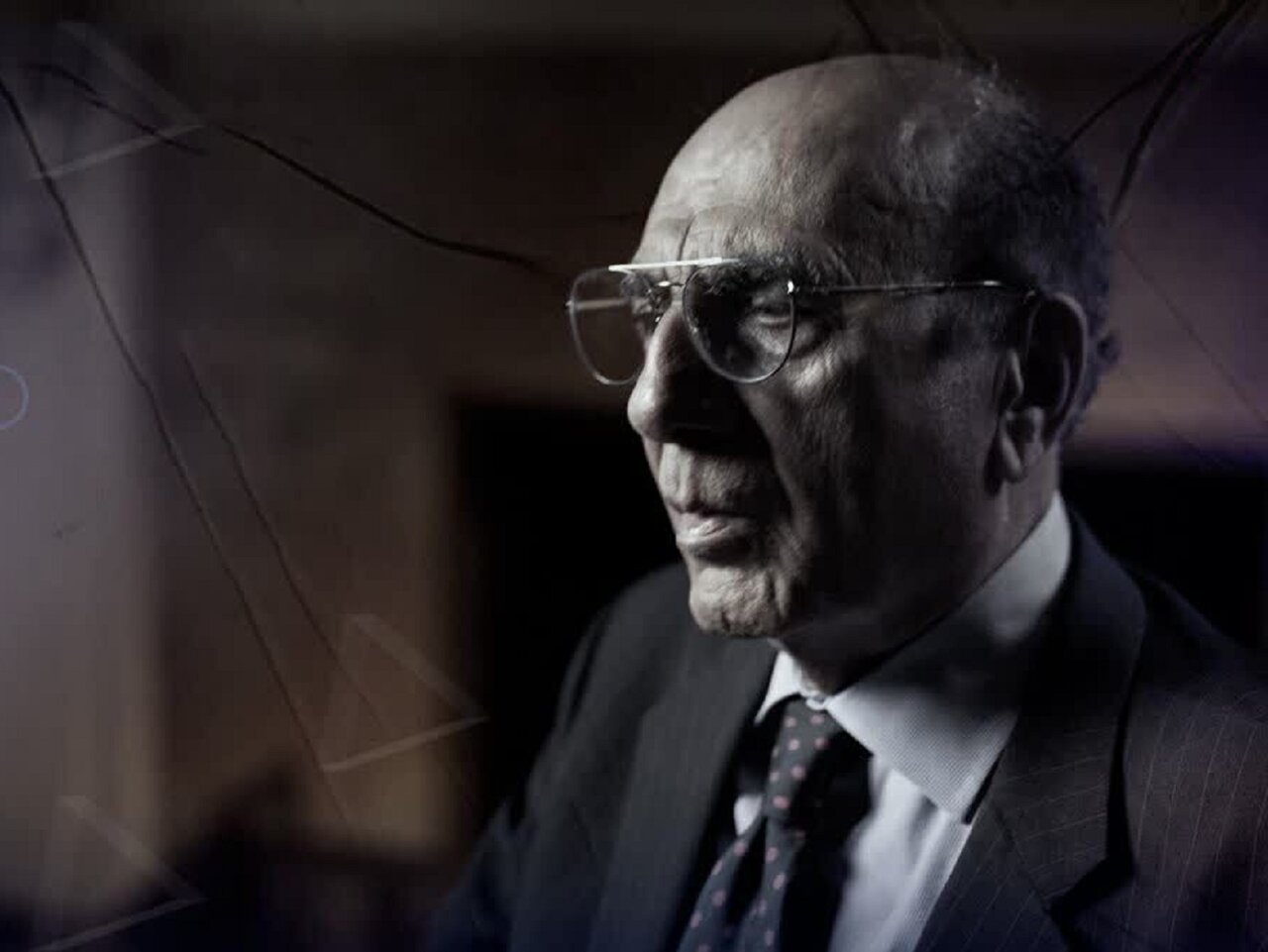

According to the news agency Online news According to Asr Iran; The photo published by the daughter of Parviz Sabeti, the former head of the third department of Savak during the Pahlavi era, became one of the most painful events in her life.
A man who lived in Florida for years after the revolution by the nickname Peter, was active in real estate, and almost no one knew where he was or what he was doing. But the publication of a photo of him in a meeting of the opponents of the Islamic Republic of Iran revealed his identity and finally became a problem for him.
At the end of 1403, around February 2025, three Iranians living in America, who were former political prisoners of the 1350s, saw this photo and realized that Parviz Sabeti was still alive and living in America. They, who are between 68 and 85 years old and live in California, claim that during the Pahlavi regime in the 1350s, they were severely tortured by Parviz Sabeti and the forces under his command.
The trio filed a civil suit in the Federal District Court for the Middle District of Florida, Orlando Division, seeking a summary judgment.
This complaint was filed based on the Torture Victim Protection Act in the United States; A law that provides the possibility of civil prosecution of some cases of torture committed under the authority of foreign governments. According to this law, victims can take legal action against the perpetrators of torture even years after it happened.
In their lawsuit, the plaintiffs have mentioned all kinds of torture, including beatings, electric shocks, hanging from the ceiling, and pulling nails. They also claim that they were tortured with a device called Apollo; A device in which the victim was placed in a chair and a metal cap was placed over his head to amplify his screams in his own head.
By filing this complaint, Parviz Sabeti was called to the court. But who is Parviz Thabeti and why is his name so closely associated with repression and torture among security officials of the Pahlavi era?
Parviz Tabeti was born in 1315 in Sangsar Semnan. He is considered one of the most senior security officials during the era of Mohammad Reza Shah Pahlavi.
In 1337, after receiving a bachelor’s degree in law from the University of Tehran, Sabeti joined the country’s intelligence and security organization, SAVAK, as a political analyst. He quickly progressed in this organization and became the head of the Communist Department and then the General Department of Internal Security.
From around 1349, he became the deputy of the third general department of Savak, and from 1352 until the last months of the Pahlavi regime, he was the head of this department.
The third general department was the most important and powerful department of SAVAK in the field of internal security. Dealing with political opponents, guerilla groups, communists and subversive activities were among its responsibilities. Arresting and suppressing political opponents was an important part of this department’s activities, and the Joint Anti-Sabotage Committee, one of the main centers for arresting and interrogating opponents, was a subsidiary of it.
In the last years of Pahlavi’s rule, in addition to being the head of the third administration, Sabeti worked in the position of the deputy head of SAVAK and sometimes appeared as the government’s security spokesman in front of the media. including in press conferences related to the activities of groups opposed to the government, such as the Siahkol affair.
But he finally left the Mehrabad airport with a pseudonym on November 9, 1357, about a hundred days before the victory of the revolution. He first went to Europe and then to America. His family was with him.
Sabeti settled in Florida and chose the Western names Peter and Nancy for himself and his wife. He had a successful business in real estate and apparently bought several properties in Orange County, Florida, one of which was a very luxurious mansion.
He lived a relatively secretive life for several decades. He did not publish photos of himself, and not much information about his residence and activities was available.
One of the few signs of his presence in the public space was the publication of a book in 1391 with the title “Der Damgeh Kadeh”; The book is the result of his detailed conversation with Irfan Qanifard, in which he talked about his activities in SAVAK and during the Pahlavi regime.
But in 1401, i.e. 2023, the publication of a photo of Sabeti made his presence more public. After that, Har participated in a detailed television interview and talked about his security activities before the revolution and the actions he had taken in SAVAK.
Many critics and former political prisoners consider him to be one of the main architects of the institutionalization of repression and torture in SAVAK and believe that he was directly responsible or at least the leader of these actions.
In October 2026, i.e. Mehr 1405, Parviz Sabeti requested the judge of the case to declare the complaint filed against him closed due to the passage of time. But the court did not accept this request.
Referring to the long-term concealment of the place of residence of Taveti and the plaintiffs’ fear of facing retaliation, the judge considered these circumstances exceptional, for this reason, the case was not closed and the investigation will continue.
The plaintiffs of this case have not revealed their real names due to security concerns and fear of the reaction of Pahlavi government supporters and supporters of Parviz Sabeti. They are known as John One, John Two and John Three in the file.
In this complaint, Sabi’s role in the arbitrary arrests, interrogations and torture of political prisoners has been objected and the plaintiffs have demanded about 225 million dollars in compensation.
The case has now entered the stage of collecting and exchanging documents, documents and testimonies; A stage that may take about a year. Also, protective measures have been taken to protect the identity of the plaintiffs. However, there have been reports of threats to plaintiffs and their lawyers.
Organizations such as Amnesty International and the Center for Justice and Accountability have welcomed the continuation of this case.
This case has now become one of the important examples of efforts to hold former officials of the Pahlavi government accountable for the accusation of torture in America; A case that can have a clear message for perpetrators of torture; Passing time, changing the country of residence and hiding behind aliases does not necessarily mean escaping from justice.
259