



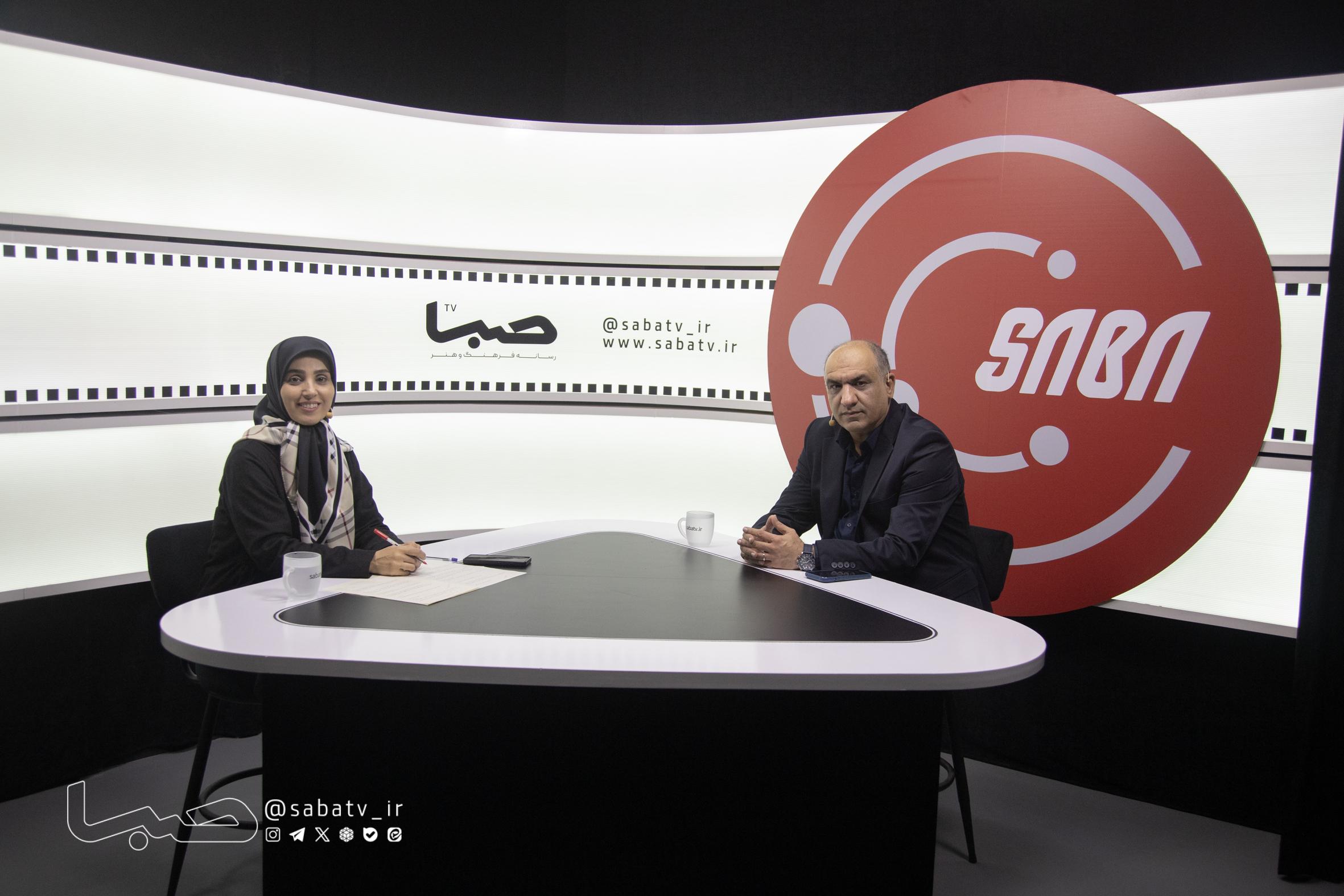


Criticizing the management policies of radio and television, the non-transparent economics of the home television network, the unbalanced increase in wages and the removal of experienced workers, the cinema and television producer emphasized that today’s media crisis requires the reform of policies rather than depending on the change of managers.

Basmira Jafari / Saba, Siavash Haghigi, the producer of cinema and television, in an interview with Saba, referring to the economic difficulties of families and its effect on the consumption pattern of cultural products, believes that the increase in the cost of entertainment has made going to the cinema a costly choice for many families, and this issue has led a part of the audience to watch movies on the home theater network. According to him, in such a situation, comedies have become the first choice for a part of the audience; Because families are looking for entertainment and distance from everyday difficulties more than before in the midst of economic pressures.
Emphasizing that there is still an audience for social cinema, Haghighi considered the role of advertising, the credibility of the director and the distinctive features of the works to be important in attracting the audience, and at the same time pointed out the position of children’s cinema and animation. He believes that family women and children play an effective role in deciding to choose a movie and go to the cinema.
This producer also said about the role of public institutions in supporting cinema that the direct entry of these institutions into the filmmaking process does not necessarily lead to the production of a high-quality product due to the multitude of considerations and interference in the script and structure of the works. According to him, it is better for these collections to include cinema and theater in the welfare basket of their employees instead of entering into production, so as to create continuous demand for cultural products and strengthen the field of private sector activity.
He also pointed to the obstacles in the production of religious works, and brought up the example of the movie “Rastekhiz” by Ahmad Reza Darwish, and considered part of the problems in this area to be caused by the multiplicity of decision-making authorities, different sensitivities, and managers’ avoidance of responsibility; A situation that, according to him, sometimes causes managers to oppose the production of such works from the beginning instead of accepting the responsibility of making decisions.
In another part of this conversation, Haghigi emphasized the necessity of transparency of income and cost of platforms by raising questions about the economics of the home show network. He believes that the number of subscriptions does not necessarily indicate the number of real audiences, and it should be determined to what extent the revenue from subscriptions and advertisements covers the production costs and the high salaries of the agents. According to him, the competition of platforms to attract well-known faces has led to an increase in wages and the disruption of the economic balance between the cinema and the home television network.
At the same time, criticizing Satra’s performance, this producer emphasized that the complete transfer of the responsibility of monitoring the platforms to the Ministry of Culture and Islamic Guidance does not necessarily lead to the creation of a more open space. From his point of view, all the problems in this field cannot be attributed to one institution and the licensing, production and monitoring mechanisms should be examined in a more comprehensive way.
Haghighi, contrary to the opinion that considers television to be a declining medium and lacks an audience, believes that this medium still has the capacity to attract a large audience due to its free access and wide geographic coverage; A capacity that is especially significant in cities and rural areas. However, he emphasizes that the fact that television is free alone is not enough to maintain the audience and that this medium must produce attractive and high-quality content in accordance with the real needs and tastes of society.
In the same context, he considered the loss of successful TV brands such as “Noud” with Adel Ferdosipour’s performance, “Khandwane”, “Asr New” and Mehran Moderi’s programs as an example of the failure of Sedavosima to maintain its human and media capital. According to the true belief, the organization that played a role in the formation and recognition of these figures, has not been able to provide the basis for continued cooperation with them, and in some cases, it has turned its successful forces into external critics.
Stating that not all broadcasting problems can be attributed to a specific manager or management period, this producer considered the roots of media crises in macro policies and structural considerations. He believes that changing managers without modifying approaches and policies cannot create a decisive change. From his point of view, the national media should reflect social diversity and avoid reducing society’s issues to political conflicts between different currents.
Haghigi also pointed to the policy of youthism in the radio and television, and emphasized that it is necessary to use young and creative forces, but this approach should not lead to the elimination of experienced forces. According to him, seasoned producers and programmers can provide their experience to the new generation in the position of advisors and leaders and provide the basis for their professional growth.
In the end, he expressed hope for the audience’s return to television, and emphasized the need to accurately identify the audience and produce high-quality entertainment tailored to the needs of families, and said that television, home television networks, and social networks can work together and the success of one is not supposed to depend on the exclusion of the other.




