



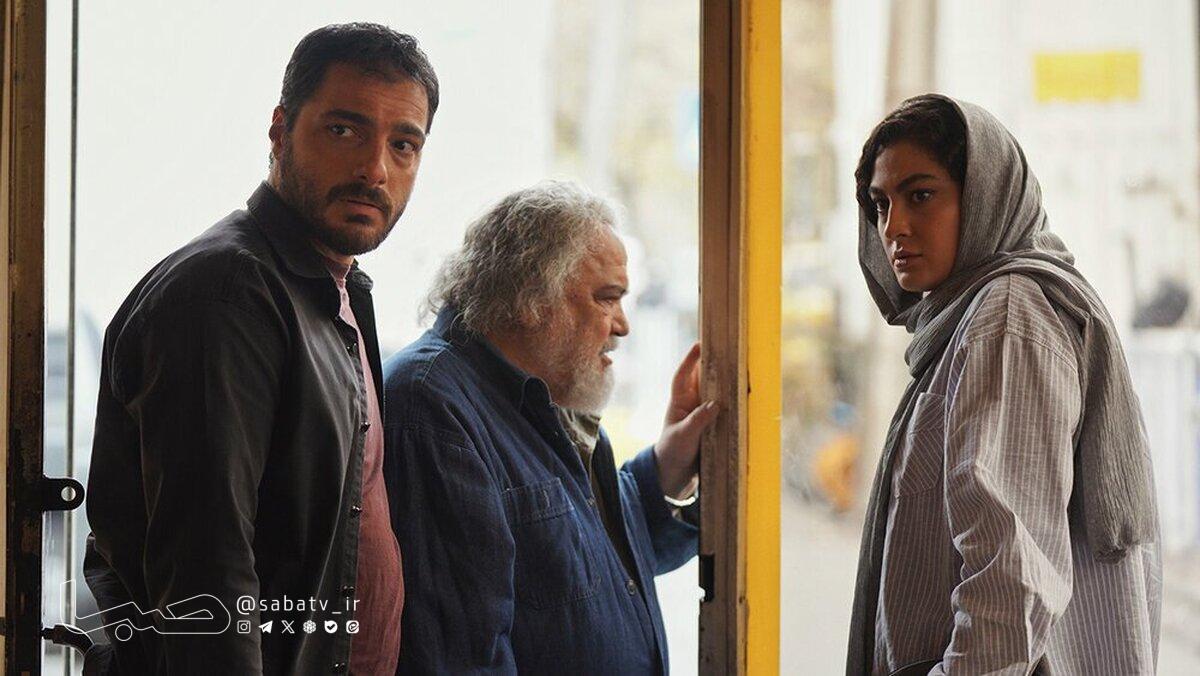


The film producer of Cafe Sultan, emphasizing the necessity of social cinema to return to the real issues of society, believes that the art of cinema, instead of issuing judgments and presenting direct statements, should provide the possibility of dialogue and empathy between generations by raising questions and revealing hidden contradictions; The approach followed in the movie “Sultan Cafe” and its narration of war, family and generation gap.

Servin Dehghan/Saba, War in cinema is not just an external situation or platform for representing confrontations; Sometimes it is a crisis that reveals the hidden layers of human relationships and puts people in front of their beliefs, memories and unfulfilled expectations. In such a narrative, the family can become the smallest and at the same time the most complex field of facing the crisis; Where generational differences, social wounds and lack of dialogue find a new meaning.
“Cafe Sultan” movie By choosing a roadside cafe as the center of the narrative, it portrays the war through the lens of a family’s life and the confrontation of different views. In an interview with Morteza Razzaq Karimi, the producer of this film, Saba investigated the role of the producer in the formation of the film world, the relationship between social cinema and the reality of war, the responsibility of art in the face of contemporary events, and the difficulty of narrating generational gaps.
How did your collaboration with Mustafa Razzaq Karimi in “Sultan Cafe” take place?
My collaboration with Mustafa Razzaq Karimi has a history, but it does not mean that we always work together. I have worked with different directors and they have worked with other producers. In “Sultan Cafe” we had common conditions and views and a very pleasant cooperation was formed. Mustafa Razzaq Karimi is a professional director, master of style and familiar with international standards. His cooperation with the author of the film, Ms. Arendi, was also effective in shaping the fictional world of the work. Like other projects, I had cooperation and consensus in the content and creation of the work. Of course, there were challenging discussions, especially with the author, but these discussions were aimed at achieving a better result. The director also had good ideas in transforming the text into the visual world, and we reached agreement in many cases. In my opinion, the triangle of writer, director and producer was formed in this project in a suitable way.
You have always talked about the creative role of the producer in the formation of the work. What is the example of this look in “Cafe Sultan”?
I am always present with the writer and director in the design and idea formation stage. Sometimes the initial idea was my own; For example, in the movie “Hidden Sense” directed by Mustafa Razzaq Karimi more than 20 years ago, I wrote the original plot myself. But in “Sultan Cafe”, the initial idea was formed by the writer and director. However, I believe that the role of the producer can go beyond the provision of financial resources, and the title of the producer of the author is not far from reality in such circumstances. I have to believe in the world of the work from the beginning and even by reading a short text, an image of the film that is going to be made is formed in my mind. In order to achieve this image, I consider research to be one of the main foundations of work and emphasize its necessity. I also think about the audience and their needs from the very beginning. Social cinema may be less related to the general desire of the audience in the current situation, but this type of cinema addresses the real needs of society. The concern about the gap between generations and the expectations of the young generation was one of the issues that was important to me in the formation of Sultan Cafe.
With this amount of participation in the formation of the content, where is the line between the producer’s creative accompaniment and involvement in the direction?
Before writing the script, I think about the idea of the supervisor of the work and I share this issue with the writer and the director. The central idea and the main plot should be formed in line with it. If I don’t get the desired result in the initial plan or logline stage, I won’t enter the next stages. I have to be convinced that the effect world has the capacity to become a motion picture. But when the script is ready and the project enters the production stage, I do not interfere in the direction in any way. I believe that the director has a central role in the production team and all agents should work within the framework of his vision. The task of the producer is to choose the right factors, provide facilities and overall supervision of the project process. If the director needs consensus, I am by his side, but this presence does not mean interfering in executive decisions. Directing is a technical and creative matter, and the producer must provide conditions for the director to transform his mental world into the image in the best way.

What criteria did you have in choosing the actors of “Cafe Sultan”, including Azita Hajian and Mohammad Reza Sharifinia?
The selection of actors must be done with the consensus and consent of the director. In this film, in addition to the fit of the actors with the characters and their professional ability, their motivation and enthusiasm to participate in the project was also important. Ms. Azita Hajian was one of our first definite choices. His knowledge and understanding of the character was very remarkable for us. We felt that they connected with the inner world of this character and even had good suggestions about it. They were chosen with the approval of the director and after that we went to the selection of other actors, including Mr. Mohammad Reza Sharifinia. I previously collaborated with Mr. Sharifinia in the movie “Whom I Killed”, but the collaboration with Ms. Hajian happened for the first time in this project. Fortunately, receiving the Crystal Simorgh for the best leading actress at Fajr Film Festival was also a valuable event for the film.
One of the main themes of the film is the gap between generations and the necessity of dialogue. How can cinema help create empathy in society?
Our society today has a serious need for dialogue; Not only between generations, but also between different strata. The lack of dialogue unfortunately leads the society to further distances, polarization and numerous social consequences. Empathy, I believe, should be a result of watching the film, rather than being presented as a direct message to the audience from the start. If we want to talk only about empathy, the dramatic appeal of the work may be reduced. Drama is formed by creating obstacles in the path of the characters and their dialogue. In “Sultan Cafe”, we tried to show the differences, contradictions and unfulfilled expectations by contrasting the generations. There are distances, each respectable from one point of view, but not often given the opportunity to be plotted against each other. When these issues are not raised, it is natural that we will not reach real empathy. Cinema can provide this opportunity for people to see and hear each other’s concerns and expectations.
The film is narrated in the context of war. How can one balance between showing solidarity and reflecting the real differences and conflicts of the society?
Crises like war can be a good opportunity to reveal the hidden layers of society. Sometimes in normal conditions, there is a kind of apparent calm that makes many differences invisible, but a crisis disrupts this situation and acts like a push that ignites the fire under the ashes. In such a situation, masks are removed and hidden complexes, unfulfilled desires and hidden expectations are revealed. We also saw an example of it during the Corona era; A crisis that revealed many family and social issues. War can also have such a function. Cinema should use these situations to analyze psychological, social and family issues, rather than simply presenting a uniform and idealistic image of society.
When facing contemporary events, the film is sometimes expected to have a clear and specific position. Do you agree with this expectation?
I believe that the film should not necessarily become a statement with a clear position. When the work of art is too involved in declaring a position and judgment, it may move away from the language of cinema and approach a report or a commissioned work. Especially about contemporary events that the audience has witnessed, the film should be able to engage his mind. In my opinion, a successful film must first be a questioner and create questions in the mind of the audience that will make them search for answers. The film can also give general knowledge to the audience, but I do not agree with direct judgment in the cinema. The language of art is the language of questioning and creating the possibility of reflection, not passing judgment.

According to your experience in documentary and fiction cinema, what parts of Iran’s social reality have made it to the cinema less?
Documentary cinema has taken more serious steps in recent years and has been closer to social realities than fictional cinema. But fiction cinema is facing more difficulties. Researching and directly confronting the facts, especially entering the privacy of families, is not an easy task. On the other hand, turning a real story into a screenplay that is both faithful to reality and has an attractive dramatic structure is a complex process. High production costs have also increased the problems of this type of cinema. Screening, distribution and screening policies do not support social cinema enough. Naturally, the audience is interested in comedy and humorous cinema and needs happiness and expansion of mind, but this issue should not mean ignoring social cinema. Cultural, social and even economic institutions, including municipalities, industrial centers and cultural complexes, can play a role in supporting these works. To survive, social cinema needs support and create an acceptable economic cycle.
You believe that “Sultan Cafe” has the capacity to communicate with general and special audiences. How do you evaluate this capacity?
Communication with the audience is not limited only to the subject of the film. A work must be based on reality from the point of view of research and have a dramatic structure and standard technical quality. However, the distribution and display system is also very important. Even a good social film faces serious problems if it does not have a specific strategy to introduce and attract the audience. The audience may be interested in watching the movie, but they don’t know in which theater and in what sense they can watch it. Information, distribution and screening policies currently do not provide adequate support for such films. Therefore, the quality of the film alone is not enough for its success, and the conditions for viewing the work must also be provided.
The social importance of an issue sometimes overshadows its quality. How do you prevent this from happening as a producer?
Sometimes the subject affects the creator of the work so much that the production process begins before it is completely transformed into the language of cinema. As a result, a film may be made that has an important subject, but does not have the right structure and does not reach the desired result in characterisation, choice of agents or technical quality. For this reason, I believe that every project should be designed from scratch. This design is not only limited to the script; From the initial idea and logline to the writing, selection of agents and actors, production, post-production, and finally release and screening, there must be careful planning. If this chain is not designed from scratch, entering the production phase is like stepping into a minefield. The importance of the subject alone does not guarantee the quality of the film, and all steps must be done with knowledge and planning.
And the final speech
The audience’s interest in comedy cinema is quite respectable. Society needs happiness, peace and expansion of the mind, but besides that, many concerns and expectations of the young generation, especially issues related to the gap between generations, are raised in social cinema. My advice is that the younger audience should definitely see “Sultan Cafe” and invite the older and previous generations to watch it as well.




