





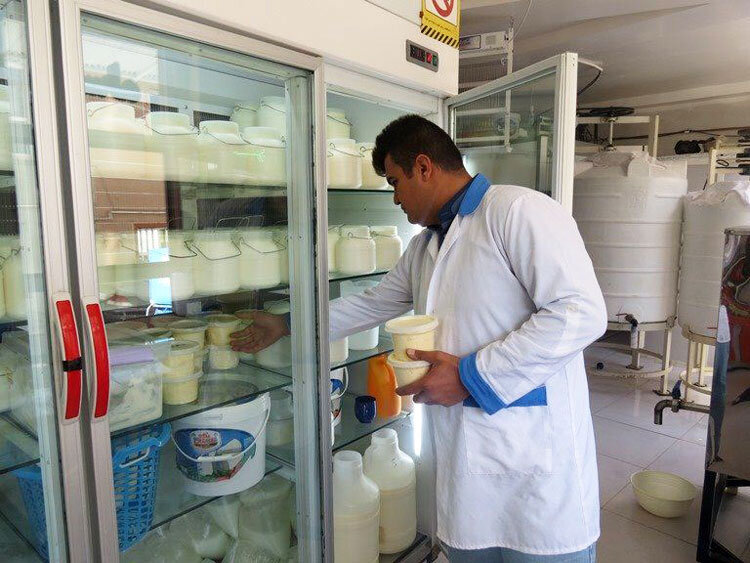
According to Khabaronline news agency, the purchase price of raw milk has not been updated despite the increase in production costs, and livestock farmers say that they are losing money.
Tasnim wrote: In a situation where the cost of raw milk production has increased in recent months due to the increase in the price of livestock inputs, medicine, vaccines, labor wages and other livestock maintenance costs, the approved purchase price of this product has not changed. According to the farmers, it has made it difficult for them to continue their activities and maintain production.
On the other hand, dairy industries have increased the prices of their products at the same time, but farmers continue to sell raw milk at the previous rates and below the cost of production.
They buy milk cheap, sell dairy products expensive!
Habib Dehghan Dehnavi, the CEO of Tehran Province Livestock Farmers’ Union, stated: The costs of livestock farmers in various production sectors, including livestock inputs, vaccines, medicine and workers’ wages, have increased, but according to this increase in costs, the price of the final product, i.e. raw milk, has not changed.
He stated that determining the purchase price of raw milk is the responsibility of the market regulation headquarters, adding: Considering that this issue should be determined in the market regulation headquarters headed by the first vice president, the meeting related to determining the new price has not been held yet, and as a result, livestock farmers are in a state of uncertainty and are forced to sell their products at a low price and at a loss.
25 thousand tomans difference between purchase price and milk production cost
This is despite the fact that the approved price per kilogram of raw milk is 60,500 tomans, which was set in the third month of the year. But according to the farmers, after that the production costs have increased significantly and the purchase rate of raw milk has not been adjusted according to the new conditions.
Explaining the production situation, one of the ranchers said: Currently, raw milk is bought from us for 60,000 tomans per kilo, while the cost of production per kilogram for the rancher has reached 85,000 tomans. According to him, the costs of various animal husbandry departments, including machinery, tractors, feeding and milking machines, buying sperm, insurance, and workers’ wages have increased between 400 and 500 percent.
Pointing to the increase in the price of livestock inputs, this rancher added: The basis for calculating the price of raw milk was 42,000 tomans for corn and 60,000 tomans for soybeans, while now soybeans in the market reach 80 to 90,000 tomans and the price of corn is about 70,000 tomans including the cost of transportation.
Referring to the increase in the cost of inputs after determining the approved rate of raw milk, another rancher said: The price of some inputs has increased by 200 to 250 percent, and the price of the main inputs, including barley, corn, and soybeans, has increased by 20 to 50 percent. According to him, the cost of medicine has increased by more than 300% and the price of vaccines has multiplied compared to last year.
Perishability of milk hinders compensation of farmers’ losses
In the meantime, livestock farmers believe that due to the perishability of raw milk, they cannot store and supply the product at the right time for sale at a higher price, and unlike some goods such as livestock inputs, they cannot postpone the supply in the hope of increasing the price.
Another rancher emphasized the necessity of continuous review of the raw milk purchase rate and stated: As the price of other goods changes in the market, there should be a mechanism to adjust the price of raw milk accordingly. Because until the announcement of the new rate, the production costs will increase again and the approved rate will actually lag behind the market conditions.
He added: Dairy factories buy milk at prices of around 60 to 61 thousand Tomans, and considering the fat, the price received by the farmer may reach around 65 to 66 thousand Tomans. However, this figure does not answer the production costs.
Warning about the reduction of productive livestock and the drop in milk production
According to livestock farmers, the continuation of these conditions not only destroys the profitability of livestock units, but can also lead to a decrease in the number of productive livestock and a drop in milk production in the future. One of the ranchers has also warned that if this trend continues, the ranchers may have to send part of their herd to the slaughterhouse to meet current expenses.
In sum, the distance between the approved raw milk purchase rate and the actual cost of production, along with the delay in determining the new price, has become one of the main challenges for ranchers; A challenge that highlights the necessity of immediate determination of the raw milk rate and revision of its pricing mechanism in the conditions of the increase in the price of dairy products by the industries.
223225



