





The secretary of the second national film festival “Water at the cost of life” announced plans to make this event permanent, support young filmmakers and create a platform for showing works related to water.

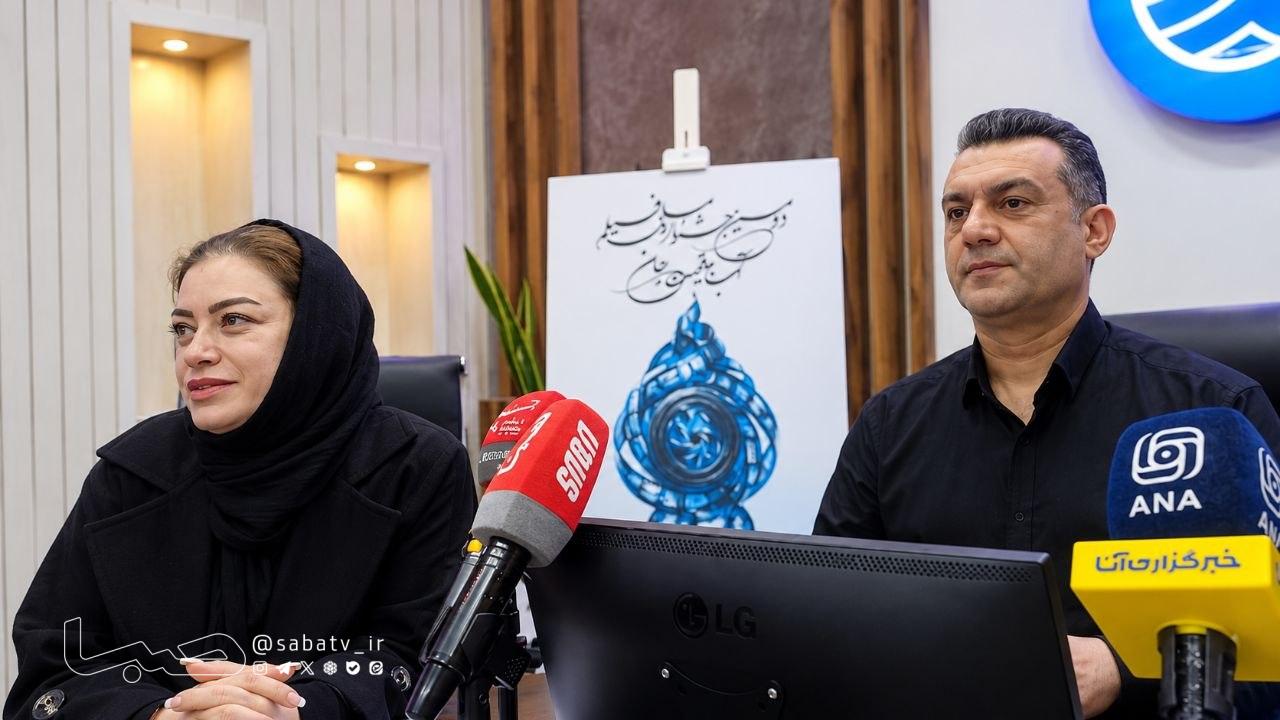
Nasser Arbab/Saba, The media meeting of the second national film festival “Water at the cost of life” was held with the presence of Amir Karmi-Yazdi, the secretary of the festival, and a group of jury members and media reporters. In this meeting, issues such as the necessity of creating culture in the field of optimal water consumption, the role of cinema in raising public awareness, the continuation of the festival after a 12-year break, the independence of the selection and judging board, how to show works and support programs for filmmakers were discussed.
At the beginning of this meeting, Amir Karmi-Yazdi, referring to the approach of the second national film festival “Water at the cost of life”, said: Water is an issue beyond political and factional boundaries; It is a universal issue that belongs to all generations and has been handed down to us from the past and we have a duty to preserve it for our children.
Stating that the main goal of the festival is to push the cinematic and artistic view towards optimizing water consumption, he said: This event is not just a place for filmmakers to gather and watch a few films, but we want artists in different fields to take steps to achieve water-related goals. Our goal is neither the festival secretariat nor a specific organization, but the issue of water itself; Because managers and policy makers may change, but the water issue will remain.
The secretary of the second national film festival “Water at the cost of life” emphasized the capacity of cinema to communicate with the audience and explained: Cinema is one of the few artistic tools that can communicate with people. Sometimes a sequence can have thousands of words and leave a lasting impression on the audience. For this reason, we believe that cinema and documentaries can play an effective role in creating culture and changing the pattern of water consumption.
From the 12-year break to the promise of making the festival permanent
In response to a question about the possibility of the continuation of the festival and the concern that it will stop due to the change of managers and policy makers, Karmiyazdi pointed to the history of this event and said: The first edition of the festival was held in 2013 and it was a successful one, but due to the change of managers, its continuation was stopped. This year, in the discussions we had with the country’s water and sewage engineering company and the deputy director of cinema, it was decided that the festival would be held permanently.
He continued: We were even suggested to use the title “Permanent Festival of Water at the Cost of Life”, but we preferred to speak cautiously about making it permanent until the third period is held. However, the proposal presented and the plans made from the beginning have been based on a continuous festival. Setting up water ambassadors and cooperation with the Ministry of Education is also part of this long-term plan.
590 works reached the secretariat
The secretary of the festival also explained about the number of works that reached the second round of this event: a total of 590 works were sent to the festival secretariat, which included 56 short films, 126 documentaries, 88 report documentaries and 59 narrative documentaries. After the review of the selection board, 40 works in the short film section, three works in the fiction documentary section and 29 works in the documentary section were selected to appear in the judging stage.
Referring to the launch of the student section of the festival, he added: One of our most important decisions was to start building culture from children. For this purpose, we signed a memorandum of understanding with the Ministry of Education and added the student section to the festival. Even though the call was published in the summer and at the same time as schools were closed, we received about 40 works from students.
Karmi-Yazdi stated that many of these works were produced with mobile phones and said: It is important for us that children get to know art and cinema from the very beginning and learn to make films about social and environmental issues. All professional filmmakers also started from a small point one day and these same students may become professional filmmakers in the future.
He also announced the launch of the “Ambassadors of Water” project and said: We tried to use the capacity of artists and activists from different fields so that each of them would address the issue of water in their specialized field; Poets should write poems about water, writers should pay attention to this issue, and filmmakers should produce their works based on it.
Film production in the provinces with the participation of filmmakers
Referring to the cooperation of the country’s water and sewage engineering company in different provinces, the secretary of the festival said: One of the positive events of this period was that the country’s water and sewage engineering company entered the production field in the provinces. For example, five documentaries were produced in some provinces and a number of films were produced in other provinces. The important thing is that the productions were not limited to the public relations of the organizations and an effort was made to identify the active filmmakers of each province and provide the possibility of cooperation with them.
He considered this process to be the foundation of communication between government institutions and the filmmaking community and added: We had representatives in each province who introduced filmmakers to the objectives of the festival and cooperated in collecting and sending works to the secretariat. We hope that this relationship will continue in the coming years and that each province will be able to produce some works on the subject of water.
The independence of judging and the possibility of displaying critical works
One of the important topics of the meeting was the question about the possibility of censorship of documentaries that may criticize the performance of government institutions. In response, Karmiyazdi emphasized: An expert related to the water field was present in the selection and judging panel, and as far as I know, there has never been such an approach that a work is discarded due to questioning of an organization.
He continued: In a film, an issue about digging a well or using water resources may be raised, which needs to be examined from an expert’s point of view, but this does not mean that critical works should not be shown. We don’t want only works that confirm the performance of an organization to be selected.
The secretary of the festival also said about the fate of the works after the end of the event: the rights of the works belong to the filmmakers and the festival alone is not allowed to decide about their screening in other platforms. Of course, we have talked with some filmmakers about buying works so that we can create a platform like a specialized platform for showing movies and documentaries related to water in the future. Naturally, this cooperation should be in such a way that the interests of filmmakers are also secured.
Cinematic quality is more important than direct message
In response to a question about the criteria for selecting works and the importance of the technical quality of the films, Karmiyazdi said: For us, simply raising the issue of water is not enough. The quality of construction, structure, direction and narration are very important. A work should be able to engage the audience from an artistic point of view in addition to dealing with the issue of water.
He added: sometimes a simple image of a glass of water, which is used to water a pot instead of throwing it away, can be effective. Cinema is the seventh art and even one sequence can affect the behavior of the audience. Fortunately, filmmakers have been more concerned about the issue of water than we imagined and sent various works to the secretariat.
Support program for the winners of the next period
In response to a question about supporting young talents and preventing the festival from being limited to works produced in previous years, the secretary of the second national film festival “Water at the cost of life” said: In the first edition of the festival in 2013, five filmmakers were selected for each province and each was paid one million tomans to produce a one-minute work.
He continued: In the framework of the festival’s proposal, we have predicted that the winners of different sections, in addition to the festival’s awards, will be allocated the cost of producing a film so that they can create a new work with the theme of water. It is also possible that some productions required by the country’s water and sewage engineering company will be entrusted to the filmmakers who attended the festival.
Karmiyazdi also explained about the addition of new parts to the festival, including teasers, music videos, and works produced with artificial intelligence: Our preference is that the festival expands gradually. We don’t want to define many sections at the very beginning that will not be possible to continue in the following years. First, the current sections should be stabilized and then the ground for the addition of new sections should be provided.
The student sector and the necessity of cooperation with education
He also said about educational and support programs for students: We left the judging of the student section to the experts of the Ministry of Education. Because we believe that the language of children is different from the language of adults and teachers are the best bridge between these two groups.
Karmiyazdi added: We have also launched the Teacher Ambassadors project in the same direction, so that teachers can talk about the importance of water and its optimal use in the classrooms, even for five minutes, and help us in collecting the works of the next course. Of course, showing students’ works in schools requires coordination with the Ministry of Education and review by the support council of this ministry. Discussions have also been held about screening works in schools and we hope that this path will come to fruition in the future.
The festival looks at the water crisis in agriculture and industry
In another part of the meeting, the issue of the festival’s need to pay attention to water consumption in agriculture and industry was raised; Areas that account for a significant share of the country’s water resources consumption.
In this context, Karmiyazdi said: Agriculture and industry are also important issues in the water sector, but some of these decisions are not in the hands of the festival secretariat and we must reach a conclusion with the officials of the country’s water and sewage engineering company. The proposed proposal is a good proposal and can be considered in future plans.
He also said about the addition of the international section to the festival: There is an international view on the issue of water, but to reach this stage, the frameworks and position of the festival must be established first. It is not possible to simply add the international title to the festival without planning. We hope to reach this stage in the third, fourth or fifth periods.
Cooperation with radio and television and municipality; Still waiting for expansion
Another topic raised in the meeting was how to show works to the general audience and use the capacity of national media and urban advertising. Karmiyazdi said in this regard: We requested Sedavasima to send documentary works to the festival and we also had requests to broadcast teasers of the festival, but this cooperation did not materialize as expected.
Pointing out that the rights of the works belong to their owners, he explained: Even if an organization wants to broadcast a work, it must coordinate with the producer and the owner of the work. However, the country’s water and sewage engineering company has carried out activities to introduce the festival through the presence of managers and officials in dialogue-oriented programs and media interviews.
The secretary of the festival also said about the cooperation with the municipality: We had planned to use the capacity of the mobile cinema in parks and some public spaces, but due to the existing conditions and restrictions, this did not happen. Efforts were also made for environmental advertising and city billboards, but it was not possible to implement it.
In response to the question of how to take documentary works from specialized audiences to families and the general public, he emphasized: the main issue is to show the works in a suitable context. A short and impressive sequence in a movie can affect the audience more than hours of direct teasers. I believe that when a child makes his own film about water, he approaches the subject more deeply, and this experience can influence his behavior in the future.
Festival budget and accompanying artists
In response to a question about the budget of the festival and the amount of financial support of the country’s water and sewage engineering company, Karmiyazdi said: This company has provided good support to the festival so far, and we have not faced any particular problem in terms of finances and mutual understanding. The regular meetings of the think room are also held with the presence of managers and officials of this complex, and fortunately, there was a good participation.
He also pointed to the presence of artists and well-known figures in support of the water issue and stated: Various artists were with us on this path and talked about the importance of water. Marzieh Broumand, Homayoun Asadian, Marjan Ashrafzadeh, Alireza Tabesh and Mehdi Faraji are among the people who have accompanied the festival in different sections.
Judging criteria from Fatima Ghorbani’s point of view
In the continuation of this meeting, Fatemeh Ghorbani, a member of the jury of the documentary section, also explained about the evaluation criteria of the works and said: In the judging, in addition to the main theme of water, we paid attention to the structure of the work, direction and script. Many of the received documentaries dealt with the issue of land subsidence and the effect of drilling water wells, which also had interesting and significant points for me.
He added: Among the works, we tried to pay attention to the films that dealt with the less seen and neglected issues of the water sector. Just that a film about water was made was not enough for us, and the quality of payment and the structure of the work were also important.
water; An issue beyond a festival
In the final part of the meeting, one of the attendees, emphasizing the necessity of deep and continuous cultural development in the field of water consumption, pointed out that holding a festival and producing works of art will be valuable when it can affect people’s daily behavior and not be limited to a one-time event.
In response, Karmiyazdi once again emphasized the importance of children’s education and said: My main concern is children. Our generation may not be in elementary school anymore, but children today can learn how to use water and how to make movies about it. Our effort is to put these two paths together.
At the end of this meeting, the poster of the second national film festival “Water at the cost of life” was unveiled. Referring to the role of the media in introducing this event, the secretary of the festival asked the journalists to continue covering the news and programs of the festival. It was also announced that the exhibition of the festival’s works has started in Abgineh Museum and those interested can coordinate with the secretariat to attend the screenings.