



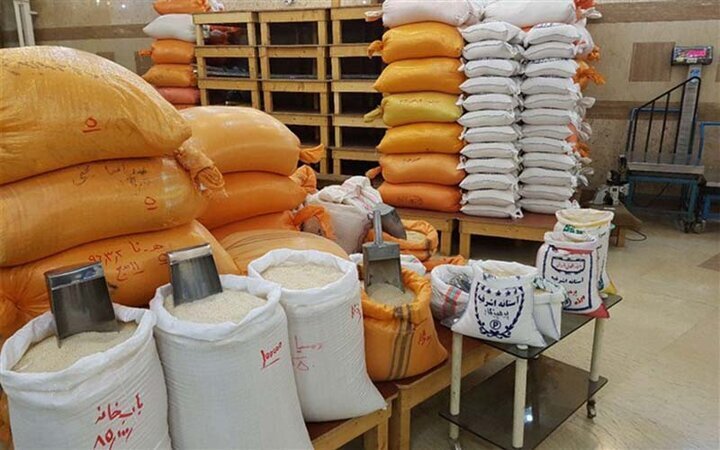



According to Khabar Online, the price analysis of Iranian rice in December 1405 shows that different types of rice are offered at different rates based on the type, quality, place of production, brand and packaging weight.
Ekhtaz Online wrote in a news: Among the offered products, Tarem Hashemi Faridoonnar native rice is sold in a 5 kg package at a price of 2,950,000 Tomans. The price of a 10-kilogram bag of Hime’s super luxury tarem bone rice has reached 5 million tomans.
Tarem Hashemi rice from Faridoon near Sorna is also available for 5 kg at a price of 2,850,000 Tomans. In the group of popular rices in the market, Tabaristan cluster golden Shiroudi rice is priced at 4,400,000 Tomans per 10 kg.
The relative stability of Iranian rice prices after the increases of the past weeks is one of the most important current developments in this market. Stopping the increasing trend can reduce the pressure caused by price growth on consumers to some extent; However, the stabilization of rates does not mean that the price of rice will return to previous levels or reduce the cost of purchasing this product.
In the current situation, the amount of Iranian rice supply, the status of products in the market, supply and distribution costs, and consumer demand trends are among the factors that can affect the path of prices in the coming weeks.
On the other hand, the price difference between different varieties of Iranian rice is still significant. Tarem, Hashemi, and black tail rice reach consumers at different rates due to differences in product characteristics, quality, and supplier brand.
Therefore, in order to accurately check the price of Iranian rice, in addition to the name of the variety, the packaging weight and product specifications should also be considered.
In general, the Iranian rice market is in a relatively stable state after the wave of recent price increases. However, the continuation of these conditions will depend on the supply and demand situation and the evolution of supply and distribution costs in the coming weeks.
217