



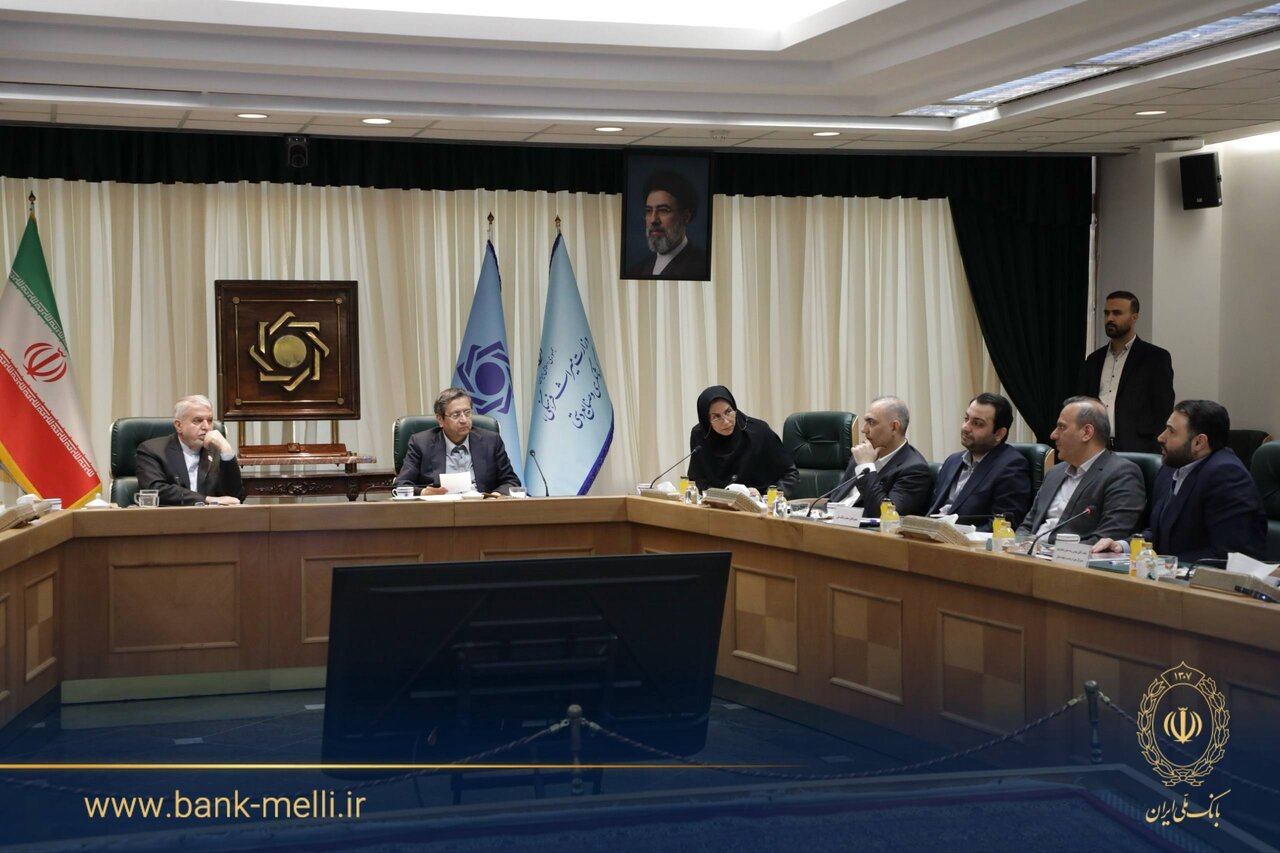


The unveiling ceremony of the National Bank of Iran tourism card was held in the presence of Abdul Naser Hemmati, the Governor General of the Central Bank, Seyedreza Salehi Amiri, the Minister of Cultural Heritage, Tourism and Handicrafts, Mohsen Seifi, the CEO of the National Bank of Iran, and a group of CEOs and officials of the banking network. This service is designed with the aim of creating a safe and efficient infrastructure for making daily payments of foreign tourists inside the country.
tourist card; A new way to enter currency and facilitate payment
In this ceremony, the Governor General of the Central Bank, Abdul Naser Hemmati, considered the tourist card as an effective measure to facilitate payment services for foreign tourists, especially health tourists and pilgrims, and emphasized its role in strengthening the official mechanisms of currency entry.
Referring to Iran’s extensive capacities in the field of tourism, he considered this plan as a basis for facilitating financial exchanges, increasing foreign exchange earnings and strengthening the role of tourism in the country’s economy.
Hemmati also pointed to the possibility of issuing two bank cards for each tourist, each with a charge limit equal to five thousand euros, determining the agreed rate of currency conversion and accepting different currencies, and expressed hope that the development of this service will make it easier for tourists to access payment services and strengthen the financial infrastructure of the country’s tourism.
tourism; A great opportunity for the country’s economy and employment
Seyedreza Salehi Amiri, Minister of Cultural Heritage, Tourism and Handicrafts, also appreciated the cooperation of the banking network in the implementation of this project, and considered the launch of the tourist card as the beginning of a new chapter in providing services to foreign tourists and said: Iran has the ability to become one of the most important tourist destinations in the world with its diverse historical, cultural, civilizational, natural and health capacities.
He announced the ministry’s goal of attracting 15 million foreign tourists in a five-year period.
Emphasizing the economic importance of tourism, he noted that the arrival of tourists, in addition to earning foreign currency, creates a significant capacity for direct and indirect job creation.
According to the Minister of Cultural Heritage, 410,000 people are currently working directly in the country’s residential centers, and the indirect employment of this sector also reaches 1,600,000 people.
National Bank of Iran; A pioneer in providing tourism card services
Mohsen Seifi, the CEO of the National Bank of Iran, also pointed to the executive history and operational provision of the tourist card in this bank, and emphasized the continuity and expansion of this service and the development of its capacities to respond to the financial needs of foreign tourists.
He considered the tourism card as an opportunity to more effectively link banking services with the capacities of the tourism industry and called its development a basis for facilitating financial exchanges of pilgrims and international tourists and taking more advantage of the economic opportunities of this industry.
Also, by emphasizing the importance of easy access for medical tourists and pilgrims to payment services, Seifi considered the development of this tool as a step towards improving the travel experience and facilitating the use of banking services in the country.
Tourist card facilities for foreign travelers
The tourist card is designed to enable foreign tourists to use payment services inside the country and has the ability to recharge. At each charging stage, it is possible to increase the balance of the card up to the equivalent of five thousand euros, and tourists can activate it after going through the authentication process through non-attendance portals and the routes determined by the issuing bank.
Holders of this card can use it at more than 10 million acceptance points across the country and all internet portals. Medical tourists and foreign pilgrims can also use this tool to pay for accommodation, transportation, medical services, shopping and other travel needs without having to carry a large amount of cash.
This capability, while increasing the ease and security of travel, helps to make the financial circulation transparent and strengthen the official channels of currency entry into the country.
333