



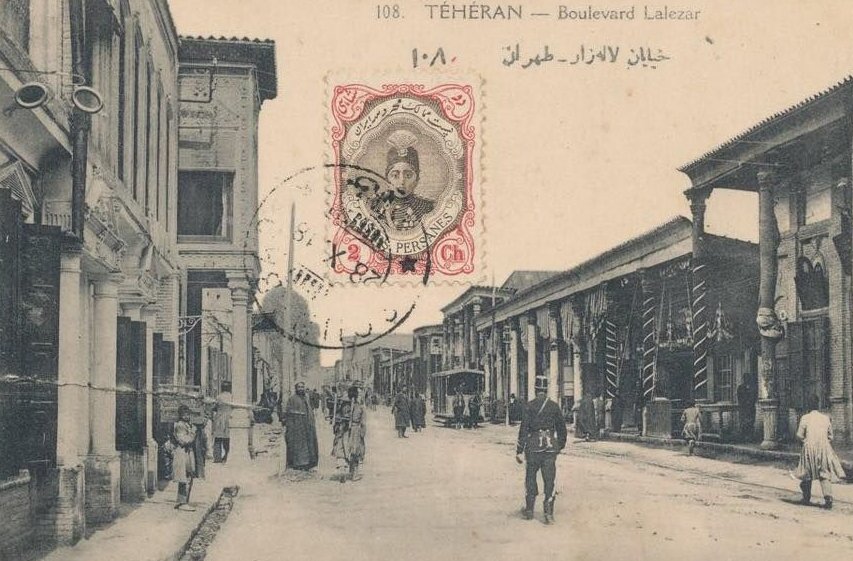


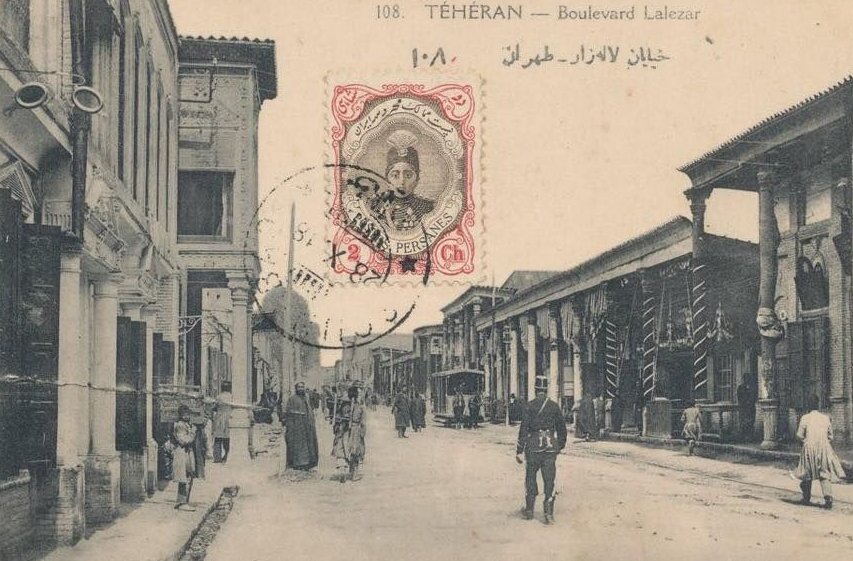
According to the news agency Online newsAt the end of the reign of Feth Ali Shah and at the beginning of the period of Mohammad Shah, Lalehzar was outside the city of Tehran, because the royal citadel was at the end of the city. Napoleon’s special agent, the French General Garden, also stayed in this garden. In 1226, Muhammad Shah passed away and his body was deposited in one of the cisterns of Lalezar Garden, and some reciters took turns reciting the Qur’an over his body until two months later, in the presence of Naser al-Din Shah, the body was removed from the cistern and sent to Qom and buried there.
With the development of Tehran in 1245 and the order to build twelve new gates of Tehran, Lalezar garden fell inside the city and little by little the importance of this garden was reduced by cutting trees and turning that unique garden into shops and homes, and because the construction of the people was indiscriminate, with the intervention of Mirza Ali Asghar Khan Atabek (Aminul Sultan II) whose house was located in this garden, order was given to it and two parallel and vertical streets were created in the east and west of the garden. Many great people lived in this garden, such as Dr. Toluzan, a French physician, Naseruddin Shah, and the Austrian house of Dumont Fert, the head of Tehran’s Nazmia.
… After the constitutional upheaval, this street was developed and the first Iranian guest house named Grand Hotel was built there, which was accompanied by several concerts by Aref Qazvini and plays by Mirzadeh Eshghi.
A horse-drawn wagon line was also drawn from Sepeh square to Amin al-Sultan’s house to facilitate transportation. One of the important events of Lalezar street is the assassination of Sani al-Doulah, the Minister of Finance at the time, in 1289, by some Caucasians who were citizens of Tsarist Russia, and Ivan Khati, the murderer, was transferred to Russia under protection!
Lalezar Street reached its peak of prosperity during the time of Pahlavi II and the best arcades, shops, cafes and guest houses were built on this street. In a way, this was Tehran’s Champs-Élysées Street. Singers of Iranian folk music used to perform on the same street of Lalezar. The first new European-style cafe was organized by the late Sediq Hazrat in a large garden in Lalezar, and the second cafe was created in Nazim-ul-Sultaneh’s house…
Source: Farshad Abrishmi, Tehran Old Days, Tehran: House of History and Image Abrishmi, first edition, 2009, pp. 166-1168
259