





According to the news agency Online news According to the information – Manouchehr Dinparast: On the one hand, governments have to provide war equipment for operational areas, and on the other hand, they have to keep their fronts safe so that they can think about winning the war. In such a situation, wars are no longer victory or defeat on the battlefield. Rather, with the emergence of the media, another war has occurred parallel to the military war, and that is the war of public opinion and the media.
With the emergence of the media, especially in the first and second world wars, their role became impossible to ignore. Many of the news in these two wars were reported by reporters and journalists to their media, and public opinion also had a serious need for that news. In these two wars, various media tools, from radio and newspapers to photos and magazines, etc., were used for the great war apparatus, and the techniques of public opinion management and propaganda in war became the basic need of countries, because the news coverage of war has a special mechanism for itself.
In this tense environment where public opinion is looking for accurate war news, no matter how depressing the war news is, the war environment faces a more serious crisis in such a way that behind the front is also pushed to a social crisis.
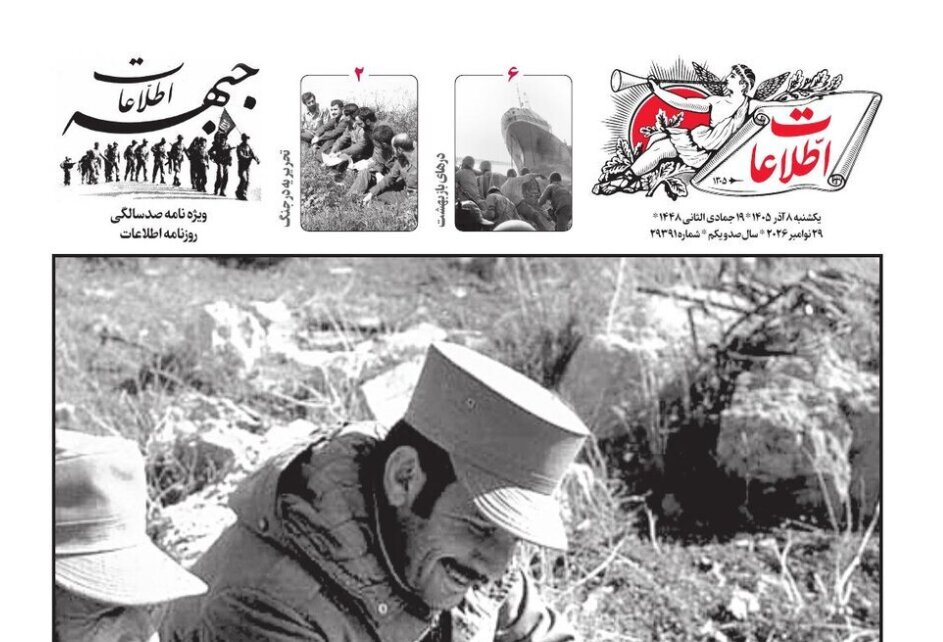
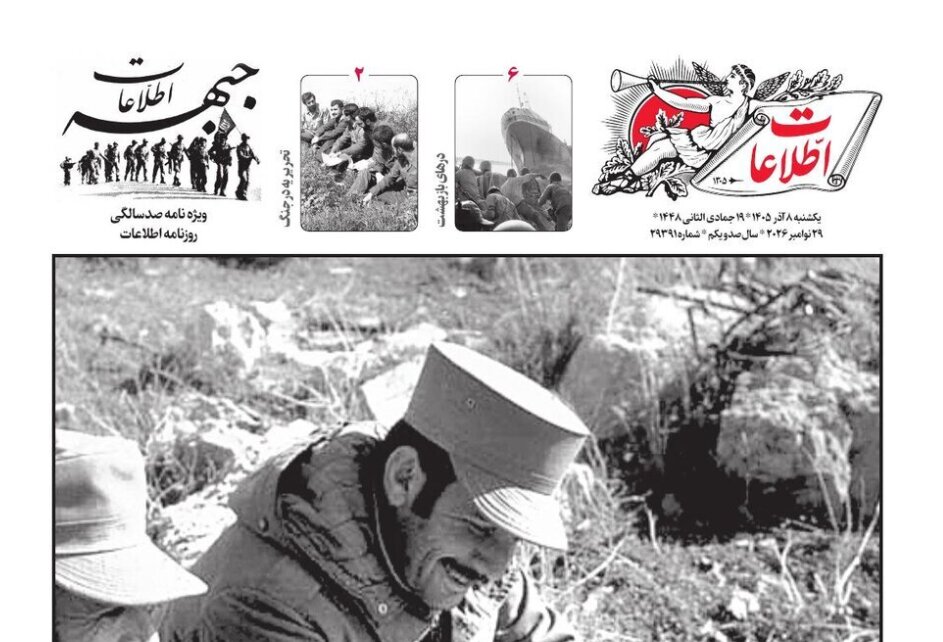
On the other hand, preventing the publication of war news can fuel rumors and create another crisis in war and non-war zones. It is in such a situation that journalists can play their correct and logical role, which is to reflect the news and materials and reports related to the war in their special mechanism. Based on this situation, for the first time in the history of Iran’s press, a weekly newspaper called “Information Front” was published on Saturday, May 19, 1366, in 16 pages as an appendix to the daily newspaper.
This weekly can be considered a serious and important event in terms of the function of publishing war news. More than six years had passed since the war imposed by Iraq against Iran, and during this period, the news of the war was made available to the people through radio, television and the press. Of course, it should be emphasized that the role of radio in reflecting the news of the Iran-Iraq war was much stronger than other media. Even in those days, a radio called “Radio Front” was established, which reflected the news of the war. Due to its unique feature, radio can provide the news to the audience much faster.
The memories of the victories in the operations and the liberation of the important cities occupied by the enemy have not gone away from the mind and memories. In this situation, publishing a weekly newspaper was an important and serious work. Therefore, the people involved in the information newspaper, headed by Shadarvan Seyed Mahmoud Doa’i, the representative of Wali Faqih in the Information Institute, decided to launch a weekly newspaper that would provide the news of the war, especially with its special atmosphere, to the audience of the front and back of the front.
For this purpose, at that time, prominent members of the editorial board and in other words, the editorial board of the newspaper, which consisted of Mr. Jalal Rafi, Seyed Ahmad Sam, Abdul Ali Rezaei and Ahmad Sattari, along with a number of photographers, were sent to the fronts and war zones to meet with the main commanders of the war, in order to raise the idea of starting a front weekly newspaper with them, and in other words, organize the taste of journalism and cultural work and the epic spirit of war according to the needs of the fronts. This happened and the plan was welcomed by the people of Jabhah and Farhang. Hamid Zahedi, one of the editorial colleagues, also participated in this effort at the invitation of the editorial board of the newspaper, and later actively cooperated in the front’s intelligence department.
The publication of this weekly was based on two serious approaches: one, the people behind the front believed that the news of the war was not properly transmitted to them, and on the other hand, the warriors and commanders also believed that the news of the war was not properly transmitted. Shahid Hossein Kharazi’s expectation from the press was “to write the news of the war properly and not coarsely”. It was based on such needs and approaches that “Information Front” weekly was published.
In the editorial of the first issue of Jabeh information on May 19, 1366, which was published without a signature, the author, while explaining the point of view of publishing this weekly newspaper, requested that “Dear soldiers and respected readers Front information Send your stories, articles, memories, poems, criticisms and suggestions to the address of the Information Institute on Khayyam Street. This is how the newspaper was published with its audience. They also did not leave the weekly and sent their poems, memories and content to the newspaper.
The weekly was published with an epic mood and revolutionary literature. Most of the content of the weekly was devoted to war news, interviews with commanders and fighters, families of martyrs and responsible people behind the front. For this purpose, it was tried to publish other information that can be useful for the audience, such as religious issues about war and jihad, laws and regulations of war, historical epics about the occurrence of Iranian battles in the past.
Another goal of the weekly was to use the potential of those who are on the front lines. For example, a warrior who has the spirit of a poet should write a poem. If someone knows how to write plays, stories and memoirs, do it and send it to the weekly. Even if a person has the spirit of a journalist, he should send news from the field he is busy with to the weekly newspaper. As a result, Turaq “Information Front” shows that this weekly newspaper is full of poems, memories and stories. The contents were written in the emotional and revolutionary spirit of that time. However, in addition to these contents, the professional work of the editorial staff should not be ignored. They were trying to prepare interviews with commanders and exclusive reports from war zones so that the audience would be in touch with the latest news. In terms of page layout, the newspaper is the same size as the newspapers of twenty years ago, and the photos were exclusive to the photographers of the newspaper.
Doai, the editor-in-chief of the newspaper, says in one of his memories about the information weekly: “Sometimes we conducted special interviews, for example, with Mr. Hashemi Rafsanjani, who was in the position of war commander at that time, or the commanders who sometimes came to the information newspaper, and we interviewed them here. The interviews of these people with the information newspaper showed that they care and value this cultural issue.
These were the things that made this weekly newspaper not only be considered as a memory, but a model for a serious production work. Because when we turn the pages of the weekly, two issues are immediately visible: one is that the names of those who prepared the reports and interviews are not next to their content.
Apparently, at that time, it was not customary for the interviewer to have his name next to his article, and he also considered the revolutionary spirit and humility of this work to be inferior. On the other hand, the productivity of the content that most of us miss these days shows itself to us sooner than others. A conversation and a report that may have taken hours and days, but reading it with headlines that promised victory to its audience is still pleasing to the eye.
However, “frontline intelligence” was short-lived as the war ended. Of course, sometimes it should be said that thank God that the weekly newspaper came to an end early because with the adoption of Resolution 598 on July 27, 1367 and the end of the eight-year war on August 29, 1367, there was no longer a need to publish the front information weekly. Finally, on Sunday, March 14, 1367, the information of the front ended in its 95th issue, and its memory remained in the history of Iranian press.
What you have in front of you in this special issue is a sample of articles, short stories, memories, poems and reports that the narrators of the Holy Defense have left for our warriors and people.
259