





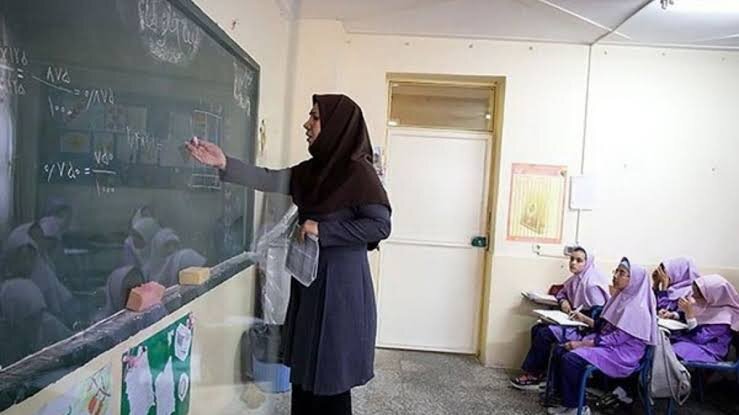
According to Khabar Online, the Ministry of Education is moving on the edge of decision-making these days. On the one hand, government statistics indicate that the fever of mass recruitment has subsided compared to the past few years, and on the other hand, the cancellation of this year’s recruitment test and blind spots in the distribution of human resources have complicated the country’s education situation, and the education system is caught between demographic changes and a lack of credit.
Tasnim wrote in a news article: Of course, the lack of teachers is not spread evenly everywhere in the system and the elementary school is under the heavy burden of overcrowding classes, and more than half of the country’s students are in this class. Also, classrooms in metropolitan cities and peripheral areas are faced with a high density of students, and the ratio of teachers to students in these areas goes beyond reasonable standards and hits the children’s learning bases the most.
There is a strong need for teachers and engineers in the high school and conservatories, and the wave of students is reaching the high school and especially the conservatories, and they are facing a shortage of teachers, storekeepers, and apprentices more than ever.
According to official statistics, education provides between 25,000 and 30,000 teachers annually through recruitment exams. According to Alireza Kazemi, the Minister of Education, despite the follow-ups done to obtain the necessary permits, due to the “war conditions”, it was not possible to hold the recruitment test and complete the recruitment process until the beginning of October. This issue, along with the non-allocation of the quota of 5,000 soldiers, put additional pressure on human resources, especially in rural, nomadic and remote areas. However, with the efforts made in the field of organizing human resources, the academic year began with fewer challenges than expected.
Also, Ali Farhadi, the spokesperson of the Ministry of Education, explained to Tasnim about the status of the exam next year: no decision has been made in this regard so far and this issue is still under investigation. Holding an employment test is on the agenda when the capacity of graduates of Farhangian University and Shahid Rajaei University is not enough to provide the required workforce.
He added: “In sectors such as health care workers and school counselors, we are still far from the desired indicators.” Also, conservatories need additional staff, including teachers, storekeepers, and second apprentices, and requests for recruitment in these departments will be submitted to the administrative and recruitment organization.
The downward slope of the need for education and training for manpower
On the other hand, Ali Baqerzadeh, head of the Human Resources Planning and Administrative Affairs Center of the Ministry of Education, emphasized that the need for human resources in education is not increasing as in the last decade and is decreasing, and stated: However, the policies of the Ministry and the requirements of the 7th Development Plan, including reducing the density of classes to improve the quality of education, are still strongly followed.
He also clarified about the recruitment status of teaching rights forces, preschool teachers, literacy movement, non-government schools, and Amin project teachers: The recruitment of these groups in the past years was mainly based on the laws approved by the parliament, and currently there is no new law that obliges the ministry to hire these people.
Golden opportunity for engineers
One of the key points raised regarding the supply of personnel is the inadequacy of the capacity of the Shahid Rajaei University of Education with the needs of training and education of the students. In order to compensate for this gap and in the implementation of the law of the 7th plan, the recruitment of skilled students has been keyed since last year with a capacity of 3 thousand people.
According to this plan, engineering graduates of public and non-governmental universities can participate in the relevant exam and be employed as apprentices after being accepted. At the same time as they complete the final year of their studies, these people will also take courses related to educational sciences at Farhangian University and will receive financial aid.
Managing the distribution and retention of teachers in less privileged areas
The main challenge of education is not only the lack of teachers, but also the unfair distribution of experts. To solve this problem, the ministry needs to revise the motivational policies so that capable teachers are encouraged to serve in rural, nomadic and peripheral areas of metropolises. Providing housing support packages, incentive points and welfare facilities can increase the retention rate of teachers in these areas.
Considering the severe shortage of workshop workers and master workers in conservatories, the plan to recruit skilled students from engineering graduates is an important measure.
233217



