



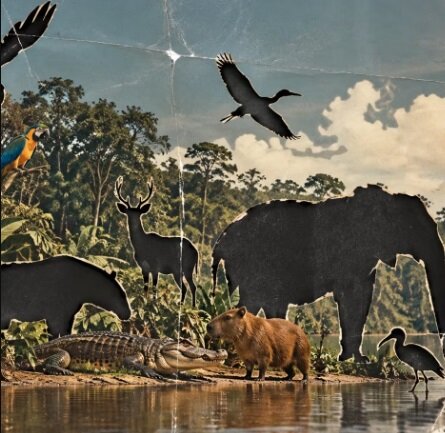


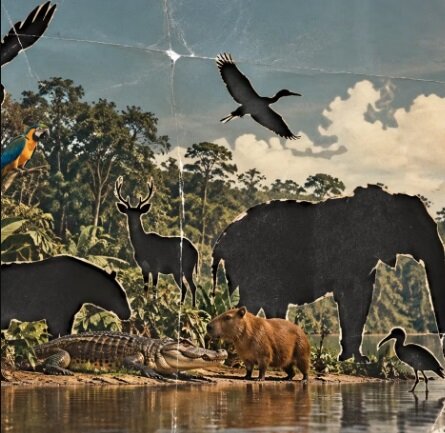
According to online information, quoted by the World Wide Fund for Nature (WWF), to better assess the widespread and rapid destruction of wildlife in the world, WWF developed an index called the Living Planet Index (LPI), which measures the population size changes of 5790 vertebrate species (amphibians, birds, fish, mammals and reptiles). The result of 2026 is more than disastrous: the latest LPI shows a decrease of 73% (73.2%)!
This means that the size of these populations has decreased by an average of 73% between 1970 and 2022. However, this does not mean that there are 73% fewer wild animals today compared to 1970, because this index does not measure the total number of animals, but changes in the studied populations around the world: mammals, birds, fish, reptiles and amphibians. This index states: “It is the only measure of the state of biodiversity on earth. “However, the declines it highlights are confirmed by other indicators and underscore the need for urgent action.”
In Europe, biodiversity loss is less significant than elsewhere.
According to the WWF, species are disappearing today at a rate at least 100 times faster or even faster than the natural extinction rate before the advent of intelligent humans. Behind this hardly believable figure = 73%, there are significant regional changes.
“Some areas are seeing their flora and fauna disappear at a much faster rate than others, while some species and ecosystems are persisting or recovering.” For example:
Populations in North America have declined by 28 percent: “In this region, extensive environmental impacts occurred prior to 1970, and populations of many species may have stabilized or increased relative to a lower baseline, resulting in less negative trends.” Sea otter, green turtle and different species of salmon are in better condition.
Populations in Latin America and the Caribbean have declined by 95%: behind this devastating result are changes that are destroying biodiversity on a large scale and at high speed; Such as the destruction of pastures, forests and wetlands, as well as the construction of dams on waterways, overexploitation of species and climate change.
Populations in Europe and Central Asia decreased by 23%: In Europe, the LPI is not good, but it is the least bad of all regions of the world. Conservation efforts have paid off for mammals and birds. However, freshwater fish, amphibians and reptiles continue to see declines.
Populations down in Africa by 80%: Freshwater fish in Africa are disappearing at an alarming rate, but large mammals like elephants are making a comeback.
Populations in Asia and the Pacific have declined by 49%: invasive species, overexploitation and habitat destruction threaten freshwater fish in particular.
The results of this index should not destroy all hopes. It is worth noting that in 2022, almost all countries of the world have adopted a “joint plan to halt and reverse the process of biodiversity loss by 2030”, which is called the Kunming-Montreal Global Framework for Biodiversity. “This decline is not inevitable,” notes the World Wide Fund for Nature (WWF). “Wherever humans have taken action, wildlife has returned.”




