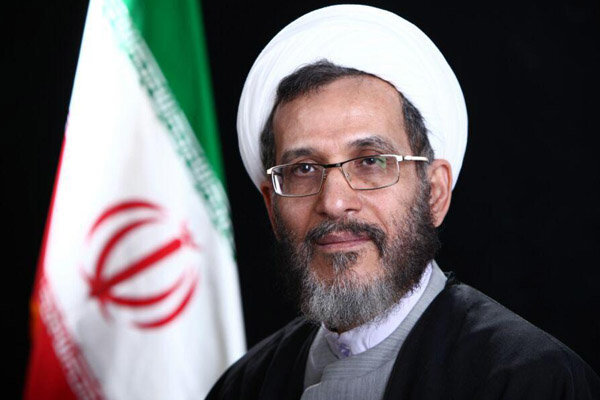
According to Khabaronline news agency, Hojjatul Islam Ahmad MazniThe head of the Cultural Commission of the 10th Parliament wrote in a note on the Jamaran news site:
These days, in the ambiguous and corrosive atmosphere of “neither war, nor peace” and among a multitude of mental concerns and preoccupations, two issues occupy my mind and probably many of my countrymen’s mind more than anything else: first, the advice and whispers that are heard these days about the necessity of producing nuclear weapons; And secondly, the horizon ahead of the country and the model on which the future Iran is supposed to be built and governed.
In the second issue, my basic question is: which country is the future Iran going to be like? What is our ideal model for the political, social and economic system? How is the relationship between the government and the people defined? What quality of life, welfare, freedom and security are supposed to be provided for the citizens? And what will be Iran’s position in regional and international relations? In the not-so-distant years, one of the models proposed by some elders and experts was the model of “Islamic Japan”. Of course, at different times, other interpretations and patterns have also been proposed in the words and deeds of the founder of the revolution, the senior officials of the system, and thinkers and experts; But what is important is having a clear picture of the future and a clear plan to reach it.
These days, as we move away from the beginning of the war imposed by America and Israel against Iran and the more the situation of neither war nor peace continues, the question becomes more serious that what is the ideal model for the country’s decision makers to manage the society? What is the relationship between the government and the people supposed to be based on? What place will the livelihood and daily life of the people have in the governance priorities? And finally, how are we supposed to interact with the world?
From the meaning of some comments and positions of political currents, sometimes signs of patterns can be seen which are not very promising. If my understanding is not wrong, it seems that we are going to gradually move away from the model of “Islamic Japan” and approach the models of Yemen, North Korea or Afghanistan! In other words, it is as if we are going to reach “Islamic Pyongyang” from “Islamic Japan”!
These days, when I am reading the book “Nimdang Pyongyang” written by Reza Amirkhani – which I hope God will clothe him with a garment of health – I am more worried and even scared than ever at the thought of such a future. A country in which security is ensured at the cost of extensive restrictions, lack of basic freedoms, international isolation and deprivation of many facilities of a normal life, what does it have to do with the ideals of a dynamic society with human dignity?
In the case of Yemen, apart from the resistance and chivalry of the Houthis, which is admirable in its place, is it really possible to accept that difficult situation and extensive deprivations as a good model for the life and administration of the country? If we are going to draw a picture of the future based on such a model, in the words of Mr. Velayati, are we going to experience life with a “lame”? That is, we should hold back, fight, resist and still wait for an unknown day that it is not clear when it will come and what it will bring to the people!
The example of our eastern neighbors is also not very promising. When I look at the contemporary history of Afghanistan, from the era of Dawood Khan to the various periods after that and the rule of Mullah Omar and the Taliban, the more I refer to my historical memory, the less I can remember a period of stable stability, general welfare and peaceful and promising life for the people of that country.
Of course, the discussion is not about ignoring resistance, independence or positive features of other societies; The issue is whether resistance and standing are supposed to become the ultimate goal or should they serve to maintain independence, security, progress and improve the quality of life of the people? Aren’t we supposed to enjoy prosperity, freedom, development, scientific and economic progress and constructive interaction with the world along with dignity and security?
In short, someone must answer this basic question: Where are we going and where are we going to reach?
But the second issue, i.e. the production of nuclear weapons, in my opinion, requires a more serious reflection and a more frank dialogue. As far as I understand, the legal and moral basis of Imam Khomeini and the martyred leader of the revolution in prohibiting the production, storage and use of nuclear weapons has been clear. This position was not just a political decision or temporary expediency, but was based on religious and moral principles. Therefore, it cannot be simply ignored or the necessity of changing it can be raised simply by referring to the new conditions. In my opinion, it is necessary to talk more about these bases, reasons and consequences of such a decision, and public opinion should also be aware of the arguments of supporters and opponents.
Of course, the argument of the proponents of nuclear weapons production may be the necessity of deterrence against foreign threats. This argument cannot be ignored without examination and discussion; But several fundamental questions remain: First, would having an atomic bomb really and definitively deter a military attack? Secondly, what are the political, economic, security and international costs of obtaining such a weapon? Thirdly, has the cost-benefit ratio of this decision been properly investigated? And most importantly, are we going to pay the price of people’s lives and future to enjoy such deterrence?
Suppose that having an atomic bomb can reduce the possibility of a military attack; Is this achievement alone enough to justify all its possible costs? Is it possible in this way, by intensifying sanctions, further international isolation, economic restrictions and reducing development opportunities, we can actually create conditions to maintain territorial security to some extent, but make life more difficult for people and make the future horizon darker?
As an example, consider North Korea. This country has nuclear weapons, but has having an atomic bomb been able to bring its people democracy, freedom, prosperity, stable access to life facilities and normal communication with the world? Are we supposed to gain security at the cost of denying other components of a decent life?
I recommend reading the book “Nimdang Pyongyang”; Perhaps you will get a more concrete picture of what may be in front of us if we choose such a pattern.
The problem is that the atomic bomb, even if it can create a kind of military deterrence, is not a development program by itself, nor a guarantee of public welfare, nor a guarantor of freedom, nor an answer to the demands of a nation for a better life. Security is important, but security should not be reduced to military survival and the ability to deal with adversaries. Real security should include economic, social, psychological and predictable future security for citizens, along with independence and national authority.
We have the right to ask, where is the position of people and their quality of life in calculations and big decisions? Are all the issues of the country, from economy and livelihood to social freedoms and foreign relations, to be covered by a single priority? Is it not possible to be independent, powerful, secure and have a developed, free, prosperous country with normal and constructive relations with the world?
In my opinion, these two issues, i.e. the discussion of nuclear weapons and the desirable model of the future Iran, are actually two sides of the same issue: what kind of country do we want and what quality of life have we considered for today’s and tomorrow’s generation of Iran?
If we are going to justify everything in the name of resistance, security and deterrence, we should clarify where the destination of this path is and what people are going to get at the end of this path.
If we are going to think like this and make such a version for Iran, we should know that this version will not necessarily work for Iran. Iran, with its history, civilization, human capital, economic capacities and social demands, cannot and should not simply be a copy of North Korea, Yemen or Afghanistan.
We don’t just want to survive; We want to live.
You know!
31216