



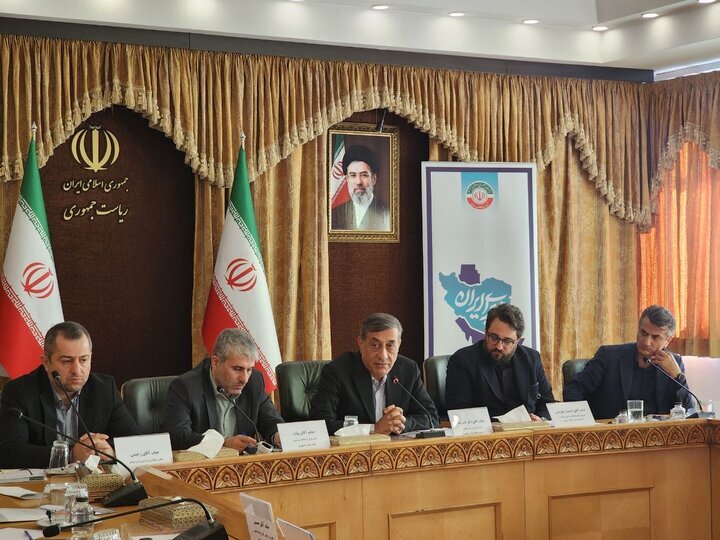


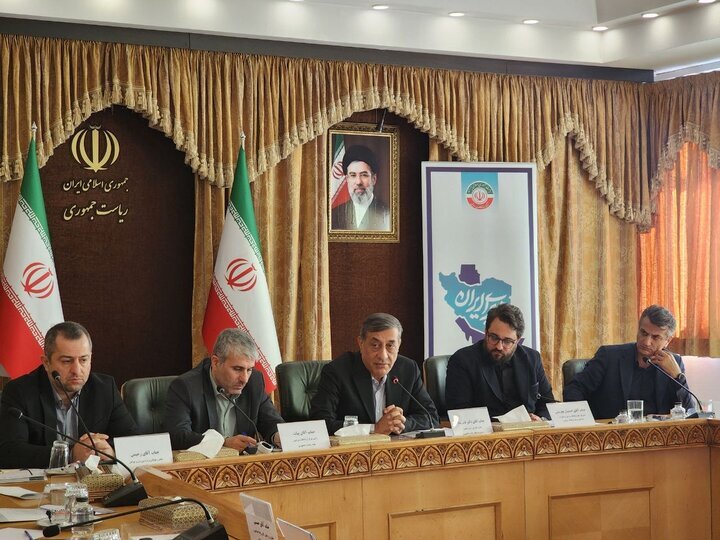
According to Khabaronline news agency, Mohammad Jaafar Ghaem Panah, Today, November 18, in a problem-oriented meeting with non-governmental organizations and organizations, referring to the importance of the role of public institutions in strengthening social cohesion, he stated: a wide range of people are active in various institutions, including environmental organizations, scientific associations, religious bodies, and political parties, and these groups form an important part of the country’s social capacity.
According to Isna’s narration, he said: “Governance without popular base and without relying on popular institutions is ruling in exile.” A strong society creates a powerful government, and in order to run the affairs of the country, people should be involved in social and popular institutions.
Emphasizing the necessity of familiarizing the young generation with collective and social activities, the executive vice president stated: Our children should be educated in non-governmental organizations from the beginning of adolescence in order to learn social, cultural and political activities, as well as the spirit of cooperation, collective thinking and cooperation.
Referring to the historical roots of collective activity in Iranian society, Qaimpanah said: Our country has had many examples of collective activities in the past, including religious delegations and Quran reading sessions.
Emphasizing the necessity of strengthening social solidarity, the Executive Vice President stated: Mr. Mezikian and I believe that we must strengthen the collective spirit and the spirit of togetherness in the society. Because people’s participation in the form of social institutions and group activities will be the basis for the formation of a strong society with greater cohesion and solidarity.
He continued: Social cohesion prevents the formation of different dualities in environmental, political, social and cultural fields. The dichotomy between national identity and religious identity is incorrect; We are both Iranian and Muslim. Just as we love and are proud of Imam Hussain (AS), we are also proud of the history of Iran, Cyrus, Takht Jamshid and the ancient works of our country. Just as Hazrat Zahra (PBUH) is our pride, Iran’s history and civilization are also our pride and we should not create a conflict between these identities.
Stating that good governance should be formed based on people’s participation, Ghaem Panah stated: If we want governance to be formed properly, we must rely on the people; Of course, direct communication with each and every person is not possible. Iran has a population of about 90 million people and cannot communicate with all people directly. Non-governmental organizations can be a representative and link between the people and the government; Therefore, these organizations should expand and represent a wider range of people in different fields.
Referring to the capacity of various popular groups, including Basij, religious groups, associations, cultural organizations, non-governmental organizations and sports groups, the Executive Vice President said: All these groups can play a role in strengthening the relationship between the people and the government, as well as increasing social cohesion. Government ministers should also believe that it is necessary to have continuous interaction and communication with all the organizations that are somehow related to their field of work. I will definitely follow up on this issue.
Emphasizing that the government should use the capacity of popular organizations to solve the country’s problems, he said: We should reach out to the people and non-governmental organizations and ask them for help in solving the problems. This does not mean abusing their capacity, nor does it mean using them as political support; Rather, the goal is to use their social power to solve people’s problems. This view should be formed in the minds of all of us that non-governmental organizations are not competitors of the government, but we should consider them as our helpers.
Emphasizing the importance of the role of non-governmental organizations and social organizations in the development of public participation, Ghaem Panah said: Positions and responsibilities are not permanent and different people are placed in and out of these positions over time, but what remains is the people and Iran. Therefore, we should try to empower people in the opportunity we have, so that the people who will assume the responsibilities in the future also follow the same view.
Stating that popular organizations have been able to highlight issues such as the environment, preservation of ancient monuments, energy consumption and water consumption management in the public opinion, the executive vice president said: These issues cannot be solved by the government’s directives and orders, but must become public belief.
Emphasizing the importance of demanding and social criticism, he said: We believe that your criticisms should be fair and compassionate. When a person is concerned and tries to preserve Horul Azim wetland, Hyrcanian forests or environmental issues of the country, this demand is in the interest of national interests. If people’s voices were not raised about Miancale, maybe a president would not have stepped in so quickly to stop a plan. Also, when people protest about the air pollution in the southern regions of the country, the authorities are forced to act more seriously to curb the pollution.
Emphasizing the necessity of cooperation of all cultural and social currents for Iran, Ghaem Panah said: regardless of any cultural, intellectual, religious and racial point of view, we must work around the axis of Iran. Iran belongs to all of us and the main goal should be to work for Iran; Even if governments do not cooperate in all fields, our main goal and ideal should be to protect the country’s interests.
Referring to the formation of human circles around some of the country’s infrastructures during Trump’s threats during the third imposed war, the executive vice president clarified: When Trump threatened to target Iran’s infrastructure, people from different groups, young and old, with different clothing and views, formed human circles around some infrastructures, including refineries and bridges.
He continued: These scenes showed how much the sense of patriotism and belonging to Iran is rooted among the people, and this issue attracted the attention of the world. Many Iranians abroad are also proud of being Iranian; Because they witnessed that Iranians are willing to risk their lives to defend their country and its infrastructure. As much as we can maintain this solidarity regardless of which person or political faction is in power, we have helped to strengthen and save the country.
Pointing to the necessity of maintaining the country’s resilience in difficult energy conditions, Qaim Panah asked the people to help the country’s stable energy supply by managing gas consumption in the cold season of the year, and stating that the country was facing a significant gas imbalance last year, he stated: Last year we had about 300 million cubic meters of gas imbalance and this year, considering the current conditions, we are facing a serious challenge in gas supply and consumption.
Referring to the high level of gas consumption in the country, the executive vice president said: Iran’s gas consumption is at a very high level and per capita energy consumption in the country needs to be reformed. We are the first in the world in gas consumption per capita. No country consumes as much gas as Iran. On the other hand, due to the war crimes of the enemies, this year 230 million cubic meters of our gas has been removed from the field. This means we are facing 530 million cubic meters of gas imbalance this year. During peak consumption days, we consume about 850 to 900 million cubic meters of gas daily, a significant part of which is dedicated to domestic, commercial, small industries and power plants.
Referring to the efforts made to increase gas production, he added: Despite the existing sanctions and pressures, efforts have been made to increase the production capacity and compensate for some of the deficiencies, but we are still facing a significant imbalance. In previous years, during the unrest, industrial gas was cut off and restrictions were applied to some power plants, but this year our effort is to minimize the amount of industrial gas cuts with the help of people.
Ghaem Panah continued: We don’t want steel industries to stop and workers to be unemployed. In a situation where the country is facing unemployment of about one million and 400 thousand people, we should not allow production to decrease with energy restrictions and more workers to lose their jobs. A reduction in production can also lead to a shortage of goods and a further increase in prices. In a situation where it is not possible to cut off the gas of homes on a large scale, the limitation of household consumption can help to supply the gas needed by other sectors. Cutting off the gas of a house or a neighborhood is different from cutting off electricity, and in the cold season, it can endanger people’s health and life.
31218




