



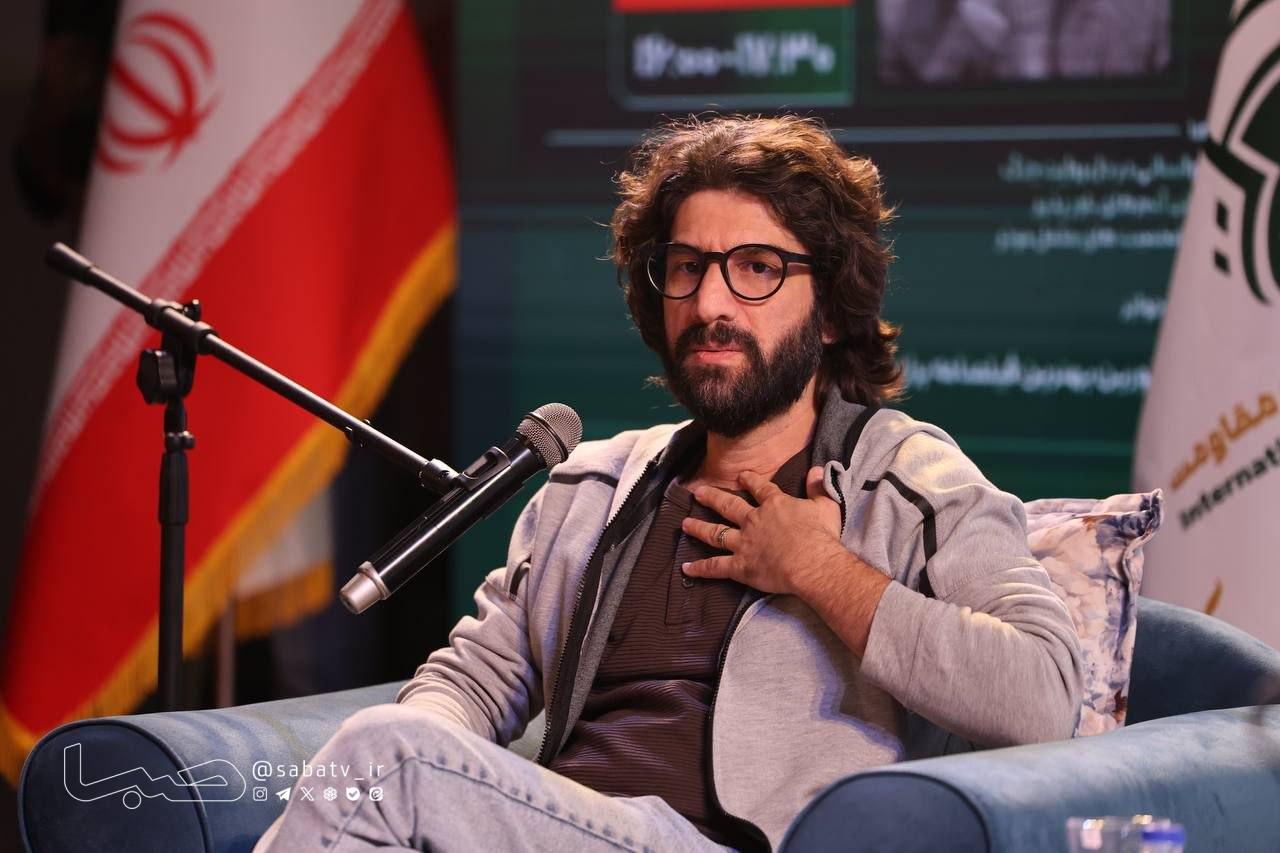


Ebrahim Amini, the screenwriter and cinema director, in an interview with Saba, emphasizing the need to pay attention to the quality of the script in the Holy Defense cinema, believes that the haste in the production and the short-term view of the management deprives the writers of enough opportunity to form high-quality scripts. He also considers paying attention to the story and entertaining the audience as one of the ways to distance resistance cinema from sloganeering.

Nasser Arbab/Saba, The cinema of holy defense and resistance needs interesting narratives, believable stories and accurate characterization above all to communicate effectively with today’s audience. Meanwhile, the script, as the starting point of the formation of a film, has a decisive role in the final quality of the film; But the acceleration in the production process and the limited opportunity for writing and rewriting are among the issues that can damage the quality of the works.
Ebrahim Amini, the screenwriter and cinema director, in an interview with Saba on the sidelines of the International Resistance Film Festival, pointed out the need to change the managerial approach in Iranian cinema, and emphasized that even a one-year look at film productions can be the basis for improving the quality of works. He also believes that paying attention to the story itself and taking entertainment of the audience seriously can remove resistance cinema from sloganeering.
Ebrahim Amini, in response to the question of what features should the scripts of the Holy Defense cinema have in order to communicate with today’s audience, said: The discussion about the script is a complex and detailed issue, and it cannot be dealt with in detail in this field. In order to check the quality of the screenplay, we should also talk about how works are produced in Iranian cinema; Because production methods directly affect the screenwriter’s work.
He continued: Usually, cinematographic works are produced quickly and budgets are allocated in limited time frames. When everything is rushed, there is naturally not enough time to write and pay for the script. In my opinion, I wish a more long-term view would prevail in the management space of Iranian cinema. I don’t necessarily mean five-year planning; Even if we think about next year’s festival instead of thinking about the next two or three months, we can see an improvement in the quality of films. Be it the Fajr Film Festival or other festivals, a one-year look at the productions can have a positive effect on the quality of the works; But when our view is still two or three months, naturally the situation does not change much.
This screenwriter further stated about the strategies of resistance cinema to distance itself from sloganeering and the importance of storytelling in this type of cinema: In my opinion, in the field of resistance cinema, we should pay more attention to the story itself. For many years, perhaps the dominant view was that entertaining the audience is a bad thing or has little dignity; But today we know that entertaining the audience happens to be a high honor. If we pay attention to the story itself and attach importance to storytelling, I think our works can be somewhat distanced from sloganeering.
In response to a question about the possibility of judging the way the events of the last year are reflected in the works of resistance cinema, Amini approached such an assessment cautiously and said: I think it is still a bit early to judge this issue.
He also explained about his assessment of the Resistance Film Festival: To be honest, I was not present at the festival in the past days, and on the other hand, I am a judge in one of the sections; For this reason, I prefer not to comment on the festival.
In another part of the conversation, this director and screenwriter said about how the works of resistance cinema distance themselves from being ordered and the necessity of forming motivation and belief in the production agents, he stated: The way I know to get away from being ordered is for the director, screenwriter, producer and other agents to do the work with their heart, faith and all their being. If all the agents believe in what they are creating, they can move away from the format of a purely custom work; But if from the beginning we look at the project from the perspective of a project that we are supposed to receive a salary for and deliver it, naturally we cannot expect the formation of a work of faith.




