According to the news agency Online news; For many readers, Ahmad Shamlou’s name is associated with white poetry, a warm voice of poetry, and the image of a freedom-loving poet. But if we distance ourselves from his poems and his familiar image and look at his personal writings, letters and reports that others have recorded about him, we will face a more complicated life: the life of a poet who worked in the press, was imprisoned, was close to political currents and distanced himself from them, had harsh judgments about Iran’s cultural heritage, and was the subject of monitoring and reporting by government institutions in the following years.
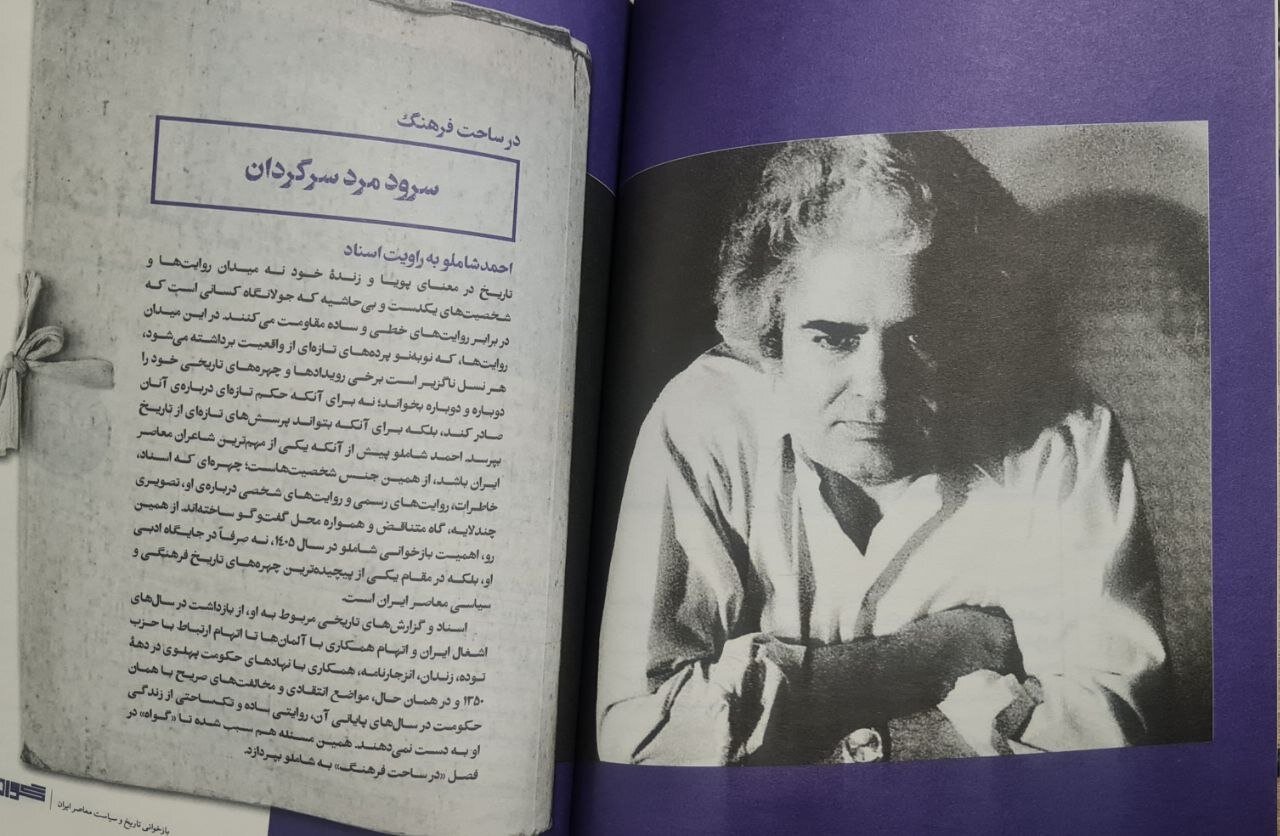
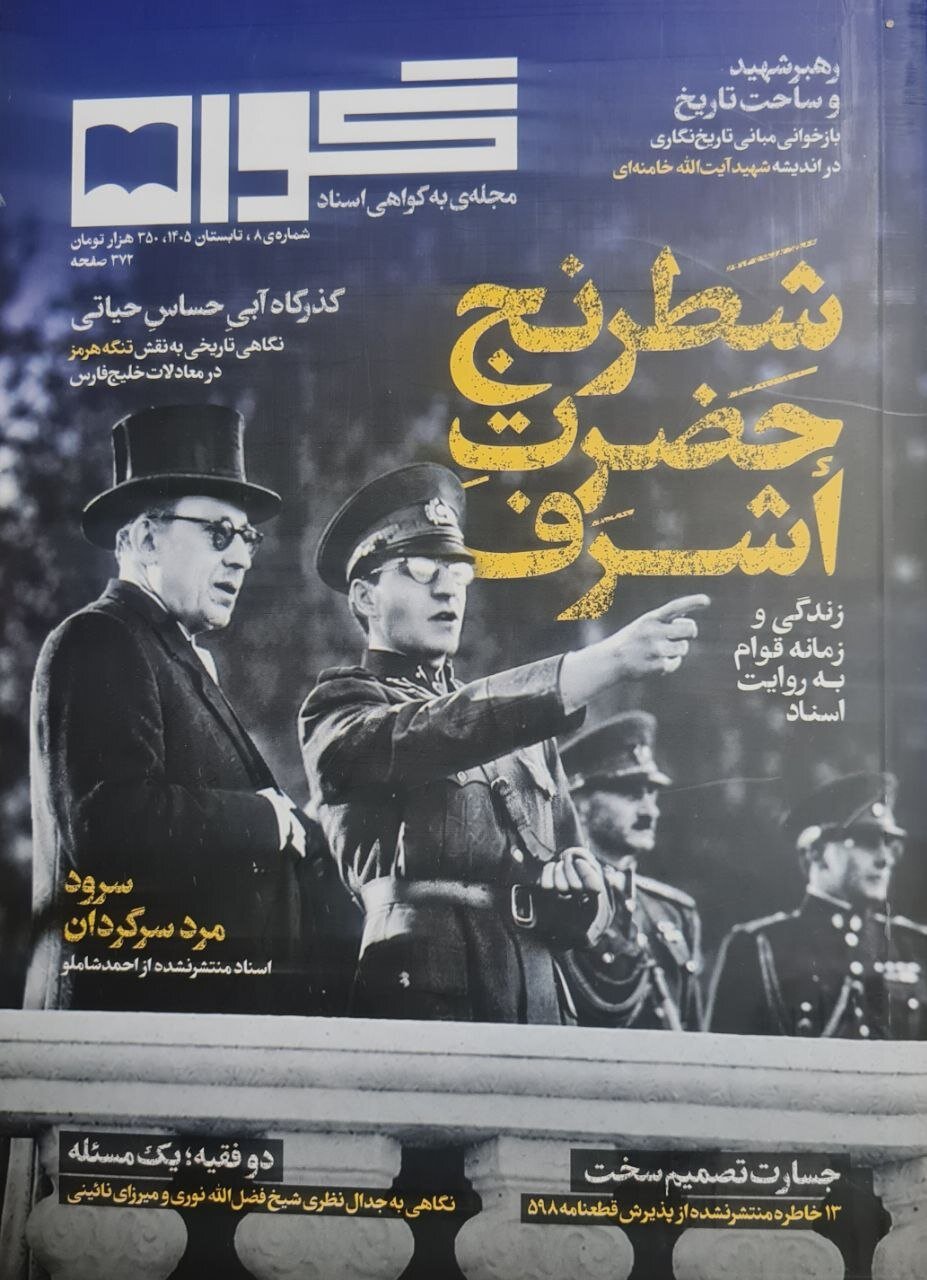
The eighth issue of “Gawah” magazine, summer 1405, in the “Dar Saht Farhang” section, a file titled “Wandering Man’s Poem; Ahmad Shamlou published according to the documents. This case presents three ways to get close to Shamlou: income that explains the necessity of rereading him; A critical article by Seyyed Ataullah Mohajerani about Shamloo’s poetry, history and cultural judgments; and two document-based studies that follow the first years of the social and political life of the poet and the reflection of his name in the reports of the Pahlavi period.
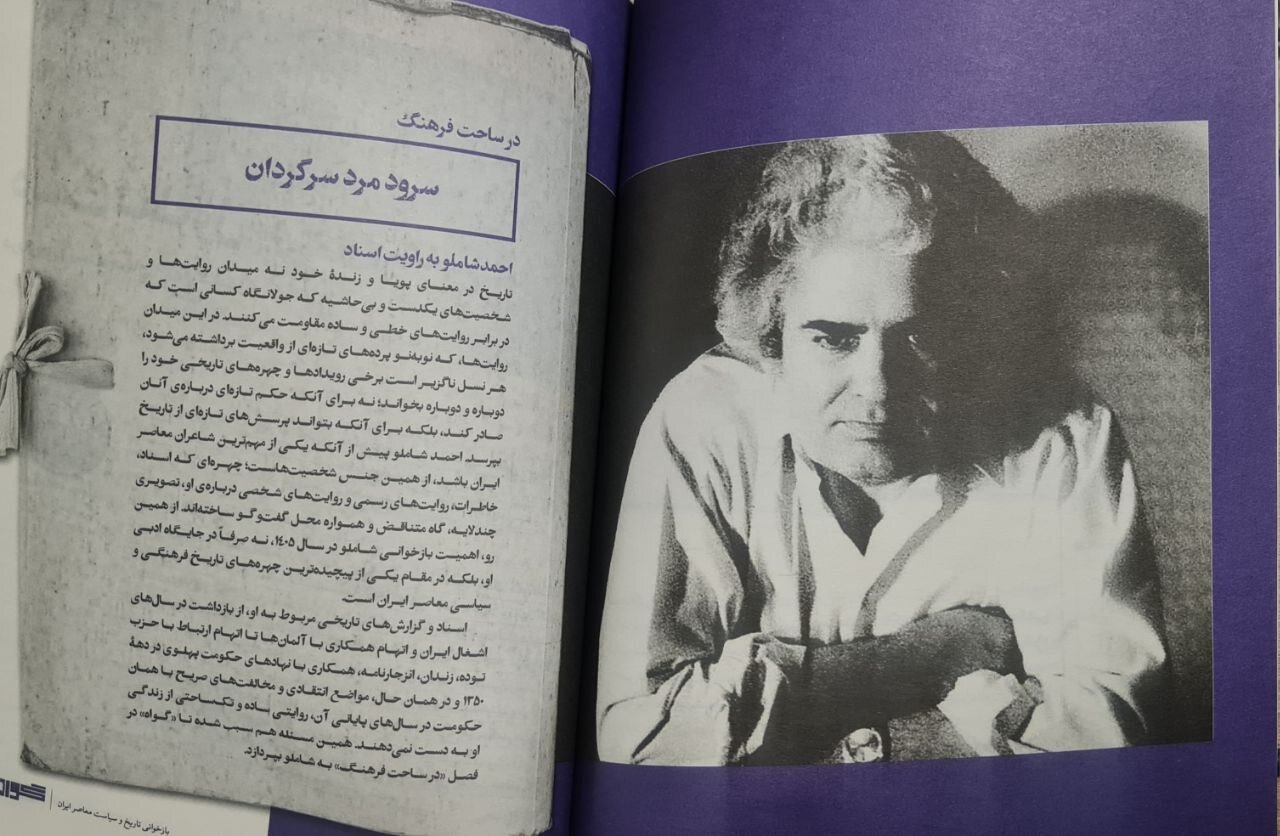
“Wandering Man’s Poem”; Why does the document need to be read?
The income of the case places Shamlou among the figures about whom various, and sometimes inconsistent, narratives have been made. Instead of seeing the poet’s death as the end of the discussion about him, the text suggests returning to the documents and asking again about the past. This approach is especially important for a figure like Shamlou; Because his life was not only in poetry books. Newspaper, prison, literary circles, cultural activities and political disputes were also part of his experience.
The revenue of the case expresses its intention as follows:
“Each generation is forced to read some of its historical events and figures again and again; Not in order to issue a new verdict about them, but in order to be able to ask new questions from history.”
“The hand of self-exaggeration”; Shamlu and controversy over the Shahnameh
The first analytical text presented in the case was written by Seyyed Ataullah Mohajerani with the title “Dost Ta’awul Bar Kishtan; It is about the living world of Ahmad Shamlou. This article is a critical reading of Shamlu’s relationship with Iran’s literary and cultural heritage.
To explain this difference, the author refers to the views of critics and researchers such as Fereydoun Rahnama, Iraj Meschizad and other experts. Meanwhile, the issue is how the contemporary intellectual confronts the tradition that has formed an important part of the historical and linguistic memory of the Iranian society.
In a part of the article, referring to Shamlou’s perception of poetry and life, this phrase is quoted:
“My poem is a complete autobiography. I believe in the fact that poetry is not a perception of life; Rather, it is life itself.”
The discussion about Ferdowsi and Shahnameh is the main point of this dispute. Mohajerani deals with Shamloo’s judgments about Shahnameh, Ferdowsi, Rostam and Sohrab and tries to show how a dispute over a literary narrative turns into a wider dispute about the knowledge of Iranian history and culture. He writes about a part of Shalom’s judgment:
“His judgment about the Shahnameh and the legend of Zahhak showed that with the mythology and knowledge of Ferdowsi and his era and the Shahnameh He does not have the necessary familiarity and is alienated from the world of legends and Shahnameh. The article then comes to the issue of Shahnameh and Ferdowsi’s status. In this section, one of the criticisms raised against Shamlou is the gap between his praise of the capabilities of Persian language and literature and his critical stance against some classical works. By proposing this contradiction, the author confronts the reader with a question: can a contemporary poet take a radical position against the literary tradition, without using the heritage of the same tradition to create his new language.
One of the readable parts of the article is to deal with Shamlu’s view of poetry and language; Where the author goes beyond the conflict between tradition and innovation and addresses the issue of the poet’s responsibility towards the society. In this view, Shamlou is not a poet who only pays attention to the beauty of words and literary forms; He expects poetry to communicate with human experience and social relations.
“included in the beginning”; The years of formation of the poet in two narratives
In the text “included in the beginning; A documentary account of the political-social life of Ahmed Shamlou in the 1320s and 1330s”, Sona Qajar goes back to the years when the poet was not yet a established figure of the following decades. By juxtaposing administrative and security documents, Shamlu’s own writings and some other narratives, the text presents a picture of his childhood, early entry into work, acquaintance with the political environment and commuting in the press space.
One of the opening scenes of the article shows Shamlou in a library that was a hangout for political people. The author then asks what path has been taken between this young man who was suffering from the difficulty of livelihood and the well-known poet of later years. Shamalu himself spoke about his life experiences and official institutions have also recorded the same period with their own language and intentions.
In a part of the article, the first years of Shamlou’s literary activity and the publication of his works are mentioned. Using administrative and press documents, the author presents a picture of the winding path of these years.
In one of the narratives quoted in the article, Shamlou talks about his youth experience and his feelings towards life:
“During Shamlou’s childhood years, hardship was not separated from his life; It was full of ups and downs, displacement, poverty and waiting.”
This description provides a basis for understanding part of Shamlu’s first experiences; The experiences that were reflected in his poetry and social outlook in the following years.
Prison, Tudeh party and the distance between closeness and membership
An important part of Sona Qajar’s research deals with Shamlu’s relationship with the Tudeh Party and his arrest after August 28; A subject about which there are different narratives. The article cites reports that talk about communication and activity around the party, and next to them, it puts Shamlou’s writings about his experience and his criticism of the behavior of some party members.
Accuracy in words is essential here. Proximity to a party, cooperation in a publication, presence in political groups and organizational membership do not have the same meaning. Also, what a security report calls an “allegation” alone is not proof of its occurrence. The merit of the article in its best parts is that it brings these disparate materials together and allows the reader to compare them.
In one of the writings quoted in the case, Shamlou speaks of his disappointment in dealing with the atmosphere of the party:
“I see in these documents that every young man gets measles once in his lifetime!”
When the “uncomfortable element” is invited to cultural work
One of the interesting contradictions that Sandi’s research of “Shamlo Bar-e-Basin” shows is the difference in the way different parts of the government look at this person. In some reports, it includes “uncomfortable element” and the issue of care; At the same time, his name can be seen in literary, artistic and press activities and is also considered for cultural cooperation.
For example, the article refers to a report about a group of artists and writers whose activities could be “politically colored” from the perspective of official institutions. Beside this pessimistic view, another document speaks of Shamlou’s invitation to do research work in the academy. The distance between these two types of encounters is part of the history of cultural life in that period: one institution wants to use the ability of a writer or poet, and another institution monitors the same presence.
In a quote from one of the reports of the Pahlavi period, it is stated:
“Ahmed Shamlou (poet and writer)… and the title of their correspondence was the discomfort of the artists of the Rudaki Hall Choir and Opera in terms of insurance, retirement, employment [بود]”
“A. Morning”; Search for contents in administrative files
Third, Hamidreza Mohammadi’s article entitled “A. in the morning A search in the documents of the 1340s and 1350s of SAVAK is about Ahmad Shamlou. If Souna Qajar’s article focuses on the early years of Shamlu’s social and political life, this article follows him in a period when the poet became famous, but still under surveillance and reporting.
Title “A. “Bamdat” also refers to the well-known nickname Shamlu; The name he used in some of his literary activities. At the beginning of the article, the author reminds that in the 1350s, Shamlu was a well-known figure in literary and cultural circles, and in this period, his position as a poet and writer was established.
One of the important parts of the article is dedicated to Shamlu’s political activities and his connection with different currents. The documents show that he was connected with some political circles in the 1320s and was sometimes arrested because of these activities. In this section, the author tries to present a documented picture of his political movements and situation in those years by separating documents and reports from different periods.
In the meantime, the issue of Shamlou’s arrest and release is particularly important in administrative documents. Reports from the years 1320 and 1330, including the documents published in the file, show that his name was registered in the correspondence of various security and administrative institutions. These documents, in addition to recording the events of the poet’s personal life, also reveal the way the government supervises cultural and political activities.
The article also mentions Shamlou’s trip to America and its reflection in Iran’s cultural atmosphere. In one of the press documents of 1355, the news of his trip to America was reflected. By quoting this document, the author gets a picture of Shamlou’s position in those years; A poet whose works were read in literary circles and his travels were also noticed by the press.
Among the documents of this section, Shamlou’s speech at New York University in Nowruz 1356 also has a special place. This speech gives an image of his political position in the last years of Pahlavi rule. In those words, Shamlou emphasizes the necessity of the convergence of the opposing forces of the government and considers ideological differences as an obstacle to political cooperation. In part of this speech it is stated:
“We need the complete unity and harmony of all national political forces against this common enemy.”
By reaching the years leading to the revolution and after, Mohammadi’s article shows that the change of government did not mean the end of the conflict between Shamlu and the government. He continued to be in the public space, speaking in cultural programs and taking a stand on the political situation and freedom of expression.
Where is the value of the “evidence” file?
Shamlou’s case in the eighth issue of “Gawah” opens a way for the reader who is only familiar with his famous poems to the less seen parts of the poet’s life. It presents a set of follow-up questions for the researcher: How was a security report written? How to separate accusation and reality? Why are the narratives of himself, his friends, critics and government officials so different about a person? And what is the ratio of political and personal experiences with literary creation?
The common feature of these narratives is that none of them try to summarize Shamlu in the form of a great poet or a political intellectual. Intellectual differences, personal experiences, press activities and his confrontation with power institutions, along with poetry and literature, are the components of a single life.
The case of “Song of the Wandering Man” is worth reading because it establishes a connection between literary criticism, historical narrative and documentary research. In one part, the reader is faced with a controversy about Ferdowsi’s legacy and Shahnameh, in another part he follows the documents of Shamlu’s political and social life.
source
“The wandering man’s poem; Ahmad Shamlou according to the narration of the documents”, income of the case “in the field of culture”, magazine witnessnumber 8, summer 1405.
259