According to the news agency Online news According to Ibna-Anahid Khazir: book “An introduction to the history of Armenians in Iran; From the Great Migration of Shah Abbas I to Today” is a historical, social and identity research by Robert Safarian, which analyzes four centuries of collective life, biological gradients and the decisive role of the Armenian community in the history, culture and economy of Iran. The author bases the work on the fact that the history of Armenians is an inseparable part of the general history of the Iranian people, and knowing the ethnic, linguistic and religious components of this society plays a fundamental role in deepening understanding and coexistence in the country’s multicultural environment. The conceptual framework of the book is compiled in eleven chapters based on the bond between these people and the phenomenon of “immigration”. A continuous event that has changed the fate of this society sometimes in the form of forced migrations, sometimes in the form of escape from political turmoil and sometimes in the form of organized relocations.
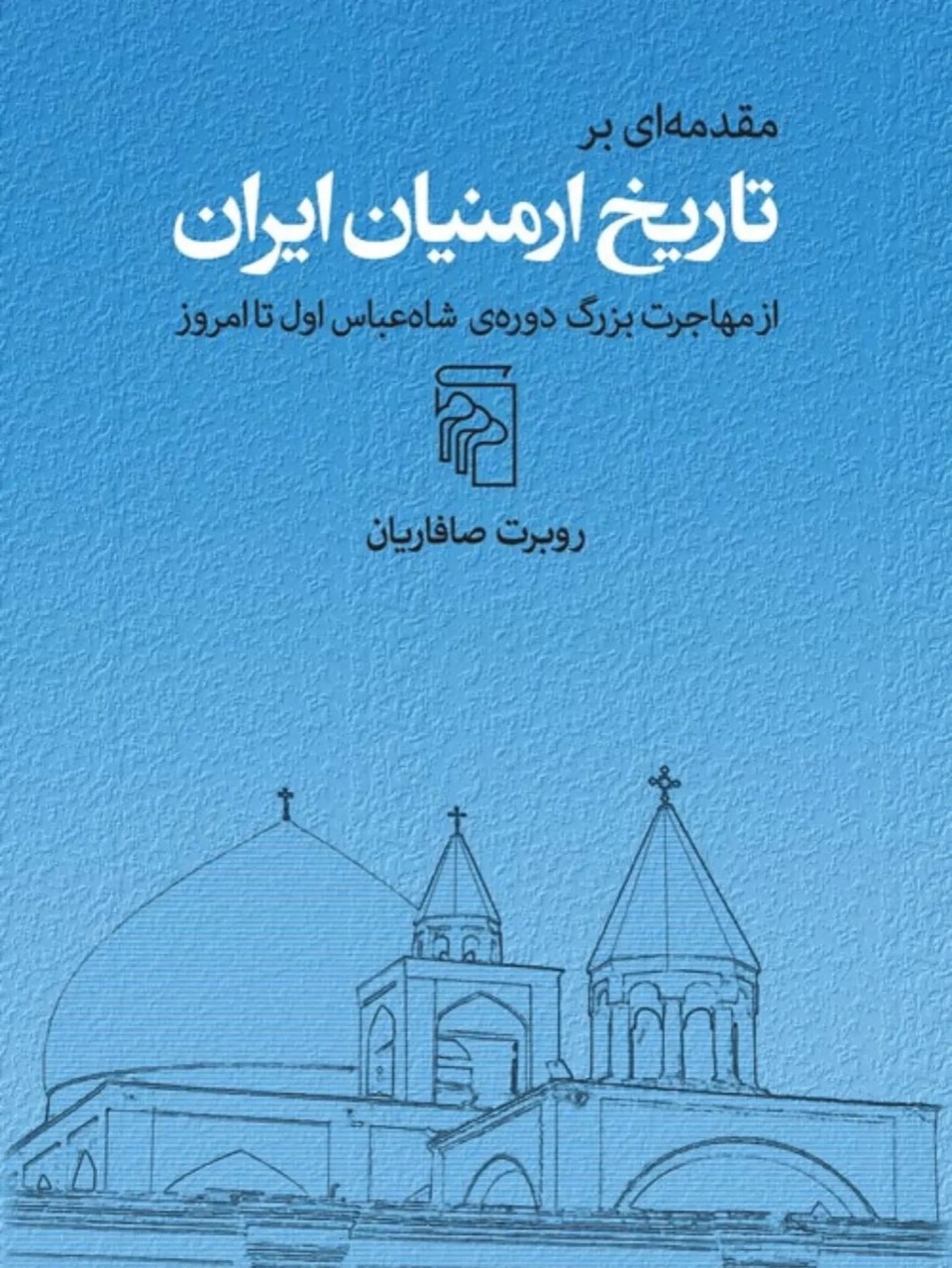
After exploring the historical roots of the presence of Armenians from ancient times and the Achaemenid and Parthian eras, the book traces the fundamental turning point in the early 17th century with the decree of Shah Abbas I of Safavid and the great deportation of Armenians from Jolfai of Ares and settling in New Jolfai of Isfahan. In this period, the establishment of the printing press, the stabilization of the religious sphere, the building of magnificent churches, and especially the genius of Jolfa merchants in setting up a wide network of international trade from India and Java to Venice and Russia, turned Jolfa into one of the most dynamic economic centers in the world; The glory that, of course, declined with the fall of the Safavid dynasty, the invasion of Afghans, and the chaos of the Naderi and Zandi eras. During the Qajar period, the consequences of the Turkmanchai treaty led to the mass migration of Armenians from Azerbaijan to Russia, but at the same time, the formation of the seeds of the Armenian community in Tehran and the entry of new political parties such as Armanakan, Hanchakian, and Dashnaksution turned this minority into an influential actor in the political developments of the constitutional era, the military events of Tabriz, and the battles of Yprem Khan.
In the middle seasons, the narrative recounts the terrible crises of the First World War, the waves of Armenians and Assyrians fleeing between the Caucasus and Iran, and then Reza Shah’s policies of closing Armenian schools and reducing their government presence. The prominent event after Shahrivar 1320 was the “Nargaqt” project or the large and organized migration of tens of thousands of Armenians to Soviet Armenia, which changed the social structure of Armenians from a society with a rural base to a completely urban context in the neighborhoods of Tehran and at the same time established their leading role in the development of modern architecture and modern art. In the final chapters, the position of Armenians after the 1357 revolution, the legal status of schools and religious institutions in the constitution, participation in the imposed war fronts, and finally the changes arising from the independence of Armenia and the wave of contemporary migrations to Glendale, California are criticized. Finally, the book “Introduction to the history of Armenians in Iran from the great migration of Shah Abbas I to today” is a documented text full of historical fairness, which provides the possibility of a correct understanding of the centuries-old ties between Iranians and Armenians, away from biased judgments.
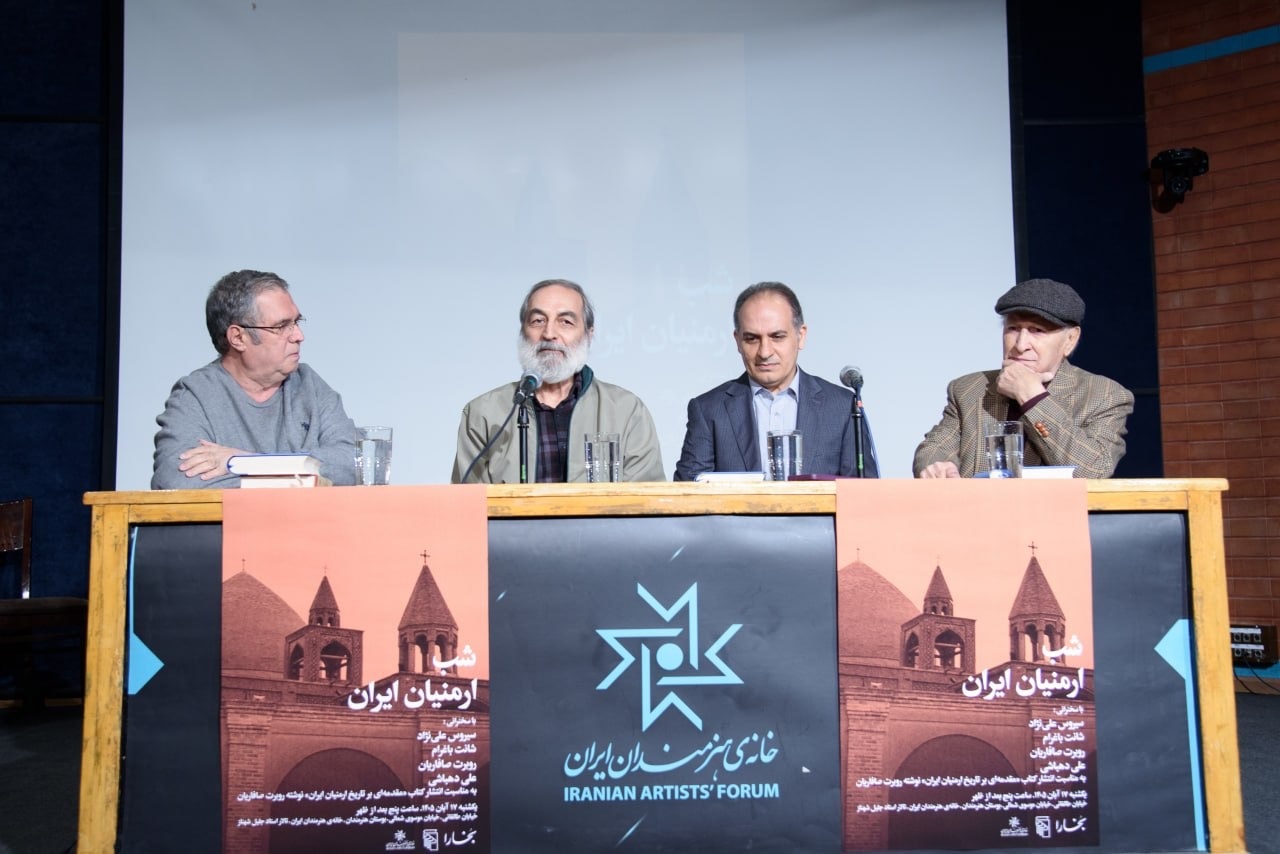
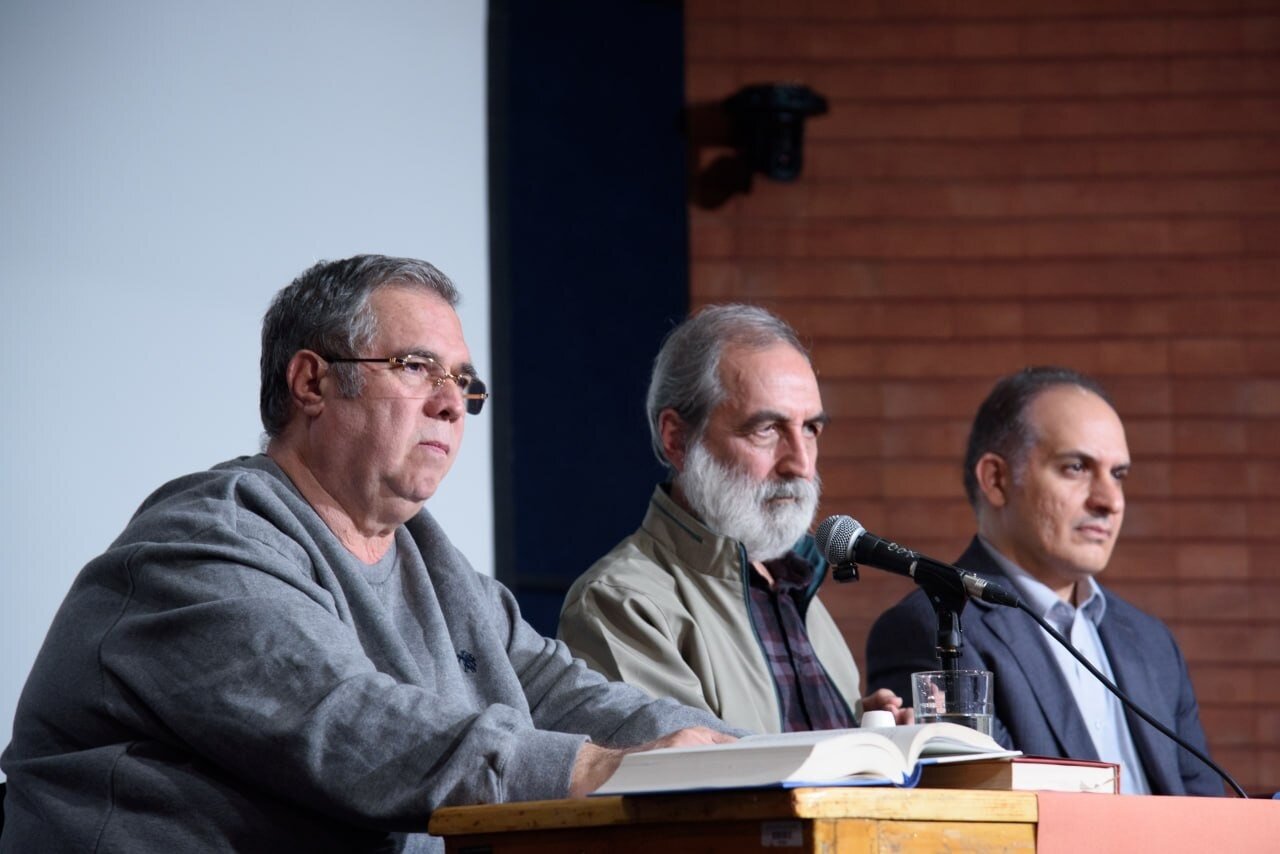
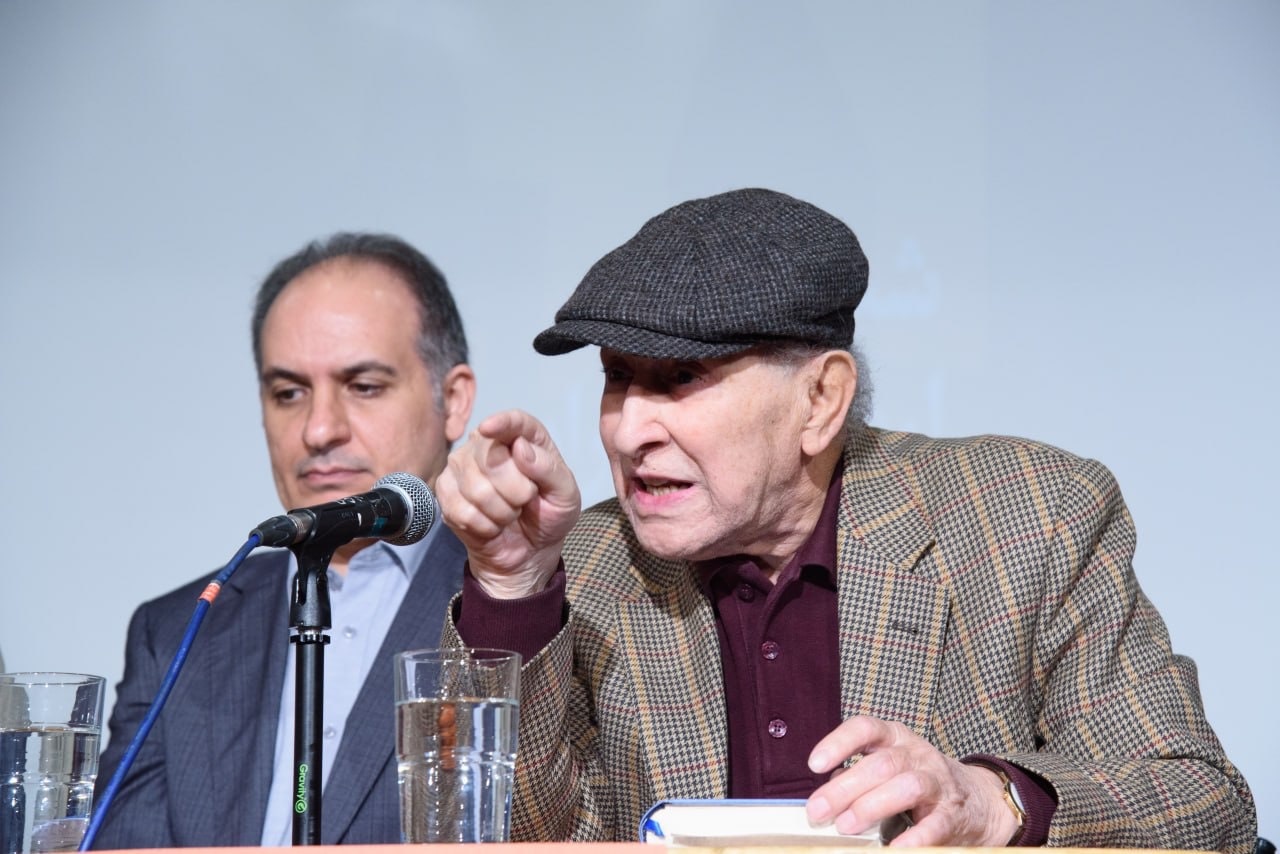
The 999th night of Bukhara nights was dedicated to the Armenians of Iran with the speeches of Sirus Alinejad, Shant Bagram, Robert Safarian and Ali Dehbashi. This meeting was held on Sunday, November 17, 1405 in the Hall of Master Jalil Shahnaz of the Iranian Artists House on the occasion of the publication of the book “An Introduction to the History of the Armenians of Iran”, written by Robert Safarian, published by the publishing center. The speeches of the attendees, along with the introduction of the book, presented three interrelated issues: how the identity of Iranian Armenians is formed, the necessity of a critical review of the historical treatment of minorities, and the place of Armenians in the cultural and social developments of Iran.
History of Armenians of Iran; From the experience of migration and discrimination to identity and modernity
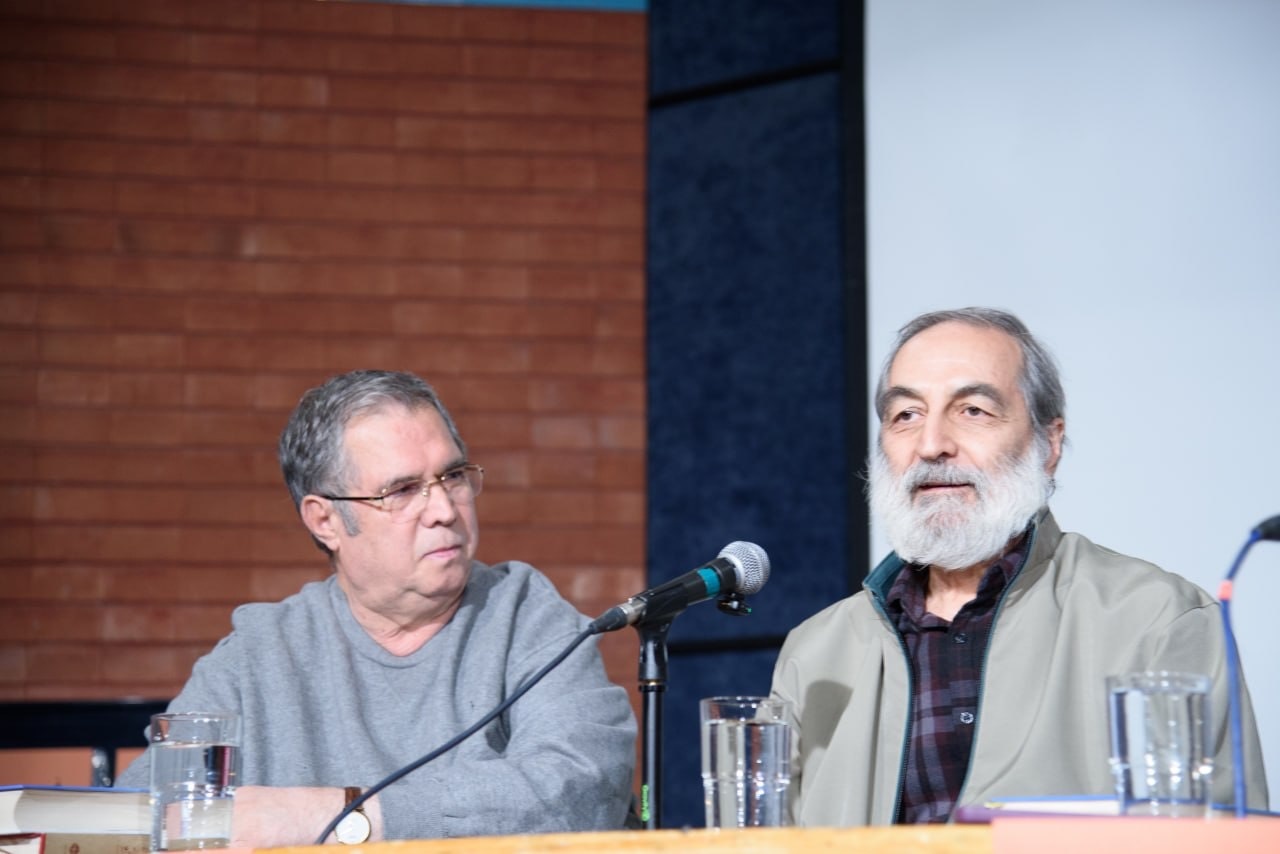
At the beginning of the meeting, Robert Safarian linked the motivation of writing the book to a question that has been with him since his youth: How is the identity of an Armenian person formed in a Muslim-majority society? This question was his departure point to deal with the history of a society that has gone through the experience of belonging to Iran while maintaining its religious and ethnic distinctions.
In this framework, identity is not just a title to introduce a group; It is a question about a person’s relationship with the social environment, family past and the society in which he lives. Safarian’s question can be expanded as follows: How can one be a part of a larger society and at the same time maintain its distinctive characteristics? From this point of view, the history of the Armenians of Iran is not only a description of the events related to a minority, but also an opportunity to think about the meaning of belonging and coexistence.
Safarian explained that eight years of being the editor of a magazine, continuous communication with the Armenian community and following up on Armenian news have provided the basis for the formation of this research. He also mentioned his activities in the magazine “Davgo” and dealing with the issue of Armenian immigration to and from Iran. Therefore, the book is not a mere library encounter with the past; Its concerns are related to observing the social life and everyday questions of the Armenian society.
He emphasized that his work is not limited to introducing cultural activities or listing the occupations of Armenians, but tries to examine the history of this society, especially from the period of Shah Abbas I to the present day. However, choosing the title “Introduction” shows that the author does not consider his work to be the end of this path. In this view, the book, rather than claiming to present a final narrative, provides a basis for raising questions and further research.
immigration; Population displacement or the transformation of the experience of belonging?
Migration was one of the main themes of Safariyan’s speech. Referring to the fourteen great migrations of Armenians to Iran and from Iran to Armenia, he likened these experiences to a “laboratory of social sciences”. He also spoke about the migration of 20,000 people and related it to the question of Armenians’ sense of belonging to Iran. However, the initial report does not clarify the time and details of this case. The importance of this interpretation is that it takes immigration beyond a population statistic.
To explain the complexity of this experience, Safarian pointed to the migration of Armenians after the Treaty of Turkmanchai. According to him, the propaganda of Tsarist Russia encouraged a number of Armenians south of the Aras River, including the residents of Tabriz, to move to the territory of Tsarist Russia; But many regretted after seeing the situation of Armenia that day. This example in his narration highlights the distance between the ideal image of the destination and the reality of living there.
He also mentioned that some neighborhoods in Tehran were the result of Armenian immigration. By putting these two aspects together, we can see that immigration in his discussion does not only mean leaving Iran; Moving within the country and creating new living environments is also a part of this history. Safarian estimated the population of Armenians in Iran to be about 150,000 people before the revolution and about 15,000 people at the time of the meeting.
A plural society, beyond positive stereotypes
Safarian emphasized on the cultural and class differences between urban and rural Armenians. This point prevents the Armenian community from being described as a homogeneous group; A collection where all its members seem to have had similar experiences, facilities and lifestyle. His reference to positive stereotypes about Armenians is also important from this point of view.
A glorifying representation of a society can still be reductive if it ignores its internal differences. Therefore, highlighting the role of Armenians in Iran’s modernization gives a more accurate picture when it is accompanied by the diversity of their experiences. In Safarian’s words, the emphasis on Armenians’ contribution to modernity was alongside the reminder of these cultural and class differences.
The history of minorities and criticism of our image of the past
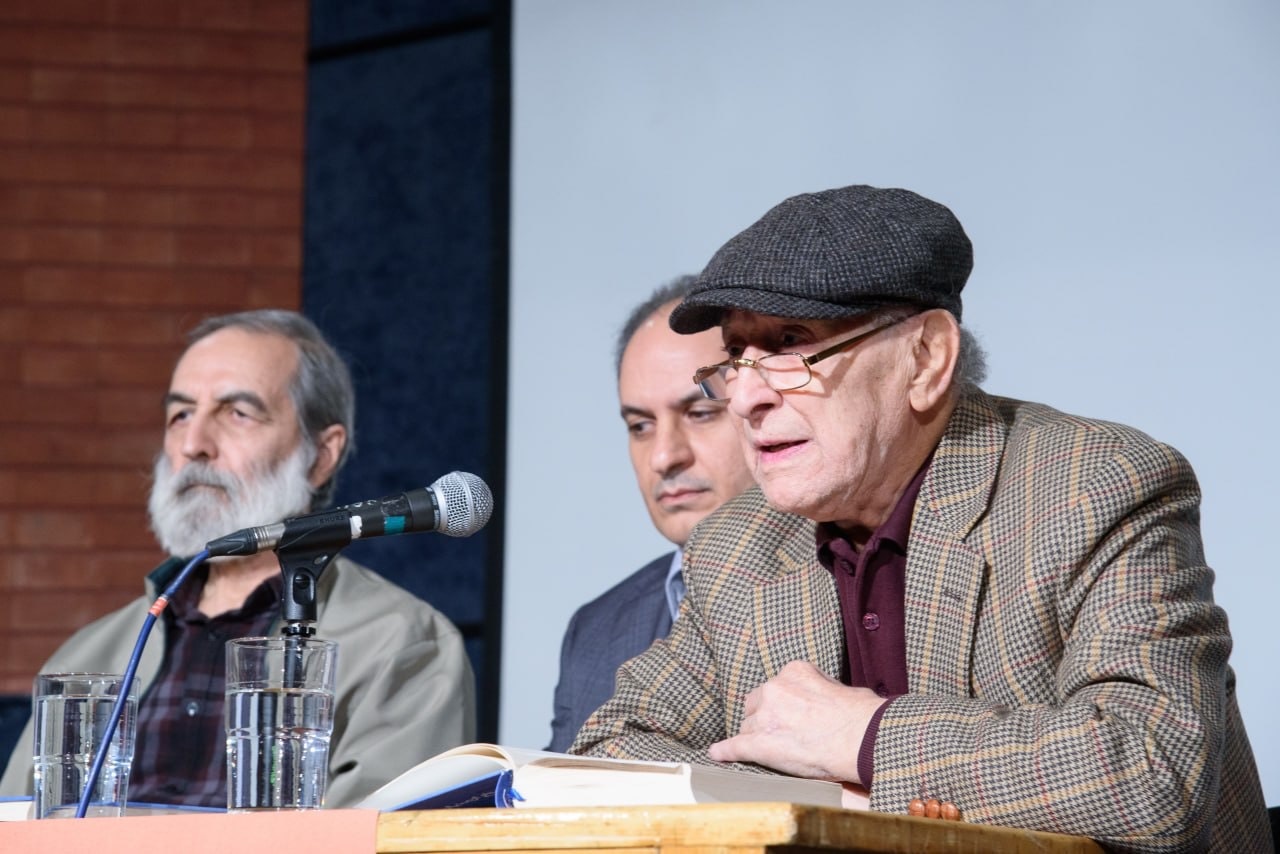
Siros Alinejad considered the book as a work from which dozens of independent writings can be extracted from its topics. He explained the eleven-chapter structure of the book with the expression “ten chapters and one more chapter”: in his reading, ten chapters are mainly the narration of the suffering and persecution of Armenians, and the other chapter presents a different picture of their situation in the contemporary era.
Alinejad came to a more frank critique of this division. He believed that the historical behavior of Iranians with minorities challenges their claim about civilization. This judgment was his own critical position in the meeting; But an important question that arises from it is the relationship between a society’s proud image of its past and the experience of those who were in a subordinate or minority position. In this reading, minority history is not merely an added part of general history; It is an angle to review. An event that is explained in the narrative of governments with the language of political expediency or military expediency, may mean the loss of home, security and the possibility of continuing life in the experience of another group.
He considered the forced migration of Armenians during the period of Shah Abbas I as an outstanding example. According to him, this migration was carried out in the framework of the scorched earth policy against the Ottomans, but the human consequences were disastrous and many Armenians died while crossing the Aras River. The importance of this example in his discussion is to change the focus of attention from the government’s decision to the fate of the people who paid for that decision.
Alinejad also mentioned receiving tribute, arbitrary actions of government officials against Armenian businessmen, and social and religious restrictions. Referring to the period of Shah Sultan Hossein, the order to dig a ditch around New Jolfa and the restriction of movement of Armenians in the bazaar during rains, on the pretext of impurity, were cited as examples of pressure on this community.
These examples together show that the subject of his words was not only great and exceptional violence; The limitations of daily life were also in the center of attention. From this point of view, the examination of the relationship between the majority and the minority should include both macro-political decisions and the ways in which inequality manifests itself in normal social relations.
From the narrative of suffering to the recognition of the social and cultural role
Alinejad further, referring to the chapter “Armenian society is becoming urban”, spoke about the change in the situation in the contemporary period and described the treatment of Armenians as more balanced in this period. He also considered them as important mediators in the expansion of art and creativity in contemporary Iran.
This section, along with the narrative of suffering and discrimination, sheds light on another aspect of the issue: Armenians are not only the recipients of other people’s policies and behavior in the discussion of the meeting, but also play a role in the cultural and social life of Iran. It is important to keep these two aspects at the same time; Neither their cultural contribution should marginalize their historical suffering, nor should the narration of suffering ignore their active presence.
The link between documentary history and collective memory
By reviewing the works of Safarian in the field of Armenian culture, history and cinema, Shant Baghram considered him one of the important figures in introducing the history of Armenians in Iran. He also preferred the term “Iranian Armenians” over “Armenian Iranians”; A choice that highlighted the sensitivity to naming and identity representation in the text of this discussion.
Baghram considered the eloquent prose and the perceptible presence of the author’s voice among the features of the book. According to him, on the one hand, Safarian refers to the sources and on the other hand, by returning to the personal experiences and social atmosphere of the Armenian family, he connects the narrative to the lived life. For this reason, Bagram considered the work to be a reflection of the collective memory of a nation in addition to a historical book. The importance of this description is in the connection of two levels of narrative: documentary history asks what happened and what evidence can be relied on; Collective memory focuses on how the past is remembered and made sense of. In Baghram’s reading, the presence of the author’s voice is a way of approaching the same experience, not a substitute for referencing sources.
He also emphasized the necessity of reading the book from the perspective of paying attention to the suffering of others and facing an ethnic and religious minority. According to him, the issues raised in the work are not included in stereotypes and the book constantly confronts the audience with questions about how to deal with this society. His interpretation of the book as an opportunity to “think about the unknown” emphasized this questioning capacity. In the end, Baghram considered the reflection of the role of Armenians in the emergence of civilization and modernity in Iran as one of the important aspects of the work.
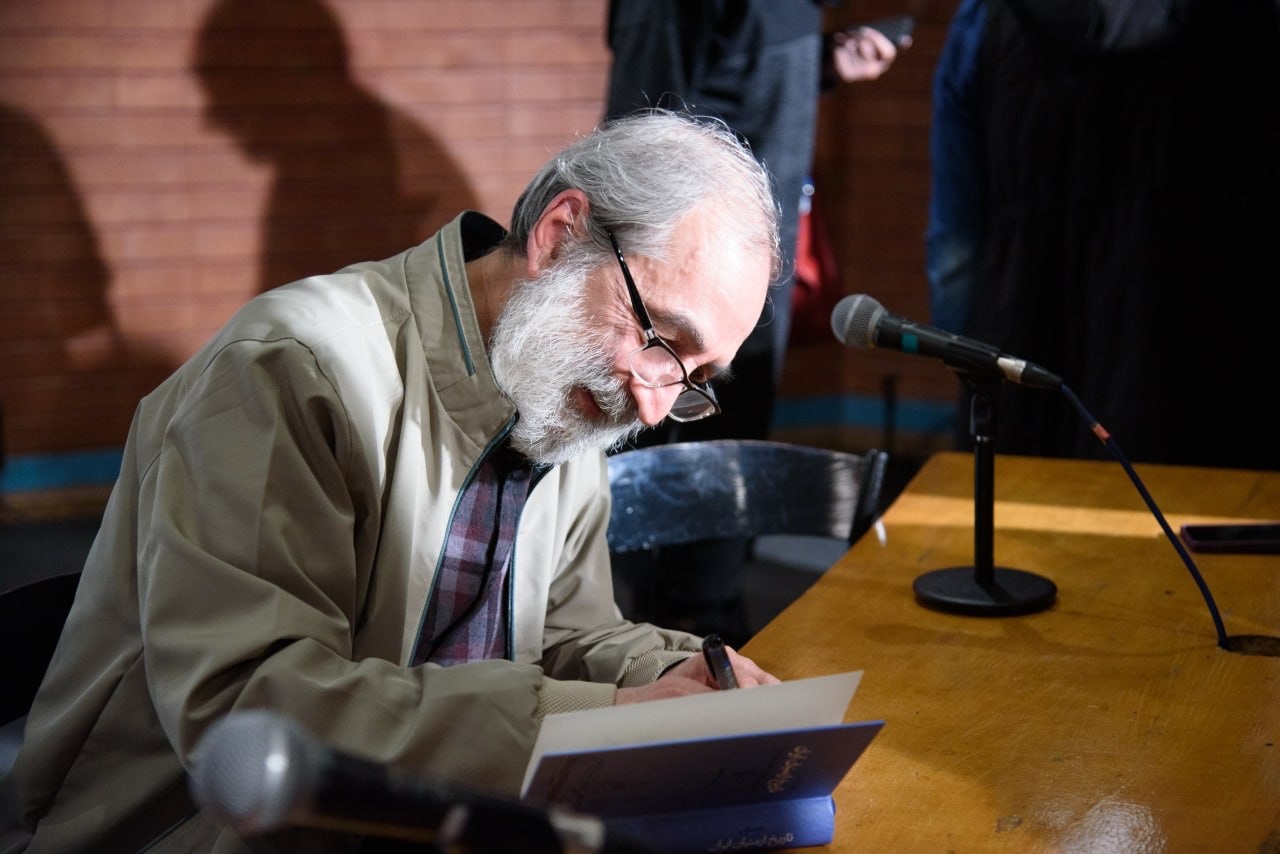
The meeting ended by answering the questions of the attendees; A meeting in which the introduction of a book turned into a conversation about belonging, historical memory, power relations and the possibility of revising the narrative of the past.
The photos are by Leila Ebrahimi, the photographer of Iran Artists’ House.
259