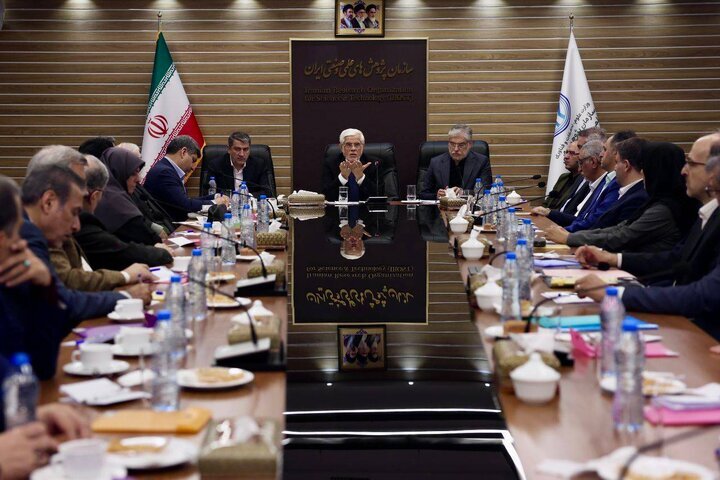
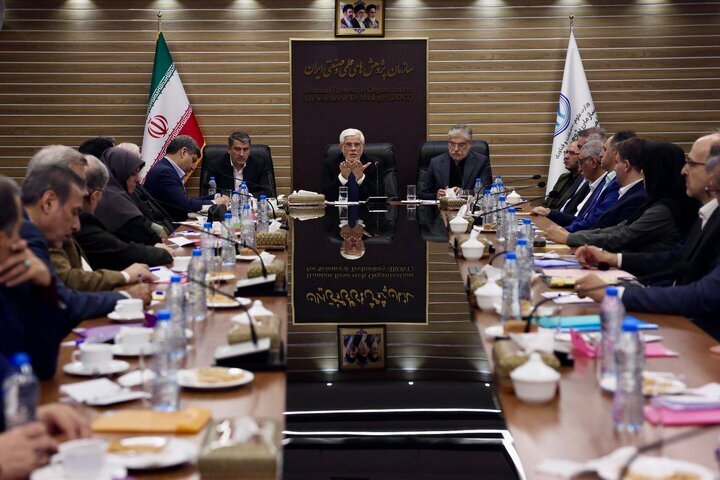
According to Khabaronline news agency, Mohammad Reza Aref, while visiting the knowledge-based companies based in the Scientific and Industrial Research Organization of Iran and meeting with the presidents of the national research institutes, referring to the strategic role of science and technology in improving Iran’s defense and deterrence capabilities, said: The experience of the two recent imposed wars showed how effective long-term investment in the development of advanced technologies has been in increasing the country’s defense capabilities.
According to Isna’s narration, he emphasized the necessity of preserving and strengthening Iran’s scientific achievements, promoting the status of research institutes, compensating the delays in achieving the goals of the vision document, and using the capacity of elites as priorities of the 14th government.
We are not looking for war, but we defend ourselves well
Referring to the two recent imposed wars, the first vice president said:Whether peace is achieved or not, The path of confrontation with the enemy will continue; Therefore, we must continue the development of science and advanced technologies with more seriousness in order to have the upper hand against the enemy.”
Aref added: Today, it is well understood why the martyred leader of the revolution emphasized that the aerospace industry should be a priority. We do not seek war, but we defend ourselves well.
Emphasizing the necessity of continuing the development of advanced sciences and technologies, he said: Regardless of the environmental and international conditions, Iran must seriously follow the path of scientific and technological progress in order to have a high defense and deterrence capability.
Honoring the memory of the martyred leader of the revolution and appreciating the performance of scientific and research centers in the two recent imposed wars, the first vice president said: Iran’s scientific and technological achievements are the result of the deep, accurate and long-term view of the martyred leader of the revolution in the field of science and technology. The young scientists were the officers of these two wars, and they ran universities and scientific centers.
Referring to the role of scientific achievements in increasing Iran’s defense capability, Aref added: These achievements improved Iran’s ability to defend against enemy aggression. In such a way that every week the defense situation of the country was getting better and it is necessary to preserve the scientific and technological achievements of the country and to continue investing in strategic areas.
The government is ready to hand over powers to universities and research institutes
Criticizing the intervention of some institutions outside the university in the decisions related to scientific centers, he considered these interventions to be one of the factors of the universities not fully fulfilling the expectations of the universities in solving the country’s problems and stated: The reason why the universities have not played a role in solving the country’s problems as expected is that some institutions outside the university, which do not have the necessary qualifications, make decisions about the university.
Emphasizing the need to reduce unnecessary interventions in the affairs of universities and research institutes, the first vice president said: the 14th government is ready to hand over the necessary powers to scientific centers so that these centers can pursue their scientific and research missions with greater independence. It is necessary for universities and research institutes to move towards sustainable income from the path of turning science into wealth.
Referring to the limitation of public resources, Aref stated: No government will be able to significantly increase the share of research compared to the current conditions; Therefore, scientific centers should be provided with a more effective use of research and technological capacities for sustainable income generation. The government also needs practical solutions from research centers to overcome the challenges of the environment, economy, energy and social issues, and there is no other way than to improve the status of research institutes that have proven their efficiency over the past decades and today they must assume a more effective role in responding to Iran’s strategic needs.
Referring to the reason for the establishment of research centers in the early 60s, he stated: The purpose of establishing these centers was to focus on research, create a common language between scientific centers and industry, and move towards the serious production of science and technology. A long way has been taken to establish research institutes and these centers have also proven their efficiency. Today, research institutes have become a bridge between science and industry and play an important role in creating interaction between scientific centers and strategic sectors of the country.
The government’s strategy is to compensate for the scientific backwardness and realize global authority
Referring to the emphasis of the martyred leader of the revolution on Iran’s achievement of scientific authority in the world and the scientificization of the Persian language, the first vice president said: According to the 20-year vision document, the country should have achieved the first position in the region in the field of science and technology and an influential position in the world. The strategy of the 14th government is to fulfill the recommendations of the leadership and compensate for the country’s backwardness in achieving the goals of the 20-year vision document.
Emphasizing that the training of capable human resources should start from the early years of education, Aref said: to achieve the country’s scientific and technological goals, we must pay enough attention to education in the first years of school and choose the best and strongest teachers for the students of these levels so that their scientific and educational foundations are formed properly. Elite manpower is the main advantage of Iran and long-term planning is necessary to train, maintain and utilize the capacity of elites.
He also emphasized the necessity of addressing the livelihood problems of professors and elites and developing appropriate support mechanisms by the Ministry of Science, Research and Technology.
29218