





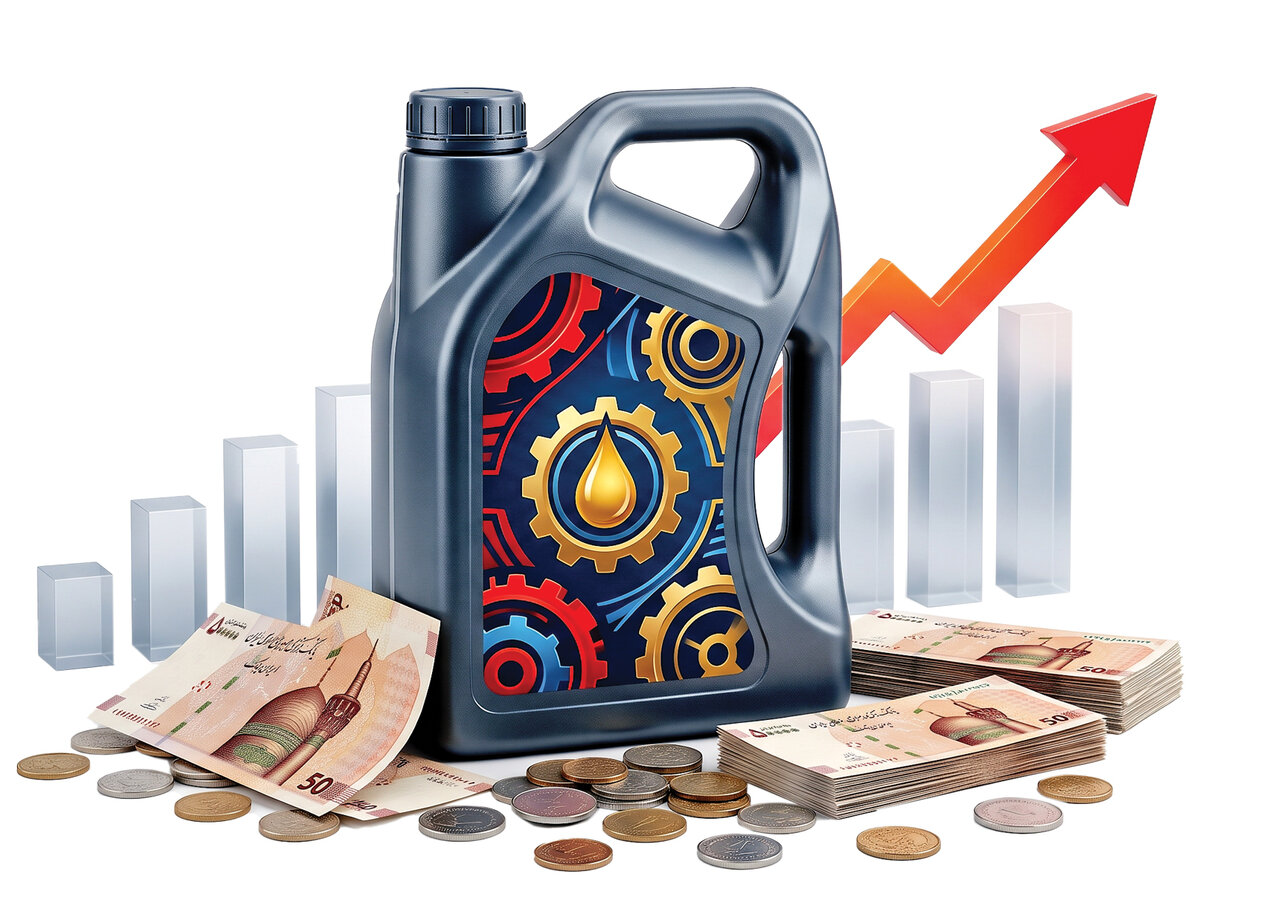
According to the online report of Hamshahri newspaper, the decision to remove the pricing of tires and motor oil was approved by the market regulation headquarters with the aim of increasing domestic production. Experience shows that the withdrawal of limited goods from the pricing system usually leads to an increase in consumer prices. While the wages, income and production of a large part of the people are still determined within the framework of government restrictions.
Expensive oil for light cars
In the recent meeting of the market regulation headquarters chaired by Mohammad Reza Aref, the first vice president, it was approved that the tires and engine oil of light vehicles will be excluded from the mandated pricing by the end of the year. The government has announced the purpose of this decision to increase domestic production and adjust prices. Based on the same resolution, the distribution of heavy vehicle tires and diesel engine oil will continue to be subject to the previous routine and include the change of the pricing system for light vehicles only. The first increase was applied in November 1404 at the rate of 10%. In January of the same year, the sales rate of the products of major motor oil producers increased between 30 and 40%, according to the grade and quality level. The third stage took place in May of this year, during which the average price of gasoline and diesel engine oil went up by 30%. Of course, the increase in the price of engine oil during this period was not limited to the official rates. The market witnessed several price increases, which were opposed by the consumer protection organization and producers. Nevertheless, the gap between the official price and the market and supply problems remained among the problems of this industry.
Liberation in the path of expensiveness
Now, the withdrawal of motor oil for light vehicles from mandatory pricing, in practice, means reducing the restrictions of manufacturers to determine the selling price. Although the government justifies this decision with the aim of increasing production and adjusting prices, the main question is that in an economy with chronic inflation, production problems and continuous cost increases, what factor is supposed to encourage producers to reduce prices? The experience of various markets has shown that freeing prices, in the absence of effective competition and increasing consumer purchasing power, provides the basis for increasing sales rates rather than reducing prices. Motor oil is also not a product that consumers can buy. Simply skip buying it. Periodic oil change is necessary for car maintenance, and its price increase directly increases the cost of using a personal car. Therefore, the natural result of price liberalization in this market, if the sales rate increases, will be the transfer of another part of production and supply costs to households.
Why is only the price of goods released?
The more important issue is the contradiction that can be seen in the government’s economic policies. The salaries of the employees are determined by the government and the wages of the workers are determined within the framework of the approvals of the Supreme Labor Council and with the serious resistance of the government. Also, business owners are facing many obstacles to increase the price of their services and products, and deviation from the set price for services and trade products will be accompanied by severe government penalties. In other words, liberalization in Iran’s economy happens more on the side of household expenses than on their income side. A producer can ask for a departure from mandated pricing to raise the price of his product, but a worker who is faced with daily increases in the cost of housing, food, transportation, and car maintenance cannot decide to raise his wages in the same proportion.
Remove barriers for everyone
The question is, if mandated pricing hinders production and investment, why is the same argument not recognized for labor wages and income in other sectors of the economy? Why is the price of motor oil and tires supposed to be freed, but the consumer’s income remains within the limits? And if the liberalization of prices is a desirable policy to increase productivity and boost production, why is this policy not followed in the same way and with clear criteria in all sectors of the economy? The problem is not only the high price of motor oil; The issue is the one-sidedness of the path in which the freedom of pricing is given to the private seller and the government, and the cost is borne by the buyer. As long as economic liberalization only means increasing the freedom to sell goods and a proportionality between price growth and people’s purchasing power is not established, the result of such decisions will not be market adjustment, but the reduction of households’ tables.
17302



