



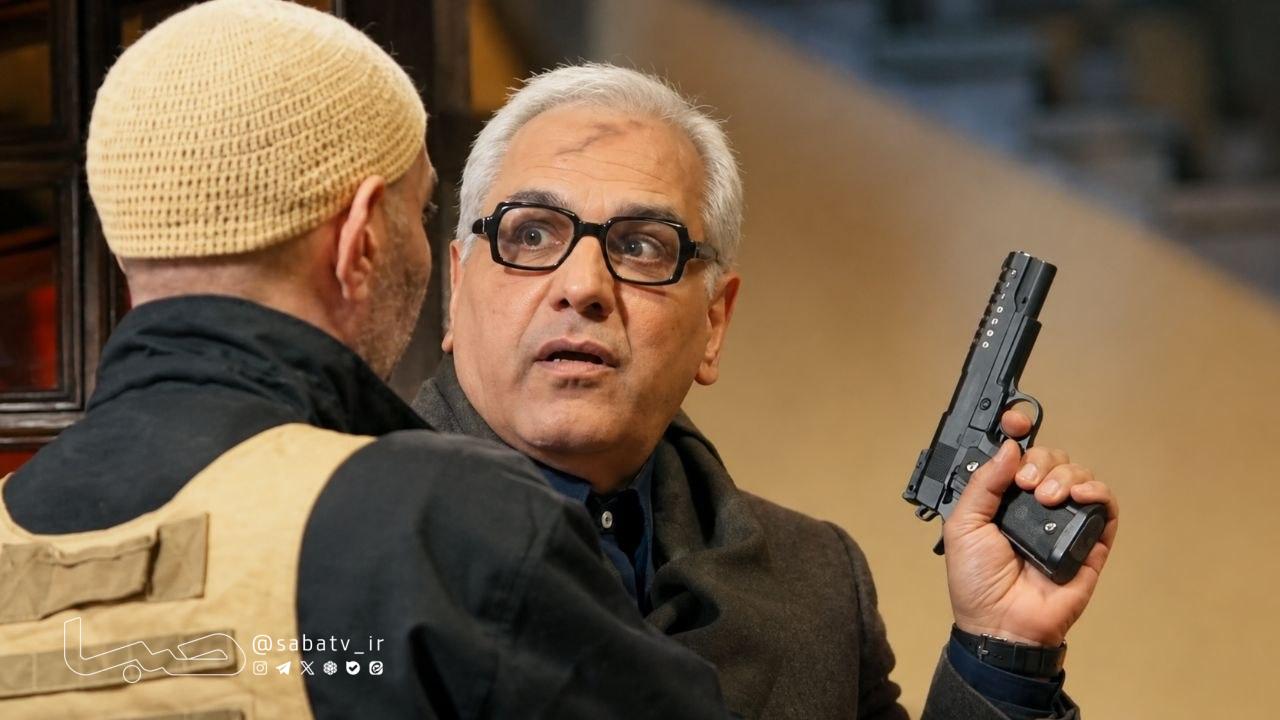


In more than three decades of television activity, Mehran Madiri has become one of the most influential faces of Iran’s television humor by creating series such as “Saat Khush”, “Paverchin”, “Shabhai Barreh” and “The Man of a Thousand Faces”. Now, his return with “The Man with Three Thousand Faces” has been welcomed and criticized, which poses this question to the audience: does a director still have something new to say, or have past successes become a difficult criterion for evaluating his new works?

Nasser Arbab/Saba, Mehran Moderi cannot be considered just an actor or a comedy director. During his more than three decades of artistic activity, he has become one of the leading faces of television humor; An artist who, by creating different characters, comic situations and using humorous language to address social issues, was able to shape a part of the taste of the television audience.
The career path of a manager began in the early 70s; When appearing in series like “Flight 57” and “Saat Khosh” became the basis for his recognition. “Happy Hour” can be considered one of the turning points of Iran’s managerial activity and even television comedy; A series that by introducing a group of young actors and presenting a different way of performing humor, was able to bring many audiences with it.
After that, Madiri continued his path on television with series such as “Happy New Year”, “Nowruz 76”, “Jang 77”, “Forgive You” and “Plaque 14” and gradually turned from an actor and comedian to a style director.
From “Paverchin” to “Barre Nights”; Forming a comedy signature
The early 80s can be considered one of the most important periods of managerial activity. By creating memorable characters and using humorous situations in everyday life, “Paverchin” was able to find a special place among the audience in 2001. In addition to popular acceptance, this collection was also influential in creating common vocabulary and terms among people.
After that, “Points” and “Grand Prize” went on the air; The works that each tried to depict social situations and relationships between people in the form of comedy.
But the peak of this period should be found in “Barre Nights”; The series that aired in 2004 and by creating an independent fictional world, used language, culture, social relations and power relations as a source of humor.
“Nights of the Lamb” was not just an entertainment series; Many of its situations were formed by allusion to social behaviors, prejudices, administrative relations and power structures. The use of fictitious language and terms also became one of the distinctive features of this collection.
After that, with “Bagh Muzaffar” in 2005, Madiri continued to produce story-based comedies; But his next experience in “The Man of a Thousand Faces” showed that he can offer a different approach from his acting capacity and creating social situations.
Massoud Shastchi; A character born from misunderstandings
Nowruz 2007, Mehran Moderi introduced the character of Masoud Shasatchi to the audience with the series “Man of a Thousand Faces”; A simple and ordinary employee who, following a series of mistakes and misunderstandings, inadvertently finds himself in situations that do not match his true identity.
When faced with different people and situations, Shasatchi becomes a new character every time; From the position of a doctor and cultural figure to the situations that involve him in complex social relations.
The important feature of this collection was the use of comic situations to show social contradictions. Massoud Shasatchi was not a smart and powerful hero, but an ordinary person who was constantly in trouble when faced with the complex relations of society.
The reception of this collection became the basis for the production of “Man of Two Thousand Faces” in Nowruz 2008. In the second season, Shasatchi was once again placed in new situations, and this time social relations, fame, sports, media and power relations became a platform for the formation of humor.
These two series, along with “Barreh Nights” and “Paverchin”, are among the prominent works of the director’s television career; Works whose parts of dialogues and situations are still republished in the virtual space.
Distance from TV and new experiences in the home show network
With the expansion of the home show network, a manager also transferred part of his activity to this area. “Bitter Coffee” in 2009 was one of his most important experiences in this field; A collection that satirized power relations, corruption, profiteering and administrative structures by using historical space and numerous characters.
After that, “My Villa”, “I was joking”, “Sneezing”, “On the sidelines”, “Monster” and “Dracula” were other managerial experiences on television and the home show network.
“Monster” in 2018, with a critical look at economic corruption and social relations, once again showed that a director is still interested in using the capacity of humor to address the issues of the day. “Dracula” was also a continuation of this fictional world.
On TV, the series “Dar Margesh” focused on the environment of hospitals and health system issues was created and aired for two seasons. This collection, like many works of the director, was welcomed and, of course, accompanied by criticisms about the way of dealing with social issues.
Along with these series, “Durahimi” program was also one of the most important experiences of a manager as a presenter. In this program, he experienced a different form of TV entertainment programs by combining dialogue, stand-up performance and the presence of artistic and cultural guests.
Return to television; From “six months” to “man with three thousand faces”
After a few years away from the production of television series, Madiri’s return to television was accompanied by projects such as “Six Months” and “The Man with Three Thousand Faces”.
“Six Months” centered on a man who realizes that he has only six more months to live, tried to deal with human relations and people’s encounter with the concept of life and death in the form of social satire.
However, Madiri’s return to television was not limited to this series. The news of the production of the third season of Masoud Shasatchi’s collection increased the expectations of his return; A character who has been around for two decades since his first appearance on television and still reminded many of the audience of one of the successful periods of television comedy.
“The Man of Three Thousand Faces” was directed by Mehran Moderi and produced by Javad Farhani. In this series, Madiri appears once again in the role of Masoud Shasatchi; A character who faces new adventures this time after his release and trying to start a peaceful life. His efforts to make up for the lost years and help his father lead to his re-entry into unexpected situations.
Actors such as Gholamreza Nikkhah, Parveen Ghaemmaqami, Pejman Bazghi, Nasrullah Radesh, Mohammad Bahrani and Ramin Nasernasir are present in this series.
The first two parts; Sixty-something is back, but how fresh is the story?
Watching the first two episodes of “The Man with Three Thousand Faces” raises the question of whether Mehran Modiri has a story equal to the capacity of this character to bring back Masoud Shasatchi. The return of Shasatchi after about 18 years is an interesting event in itself, but what can be seen in the first episodes is still far from the expectations from the creator of “The Man of a Thousand Faces” and “The Man of Two Thousand Faces”.
In the first part, a significant part of the time is spent introducing the characters and setting the story’s premises, and in the second part, despite the expansion of the adventures, the narrative rhythm and the power of some comic situations still have a place to work. Some of the jokes are predictable, and references to well-known figures and events do not always lead to fresh humor.
Of course, Mehran Moderi is still capable of performing Masoud Shasatchi’s character. His pauses, surprised looks and simple reactions to unusual situations are some of the features that have preserved the identity of this character. However, good acting alone cannot make up for possible weaknesses in scenario design and screenplay.
The main problem here is that the “man with three thousand faces” has not yet been able to define his relationship with today’s society and audience. The success of the previous two seasons was not only dependent on the presence of Masoud Shasatchi, but was formed from social situations and contradictions that were new to the audience of their time. Now, the expectation from a manager is not to repeat the memories of the past; Rather, creating a new world for a familiar character. Of course, the first two episodes are not enough to make a final judgment about the series, but the beginning of the series shows that relying on the nostalgic capital of the past alone will not guarantee the success of the director’s return.

“Man with three thousand faces” under the microscope of critics; Nostalgia is not enough
Massoud Shastchi’s return was accompanied by many expectations from the very beginning; Expectations that originated more than anything from the success of the first two seasons of this series. However, after the airing of the first episodes, criticisms were raised about the quality of humor, the rhythm of the narrative and the repetition of past patterns.
In one of the reviews published under the title “Mr. Moderi, it’s not the 80s anymore!” which echoed a report in other media, it has been pointed out that the director’s humor in the initial episodes of “The Man with Three Thousand Faces” is still close to the patterns of the 80s; While today’s audience is faced with a large amount of visual content, short jokes and social networks, it is no longer possible to engage them with a series based on predictable situations and familiar types of comedy.
In this review, the difference between the first two seasons and the third season is also pointed out, and the question has been raised as to why “The Man with Three Thousand Faces”, despite having a well-known character, has not yet been able to create lasting and republishable moments similar to previous works.
From the point of view of the author of this review, the main issue is not simply the return of an old character, but the necessity of connecting nostalgia with today’s social and media experiences. In other words, in order to succeed in this return, a manager must be able to put the same familiar character in new situations that are suitable for today’s times.
On the other hand, in a report titled “Seven days of Sima” analytical package, he addressed the feedback of this collection. Pointing out that “The Man with Three Thousand Faces” has established a better relationship with the audience compared to “Six Months”, this report announced the registration of four million views for its first four episodes on TV.
Despite this reception, this report emphasizes that simply being popular is not enough for a series with Mehran Moderi’s name, and the audience expects more creativity, boldness and a different comedy signature from him. Also, in this report, it is mentioned that part of the group of writers of “Six Months” and “The Man of Three Thousand Faces” are in common, and it is possible that part of the weakness in creating new situations comes back to the way of paying for the script.
At the same time, Bunnyfilm also took a very critical look at this series in a note titled “The Illusion of Revival of the Dead in the Man with Three Thousand Faces” written by Jabar Azin. Azin believes that in his new works, Madiri remains in the humorous atmosphere of the past years and has not been able to find a new language for his comedy according to the changing generation and taste of the audience. He has also criticized the weakness of storytelling, character building and comic situations in this series.
On the other hand, Farzin Muhaddes, the actor of this series, in an interview, has given explanations about the criticism of the similarity of the director’s serialization style to the works of about two decades ago.
In this interview, Muhaddith believes that for a definitive answer to this question, one should ask Mehran Moderi himself. He has also raised the possibility of the influence of limitations, considerations and red lines of television on the way of production and payment of issues.
At the same time, this actor pointed to the change in the audience’s taste and believes that the expansion of virtual space and online display platforms has changed the experience of watching video works. From his point of view, producers of theatrical works should find new ways to communicate with today’s audience while preserving the valuable features of the past.
Management and the difficult test of returning to the past
Mehran Moderi’s career shows that he was able to experience different forms of comedy in different periods by knowing the social atmosphere and the taste of the audience. From the humorous item “Saat Khush” to the situational comedy “Paverchin”, the fictional world of “Barre Nights” and the social satire “Man of a Thousand Faces”.
However, past successes do not necessarily guarantee the success of new works. The audience that used to be associated with the adventures of Masoud Shasatchi, the characters of Barre and the events of the Powerchain family, today is faced with many more choices on television, home television network and virtual space.
On the one hand, “The Man with Three Thousand Faces” relies on the nostalgic capital of Masoud Shasatchi’s character, and on the other hand, it must be able to show that this character still has the capacity to create new situations after nearly two decades.
Perhaps the main question about the return of Mehran Moderi is the same; Can he repeat the same impact he had on television comedy in the 80s in today’s media environment? The answer to this question is not limited to the popularity of old characters or the number of visits to his works; Rather, it depends on his ability to pass past exam formulas and provide a fresh look at today’s society and man




