



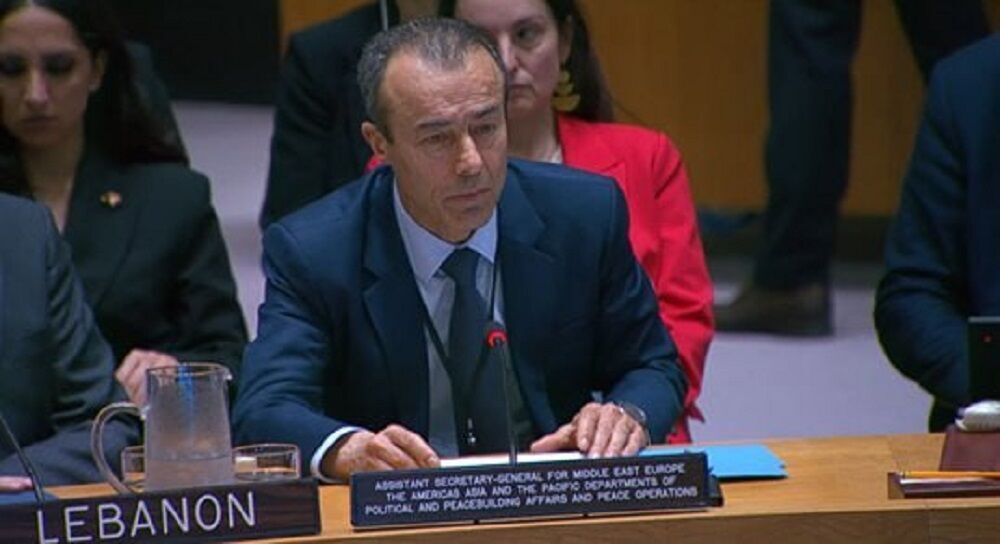


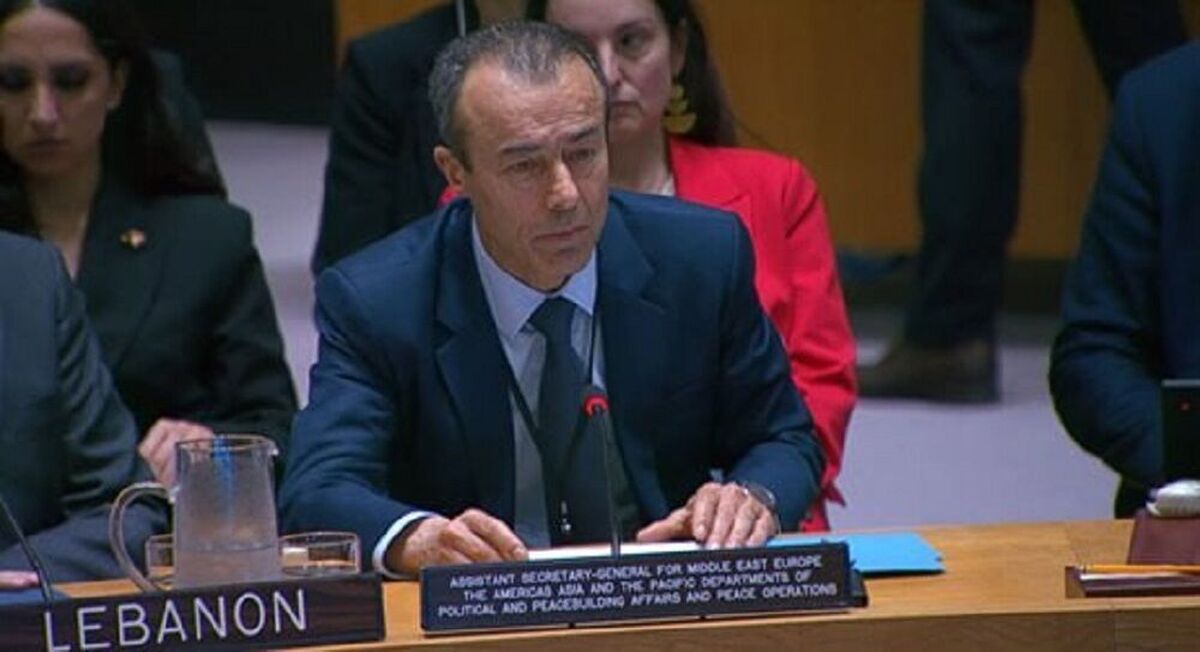
Mohammad Khaled Al-Khiari, Assistant Secretary-General of the United Nations for the Middle East, Europe, Americas, Asia and the Pacific, warned on Friday evening local time at the meeting of the United Nations Security Council under the “Situation in the Middle East” agenda: the continuation of tensions in the Strait of Hormuz and Bab al-Mandab and their surrounding areas poses serious risks to international peace and security, regional stability and the global economy.
According to IRNA, he added: Every day new reports of sea accidents are published. Merchant ships are exposed to various types of attacks. A large number of commercial ships and their crews have been trapped inside the Persian Gulf for months. Restrictions imposed by the parties involved on shipping also add to the existing uncertainties.
He clarified: Although the alleged published reports that the volume of energy exports from the Persian Gulf region has been restored to a large extent, including with the help of alternative routes, are of our concern, but this issue should not be considered as a return to normal conditions. The volume of sea cargo is still lower than the pre-conflict (war) level.
Al-Khiari continued: October had the highest monthly number of incidents against commercial shipping since February 2026. According to the International Maritime Organization, as of November 11, 134 confirmed incidents have been recorded in the Strait of Hormuz and the wider Middle East maritime region.
He added: According to this organization, 25 sailors have lost their lives. Many others have been injured or are still missing. These incidents are unacceptable. Civilian ships and commercial vessels should not be targeted.
The Assistant Secretary-General of the United Nations said: “Although there have been no recent reports of attacks on commercial ships in the Red Sea, the ongoing conflicts around the Bab al-Mandeb Strait, the possibility of disruption to navigation and the continuous threats against freedom of navigation remain a matter of deep concern to us.”
Al-Khiari continued without condemning the attacks against the Yemeni army: “In this context, we once again express our concern and condemnation regarding the cross-border attacks of the Houthis (Yemen’s Ansarullah) against civilian infrastructure and energy in Saudi Arabia and the escalation of conflicts throughout Yemen.”
The Assistant Secretary General of the United Nations said: “The current arrangements governing the maritime situation in the Middle East are still costly, unpredictable and insecure. Maritime disruption continues to have significant economic consequences worldwide. These disruptions have increased energy, transportation and insurance costs, exacerbated inflation and threatened food security; And that is in a situation where the shipment of chemical fertilizers is severely limited.”
He clarified: The longer these restrictions continue, the more the economic costs will increase and it will be more difficult to restore the confidence of commercial actors and restore the flow of commercial exchanges. This situation should not be allowed to become the new normal conditions.
This UN official emphasized: The full return of maritime to the normal situation in the region and the re-establishment of safe and unhindered passage, along with the full enjoyment of maritime rights and freedoms in accordance with international law, is necessary for regional and global stability.
Al-Khiari continued: As the Secretary General of the United Nations has emphasized many times, strategic maritime bottlenecks should never become a tool for applying pressure and coercion. There should be no obstacles to the movement of food, energy, chemical fertilizers and other basic goods.
He added: The Secretary General of the United Nations continues to emphasize that the rights and freedoms of navigation must be restored without delay and all attacks against civilian ships must be stopped immediately. The regulations governing maritime traffic must comply with international law and the applicable regulations of the International Maritime Organization.
He said: We ask all parties to fully adhere to their obligations based on international law, including the law of the seas and related resolutions of the Security Council. Cooperation with the International Maritime Organization to promote maritime safety and security, in a manner consistent with international law, is also of vital importance.
The Assistant Secretary General of the United Nations emphasized: “The maritime developments cannot be separated from the wider tensions in the region. We express our satisfaction that no major military exchange has occurred since the beginning of September.” At the same time, we are deeply concerned about the statements that indicate the possibility of resumption of military conflict.
He clarified: The agreements reached between Iran and the United States in June and included in the Islamabad Memorandum of Understanding showed that diplomacy can achieve results. Despite the unfortunate resumption of military actions after the signing of the Memorandum of Understanding and deadlock in negotiations, including in the field of the nuclear case and sanctions, we welcome the resumption of diplomatic activities in Doha and other parts of the region.
This UN official said: We want the parties to take advantage of the current opportunities and enter into negotiations in good faith. We hope that the efforts of the mediators will help Iran and the United States to reach a peaceful and stable agreement.
Al-Khiari continued: We welcome the continuous efforts of regional countries to review arrangements aimed at improving maritime security. These efforts are important and can complement a wider political process.
He added: “Countries in the region play an important role in advancing confidence-building measures, maintaining diplomatic interactions, reducing tensions, and encouraging the parties to compromise. The resumption of military conflicts (aggression) will have devastating consequences for Iran, the region, and beyond.” The people of the region, and indeed the international community in a wider scope, cannot bear a long-term conflict in one of the most important strategic waterways of the world.
The Assistant Secretary General of the United Nations emphasized: Diplomacy, reconciliation and political courage are still the only way to achieve lasting peace, and the Secretary General of the United Nations is ready to support negotiations aimed at achieving a peaceful, comprehensive and sustainable agreement.




