





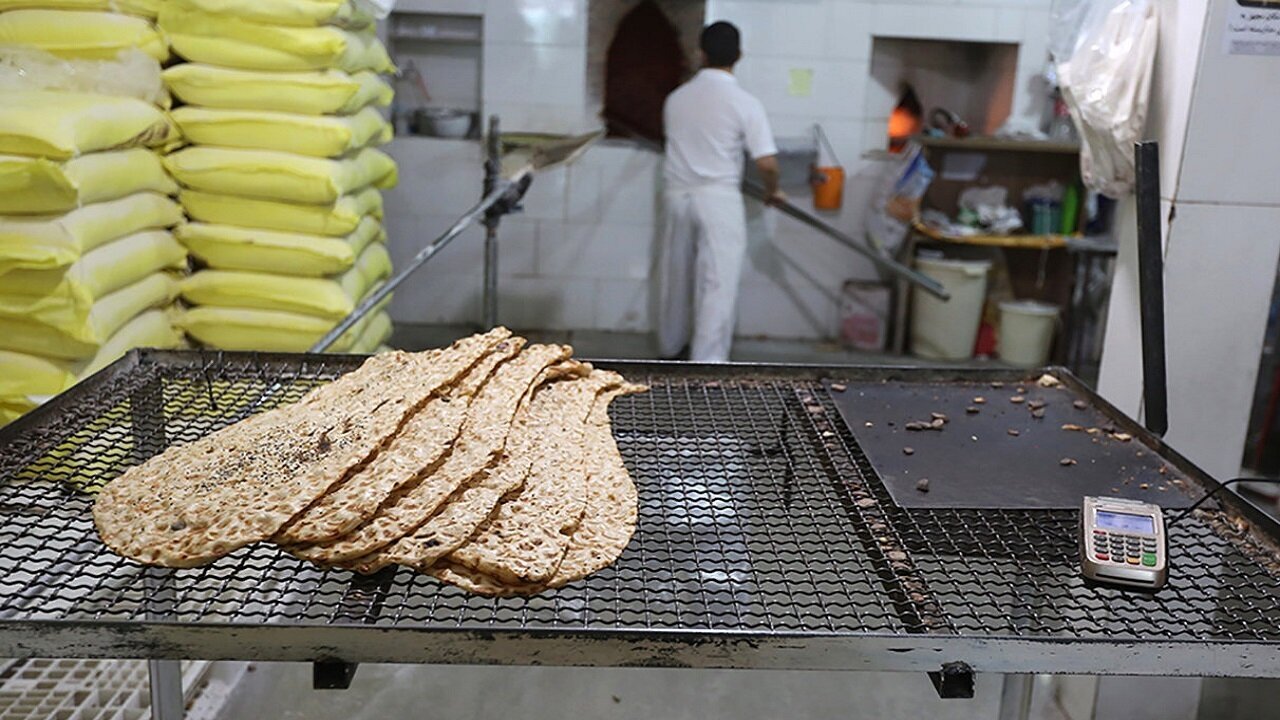
According to Khabar Online, changing the way bread is sold from grain sales to sales based on weight has become one of the topics discussed in the bread market. The plan is proposed with the aim of transparency in pricing, determining the weight of the product and reducing the areas of low sales.
Tasnim wrote in a news: The implementation of this plan is accompanied by questions about technical infrastructure, how to calculate weight, compliance with health standards and possible costs of bakeries.
Time to implement the plan to sell bread by the kilo
In this context, Fatemeh Nazari, the head of Tehran’s Traditional Bakers Union, emphasizing that selling bread by kilos is still in the early stages, believes that the current infrastructure of bakeries and the existing laws are suitable for selling bread in slices, and changing this method requires further investigations and culturalization.
His statements are made in the context that the head of Iran’s Chamber of Guilds announced the plan to implement the sale of bread by weight in early November and announced that this plan will be implemented in the first phase for Sangak bread and government bakeries.
What was the purpose of selling bread by weight?
Qasim Node Farahani, the head of the Chamber of Guilds of Iran, announced on October 29 about the bread supply program based on weight and announced that the chin weight of Sengak bread is considered to be 650 grams.
According to his explanation, the Ministry of Interior is responsible for the notification of the implementation rules of this project, and this notification was supposed to be done by the beginning of November.
In this way, instead of paying the price for each loaf of bread, the customer pays for the product based on its weight. Equipping bakeries with digital scales and placing information about weight and price in front of customers is also one of the announced requirements for the implementation of the plan.
The stated purpose of this change is to increase transparency in the transaction and reduce the areas of underselling; Because in bulk sales, the difference in the weight of the offered breads despite the same price may not be recognizable to the consumer, but weight sales allow a more accurate comparison between the amount of the product and the amount paid.
However, before the implementation of the project, the head of the Chamber of Guilds of Iran emphasized the necessity of checking the quality of bread so that changing the supply method does not lead to the delivery of low-quality or doughy bread.
Kilo sales infrastructure is not available
Fatemeh Nazari, the head of Tehran’s traditional bakers’ union, pointed out that the existing equipment and rules are designed based on the sale of bread in slices, and she considered the implementation of the kilo sales plan as requiring further investigation and culture building.
He believes that selling tablets is more appropriate with the current structure of bakeries and changing this method without preparing physical and software infrastructure can cause problems for trade unions.
One of the concerns raised by the head of the union is the possible non-compliance with health regulations due to the increased involvement of hands in the process of weighing and delivering bread. In this way, in addition to providing suitable scales, the method of moving, weighing and delivering the product should also be defined in such a way that the health and hygiene of the bread is not affected.
Nazari has also emphasized that the current kilo sales plan is still in the initial and crude stage and more technical and executive details should be reviewed for its implementation.
The difference between the weight of dough and the weight of bread, the pricing challenge
One of the important technical issues in selling by weight is the difference between the weight of the initial dough and the weight of the bread after baking. Chin weight alone cannot be the final basis for price calculation; Because in the baking process, part of the moisture of the dough is lost and the weight of the final product is reduced.
Mohammad Javad Karmi, the head of traditional bakers’ union, explained this issue earlier and said that if the weight of the dough is 600 grams, the weight of the bread after baking will be about 400 grams; Therefore, approximately 2.5 tablets of this bread will be one kilogram.
Referring to the possibility of calculating the price of bread based on weight in Nanino card readers, he warned that increasing the weight of dough without compensating the production costs could have a negative effect on the quality of bread.
This shows that the determination of the standard weight should be done based on the final product and after baking, and the criteria related to the amount of weight, quality and price should be transparently provided to bakers and consumers.
Selling by the kilo does not necessarily eliminate violations
Another consideration for the implementation of this plan is operational costs and the possibility of its impact on the quality of bread. Mohammad Soleimani, head of Tehran’s Sengak Bakers Union, also pointed out that selling by weight can create more transparency in the transaction, and emphasized that this method alone does not guarantee the elimination of bakeries’ violations.
According to him, the installation of scales and the possibility of needing a separate manpower for weighing can impose new costs on trade unions. Also, if the weighing standards are not formulated correctly, it is possible that some units will change the way of preparing and baking bread to increase the weight of the product and its quality will be affected.
Issues such as how to weigh, buying part of the bread, the amount of hand contact with the product and the possibility of increasing waste are also among the issues that he believes should be investigated before implementing the plan.
From an operational perspective, these cases show that weight sales can lead to greater transparency when quality monitoring, health standards, and costs imposed on bakeries are also considered.
The price of traditional bread has not changed
In addition to the issues related to the change in the sales method, the price of bread and the cost of supplying raw materials are also among the issues raised in the statements of the head of the traditional bakers’ union of Tehran.
Fatemeh Nazari, emphasizing that the price increase has not been applied in the traditional bread sector, has announced that the quota of type 6 flour for traditional independent bakeries is in place, and the price of flour used in traditional type 2 and type 6 breads has not changed compared to before.
However, he considered the increase in the price of sesame to 700,000 tomans per kilogram as one of the pressure factors on the production cost of sesame breads and believes that the price of this group of products should be reviewed.
In this section, a distinction should be made between the price of traditional bread and the cost of additives; This means that according to the statement of the head of the union, the price of traditional bread has not increased, but with the increase in the price of sesame, the price of sesame bread needs to be re-examined.
Helping to sell kilo bread to reduce violations
Selling bread by weight, if implemented correctly, can provide consumers with a more accurate basis for calculating the price of the product and comparing weight and price, but changing the sales method alone will not solve the problems of the bread market.
To implement this plan, the standard weight of bread after baking, the rate per kilogram, how to calculate the price in card readers and the responsibility for monitoring the performance of the scales must be determined. It is also necessary to provide equipment, train bakers, comply with health requirements, and determine the task of new expenses for trade unions.
217